The firing of a top United States statistics official by President Donald Trump last week has drawn concerns from economists and policymakers regarding the credibility of data in the world’s biggest economy.
Trump’s dismissal of Bureau of Labor Statistics Commissioner Erika McEntarfer after the release of disappointing employment figures on Friday has raised fears over the integrity of Washington’s economic data, which are relied on by countless businesses and investors in the US and across the world.
The National Association for Business Economics warned that McEntarfer’s “baseless” ouster risked doing “lasting harm to the institutions that support American economic stability”.
“It could open the door to political meddling and certainly will undermine trust in federal statistics that businesses, policymakers and individuals use to make some of their most important decisions,” Erica Groshen, who led the Bureau of Labor Statistics under former President Barack Obama, told Al Jazeera.
If Trump’s dismissal of McEntarfer and other presidential appointees is allowed to stand, Groshen said, he could make a habit of firing any head of a statistical agency or other body that delivers “unwelcome news”.
“Then he is likely to replace them with appointees who prioritise serving his goals over serving the mission of their agencies, ethical standards or scientific integrity,” Groshen said.
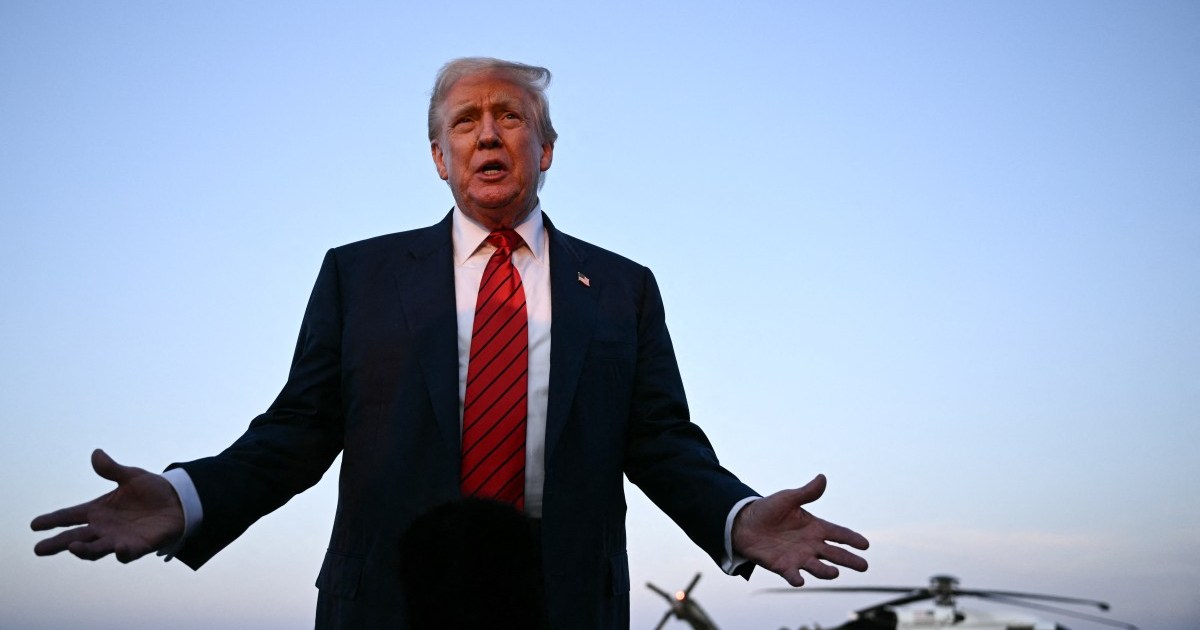
Trump, who justified McEntarfer’s removal by claiming without evidence that the latest job figures were “rigged” to make him look bad, said on Sunday that he would announce a new Bureau of Labor Statistics head in three or four days.
 Labour economist Erika McEntarfer became head of the US Bureau of Labor Statistics in January 2024 [Handout/US Bureau of Labor Statistics via Reuters]‘Global ramifications’
A collapse in trust in official economic data about the US would have ramifications worldwide.
Despite the growing influence of emerging economies such as China and India, the US remains the world’s largest economy by some distance.
The US gross domestic product (GDP) at about $30.3 trillion accounts for more than one-quarter of the global economy. China’s estimated GDP is about two-thirds that amount.
US government data on trade, employment, consumer spending and GDP are considered important signals for the direction of the global economy and are closely followed by businesses and investors from London to Dubai and Tokyo.
Many countries, including democratic states, have faced accusations of fiddling with economic statistics for political reasons, often with serious reputational consequences.
In 2010, the European Commission published a withering report accusing Greece of deliberately falsifying data to conceal the poor state of its public finances.
In 2013, the International Monetary Fund officially censured Argentina for providing what it said was inaccurate data on inflation and economic growth.
‘Economic data manipulation’
Some research suggests that countries run by strong-arm leaders are especially prone to misrepresenting the state of their economies.
A 2024 study published in the European Journal of Political Economy found that economic openness and democracy decreased the likelihood of governments manipulating statistics although there were no observable positive effects from media freedom or the independence of the statistical office.
In a 2022 paper that used satellite imagery of nighttime light as a proxy for economic development, Luis Martinez, a professor at the University of Chicago, estimated that autocratic countries artificially inflated their annual GDP growth by about 35 percent.
“Economic data manipulation is pervasive in history, especially in autocracies and dictatorships to create narratives for the people – typically to embellish standards of living,” Tomasz Michalski, an associate professor of economics at the HEC Paris business school, told Al Jazeera.
“What is rarer, though, is to find such deliberate behaviour in countries that strive to be democracies or are more developed.”
After Trump’s firing of McEntarfer, a career economist who was appointed in 2024 with overwhelming bipartisan support, critics were quick to note parallels to tactics attributed to strongman leaders seeking to bolster public approval for their policies.
“It’s one more step on our rapid descent into banana republic status,” Nobel Prize-winning economist Paul Krugman said on Substack, a subscription-based newsletter platform.
Lawrence Summers, who served as US Treasury secretary under President Bill Clinton, described the firing as the “stuff of democracies giving way to authoritarianism”.
Scott Sumner, a professor of economics at Bentley University in Waltham, Massachusetts, said Trump’s move made the US “look more like a banana republic” although it remained to be seen whether he would seek to directly manipulate the government’s economic figures.
“It’s actually hard to fool the public, and almost no one was fooled by the Argentina manipulation,” Sumner told Al Jazeera.
“It’s too soon to say whether Trump will try to do the same. Any attempt to do so would likely fail.”
‘The quality of US economic statistics’
The quality of US economic data has been a growing concern for some time due in part to the Trump administration’s freeze on hiring federal employees and staff cuts at numerous agencies.
In March, Commerce Secretary Howard Lutnick dissolved two expert committees that advised the government on its economic statistics, prompting concern among some economists.
In June, the Bureau of Labor Statistics (BLS) announced that it had stopped collecting price-related data in three US cities – Buffalo, New York; Lincoln, Nebraska; and Provo, Utah – due to limitations in “current resources”.
But even before Trump’s return to the White House in January, declining response rates to surveys among the public in recent years had made the collection of data increasingly difficult, raising concerns about accuracy.
In a poll published by the Reuters news agency last month, 89 of 100 policy experts surveyed said they had at least some concerns about the quality of US economic statistics.
“Some data is just unreliable because people stopped responding to surveys or the responses became so biased given the nonhomogeneous response rates,” said Michalski, the HEC Paris associate professor.
“There are no easy remedies often for improving data collection given that many people are not using landlines, are unreachable or provide careless answers to investigators,” he said.
Even with sound methodology, data are always at risk of manipulation once politicians get involved, Michalski added.
“Even with correct numbers, it is possible to spin a story about inflation or GDP growth by changing the base years or selecting some specific periods to weave narratives,” he said.
“The incentives to manipulate and falsify are clearly there. There is little or no punishment.”
Groshen said that while she does not expect US economic data to stop being reliable in the immediate future, “we seem headed in that direction.”
“For now, the BLS will continue to operate as it has before,” she said.
“We will need to start worrying if and when the president’s people are embedded there.”