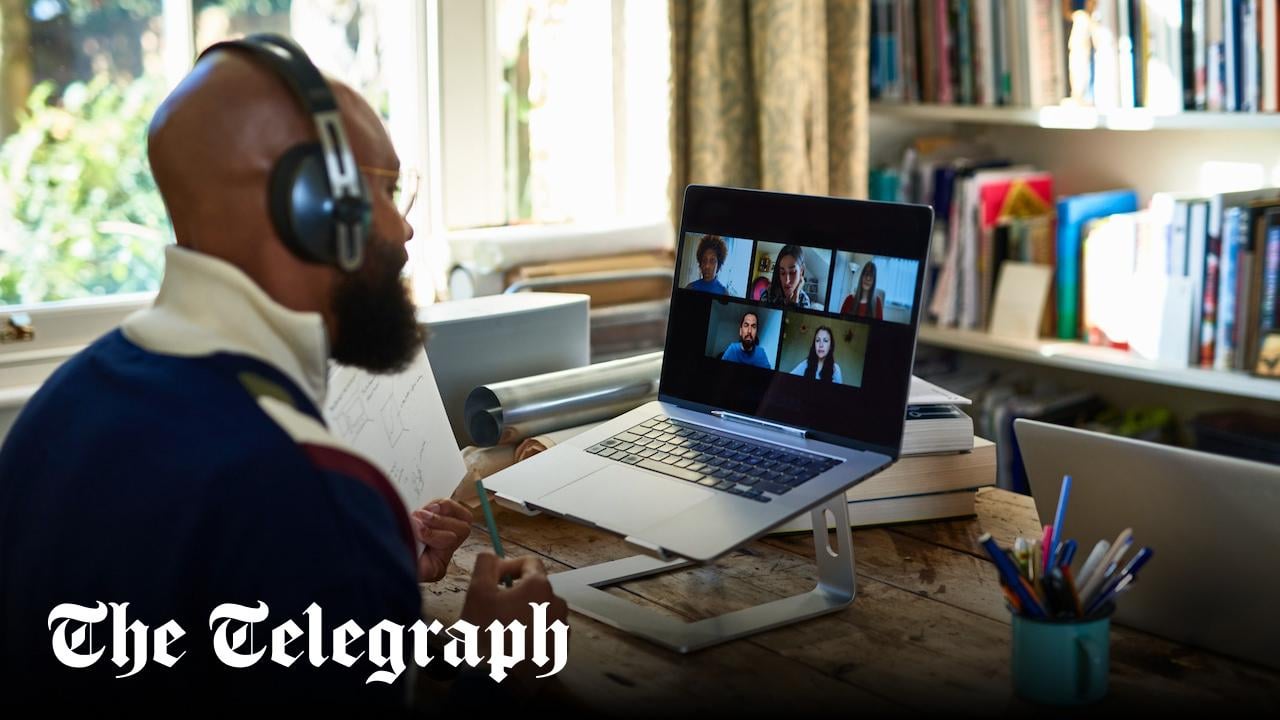
Home workers quit rather than return to the office
https://www.telegraph.co.uk/business/2025/08/06/home-workers-quit-rather-than-return-to-office/
by weregonnamakit

Home workers quit rather than return to the office
https://www.telegraph.co.uk/business/2025/08/06/home-workers-quit-rather-than-return-to-office/
by weregonnamakit
29 comments
Working from home is so much better for me. It’s less stressful, I get to walk my kids to school every morning, and I have a much nicer setup than in the office.
When I have to go in I spend half the day on teams calls anyway, have to work out how to sort a healthy lunch with just the office microwave/nearby shop and have to deal with crappy screens and a stupidly low dpi mouse. Overall I get much less done at work compared to at home, get less exercise and see my family less. I’m pretty sure it’s a no brainer where I’m better off working!
Edit: And yes, I would quit if I was told to come into the office every day.
I do two days in the office and three at home. I get much more done at home but I do appreciate some face to face meetings are worth it.
I’m in 5 days a week because I can’t stand working from home. Some of my colleagues are in 3 days a week, some are in 1 day every few months.
I’ve never noticed a single problem with anyones schedule. I’m sure the people living hundreds of miles away would quit in a heartbeat if they had to come in more frequently than they do.
No shit. Can’t be having a better quality of life now can we…
And of course that’s exactly the result The companies are looking for, much easier to get people to quit voluntarily than to have to pay redundancy.
It’s shortsighted because you lose your best people, but that hardly matters when you only think about the short term.
Keep it up and they’ll go to the whip-cracker’s house.
The take away here seems to be let people choose what works for them and buy and large they’ll benefit the business with better productivity.
I would do the same if I worked from home, but I’m self employed in film so who would I do that to?
Being forced back to the office would cost me between £250 and £300 a month in fuel, parking and food. It would effectively be a pay cut while increasing my working day from 8 to 10 hours.
I have noticed that the people who keep dragging us onsite for team days etc are the ones who live close to the office.
The problem with quitting a well paid remote job if you live in a remote area is that you’re then stuck with the jobs available locally or you’re competing with the entire country for fully remote jobs.
Any salary you’re earning has got to cover your costs especially if you have a large mortgage and other expenses
If I had to go into the office twice a week it would be too costly and I’d have to find a new job.
>looking to boost productivity
But we’re already the most productive workers ever due to technology yet pay hasn’t accelerated at the same pace as productivity…
Working from home is just so much better for me. I can put the washing machine on between meetings, be around for deliveries and tradies and prep food for the week at lunch time. In the office the lighting makes me feel sick and I just sit on Teams calls all day because most of my team are in London or India.
What they gunna do with all these empty offices that are springing up? If folk are wfh a fair bit
That’s the idea… Cheeper to have someone quit than pay redundancy.
The way to sort this out is make office working optional or a minimum amount of days (that’s sensible, not 5 days a week).
My employer tried to say 3 days back in the office last year. I pushed back on the basis that I was given verbal assurances by HR on hiring that being fully remote was the default position for all staff except those whose job actually required them to be in an office location, and that it would remain the default position. That assurance that was echoed in emails and intranet blogs by the big boss himself multiple times…including just weeks before he turned round and demanded 3 days in the office.
Things don’t have to be specifically enumerated in your contract in order to be contractual terms, implied (those that are custom and practice, or those that are common sense) and incorporated (which is to say terms outlined in other documents) are just as contractually binding as the words in the document itself.
I compromised and agreed to 1 day a month in the office. That satisfies my desire to occasionally get a nice lunch from the fancy sandwich place and to stop in at the big chinese supermarket near the office on my way home. To be honest, its about what I was doing before they did the RTO mandate so nothing has changed for me.
But if they’d pushed the issue, I’d have left without hesitation. I can get a better wage elsewhere, I know that for a fact. So the flexibility of being principally remote is a big factor in me choosing to stay in this role.
‘Home workers look for something else rather than take a pay cut’
Ftfy
Same here, I will not be a battery hen in an office building again
Yeah, I really miss having to pay £5k a year to commute, not.
This is your choice, if your job does not work for you move on, your new employer will enjoy you and your old one the expense of finding a new you.
Some employers just do not like WFH if it is a must for you then vote with your feet
Working from home is 9-5. Working in the office is 7-7. It’s just not possible to do that and to be a well-rounded individual with friends, family and hobbies. Unless they let you sleep at your office Monday to Friday. Not to mention the extortion racket that is train fares and what have you.
It’s just another tax. Tax as travel costs, tax on your time, tax on your wellbeing, tax on your family life. Fuck them for forcing this utter cuntish bullshit and fuck the government for not protecting these rights when they had the chance.
So some workers have a backbone and prefer to remain WFH? Good.
Employers are closing ranks on this, we had a good run but I can’t imagine in another 5 years more than a small percentage of people in high demand niche roles will routinely work at home.
A shame, but at least for me it’s clarified my thinking, I either work remotely or I work very close to my workplace. I won’t go back to lengthy commutes now.
Much better not to work for anyone and do your own projects at home.
the problem with quitting a fully remote job is… finding another fully remote job.
i did some recruitment work for our WFH company and literally any advert that went out for a min wage fully WFH role would get easily 3,000 applicants over a weekend – had to trim that down to maybe 10-15.
I guess if you moved from London to the Highlands of Scotland you’d likely quit
It’s going to depend on the job sector.
In 2000, I joined a large US computer manufacturer on the software side. They operate in many countries – I was in the UK. You can’t do all the development one area or even in one country because you exhaust the available skills there, and the wages for the staff you need skyrocket. As one of their directors famously said, if you want the best people in the world working for you, most will not live anywhere near one of your offices. If you insist on office working, you just ruled out 99% of the best people in the world working for you. If you are set on being the leader in your sector, this is a massive issue. Granted, this isn’t an issue for all companies, but it clearly is for some. I learned a lot about how to make home working work in this company, and the massive productivity gain it gave them.
I moved on to a company in the financial sector in 2005, managing a new team I had to recruit. That was all office working. One day, one of my best staff told me he was leaving. Why? he was too far from home/family, and home-sick. Based on my previous experience, I immediately set about getting home working in place in my team, the only team to have it at that point. We kept our good member of staff, who worked from home most of the time, but came and worked in the office for a few weeks every 6 months when we rolled out our new release. Fantastic outcome – we retained a great worker, he loved the job, but worked mostly from the other end of the country. That also meant I could recruit home workers, which meant the tiny local talent pool suddenly expanded to the whole country – much easier to find good people. Home workers tend to be much happier to do work outside of office hours too, which was an advantage in the team.
You do need to put measures in place to ensure the team know each other and interact just like the would in the office, but that’s not difficult, just different. I had a call from HR saying “*Your staff are talking about their holidays on email”*. I said “*Good*”, because they would have been talking about their holidays if they were sitting next to each other in the office. HR immediately got it.
At my last job, I worked from home, which was actually my parents’ home because I was their carer. This didn’t take any time out of my work, but did require me there to act if something went wrong. A change in manager resulted in me being told I had to come back into the office. No amount of money would have me commuting into London each day, so I left and decided to retire, and haven’t regretted it for a moment, even though I’ve always loved my job. That makes me one of the economically inactive people, although I’m enjoying full time volunteering now. Interestingly, I noticed the company advertised my role, but never managed to fill it in the UK. After a year or two, they found someone in another country to do it, so they’re not in the [London] office in any case.
Work/life balance is now more important for more people. Far fewer people are willing to do long commutes each day, particularly into London.
Companies do need to change things to make home working work, and it isn’t going to work for everyone. But I’ve seen many cases of it dramatically improving productivity when done right. Sure, when done wrong, it can reduce productivity.
Comments are closed.