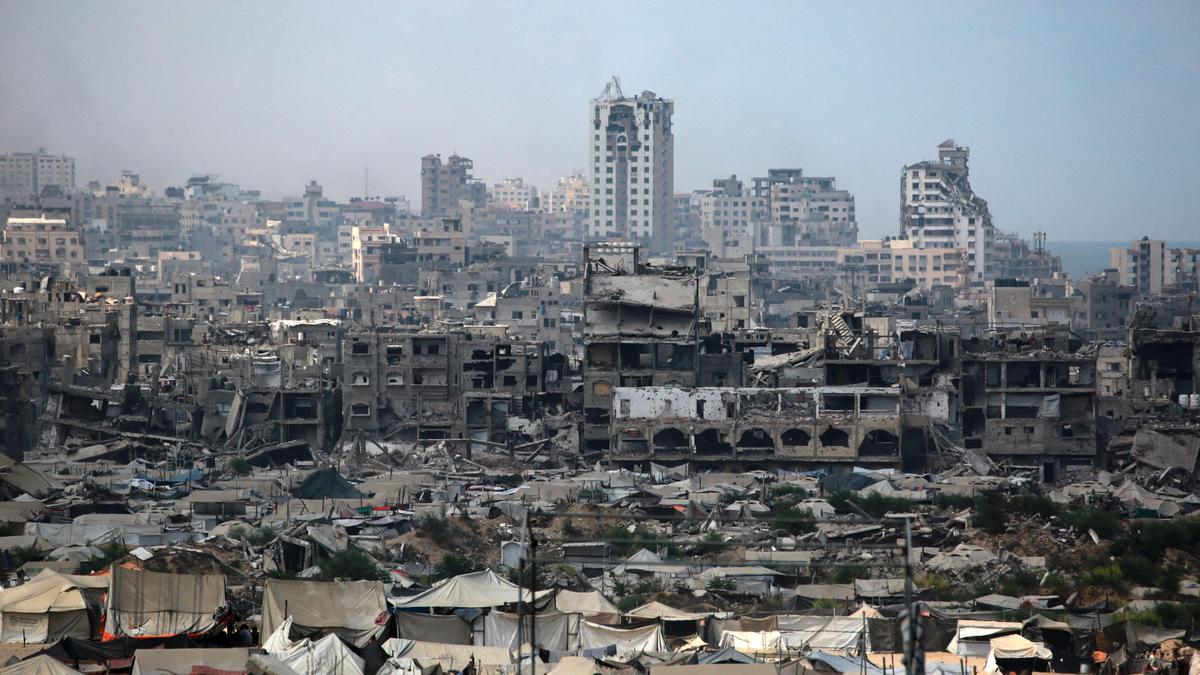
Israeli Prime Minister Benjamin Netanyahu secured cabinet approval on Friday for a military takeover of Gaza City, which he described as part of a final push to topple Hamas after 22 months of fighting and recover its last 50 hostages, dead or alive.
The decision to step up operations in the Gaza Strip’s biggest city marks an escalation in a conflict that’s already devastated the Palestinian territory, where the United Nations World Food Programme has warned half a million people are starving.
“The Israel Defense Forces will prepare to seize Gaza City while providing humanitarian aid to the civilian population outside combat zones,” a statement from Netanyahu’s office said upon the conclusion of the 10-hour Security Cabinet session.
It said the plan’s objective was “defeat of Hamas.” The Iran-backed Islamist faction, which is on Western terrorism blacklists, triggered Israel’s longest war with an 7 October 2023, cross-border rampage in which some 1,200 people were killed and 250 kidnapped.
Negotiations on a proposed third ceasefire and partial hostage release stalled last month, with Israel and its US ally blaming Hamas. The Palestinian faction sought an end-of-war commitment by Israel, which insisted that Hamas first give up power and weaponry.
Also read:Foreign minister condemns Israeli destruction of Luxembourg-funded school
The IDF already controls some 75% of Gaza, displacing hundreds of thousands of Palestinians whose towns and homes have been reduced to ruins. Gaza City, in the north, is among pockets of territory that have been subjected to air strikes but largely skirted by ground forces as the Israelis believe Hamas holds hostages there.
Moving troops and tanks into Gaza City, home to as many as 1 million civilians, pits Netanyahu against the views of most Israelis. Polls show that, by a wide majority, they’d prefer to see the war called off with Hamas intact if that’s the cost of recovering the hostages and sparing the conscript military more casualties.
Shortly after the Security Cabinet’s decision, the rumble of ordnance could be heard from Gaza every minute or so from a distance of about 50km away.
According to Israel’s Channel 12 TV, the new plan will require six army divisions – around twice the current deployment in Gaza – and mustering reinforcements could take two weeks.
Post-war vision
Israel has been plunged into international isolation over the spiraling humanitarian toll on Gaza. The Hamas-run health ministry says more than 61,000 Palestinians have been killed in the war, while Israeli restrictions on aid have drawn warnings of worsening hunger from the UN and other relief agencies.
While Gaza has been the epicentre of the conflict following Hamas’s October 2023 attack on Israel, the war has since shifted to other zones. Israel fought Iran-backed Hezbollah in southern Lebanon in late 2024, knocking out part of its missile arsenal and launchers and pushing back the group’s forces from near Israel’s border before agreeing to a ceasefire. The IDF then fought a 12-day air campaign against Iran targeting the Islamic Republic’s nuclear programme.
Netanyahu has not articulated a clear post-war vision for Gaza, and has faced calls by far-right coalition partners to annex and depopulate the strip. That would be widely condemned by Western and Gulf nations and could lead to open-ended conflict. Friday’s statement said most Security Cabinet ministers rejected an “alternative plan” – which it did not detail.
The forum voted to reaffirm Israel’s war goals of recovering all hostages from Hamas, disarm the Iran-backed Islamist faction and demilitarize the Gaza Strip. The ministers also endorsed continued Israeli security control over the territory and a post-war administration that is neither Hamas nor the internationally-backed Palestinian Authority.
Most of the nation isn’t behind you. The people of Israel don’t want this war
Yair Lapid
Israel opposition leader
Israel wants to hand Gaza over to “civilian governance that is not Hamas and not anyone advocating for the destruction of Israel,” Netanyahu told Fox News on Thursday, without being more specific. “We don’t want to keep it.”
Yair Lapid, the liberal leader of Israel’s parliamentary opposition and an erstwhile supporter of the anti-Hamas offensive, said Wednesday on X he met Netanyahu to tell him that a reoccupation of Gaza would be “a bad idea”.
“Most of the nation isn’t behind you. The people of Israel don’t want this war. We will bear heavy costs for it,” Lapid said he told the prime minister.
Hamas defiant
Discussions by Israel’s Security Cabinet are usually kept behind closed doors. But this one was prefaced by two weeks of media leaks about operational options as well as warnings by officials directed at Hamas that the group’s time is running out.
Hamas – which Israel estimates still has around 20,000 men under arms, half its prewar numbers – is defiant. In Gaza City and the central towns also now in Israel’s sights, the Palestinian fighters retain tunnel systems that would enable hit-and-run ambushes on the Israeli army, which has lost more than 450 troops in Gaza so far.
Hamas has also threatened to execute the 20 live hostages rather than see them rescued. Such risks are why the IDF has held back on storming the remaining 25% of Gaza territory.
Also read:Israelis begin to question the morality of their war in Gaza
The IDF intends to defeat Hamas and will operate with the hostages “at the forefront of our minds,” its chief of staff, Lt.-Gen. Eyal Zamir, said Thursday. “We will do everything in our power to bring them home.”
Hostage families held a vigil outside the Jerusalem government complex where the Security Cabinet met. Ordering a full conquest, they said in a statement, poses immediate danger that their relatives will “disappear forever in Gaza’s soil.”
Israel has major diplomatic and logistical backing from the US, with President Donald Trump exasperated by Hamas’s negotiating tack and offering to expand an alternative to the UN’s aid-distribution system in concert with IDF advances.
The Gaza Humanitarian Foundation, the US- and Israeli-backed relief group, is shunned by traditional UN agencies. The UN says more than 1,000 aid seekers have been shot near GHF stations – incidents for which GHF denies responsibility.