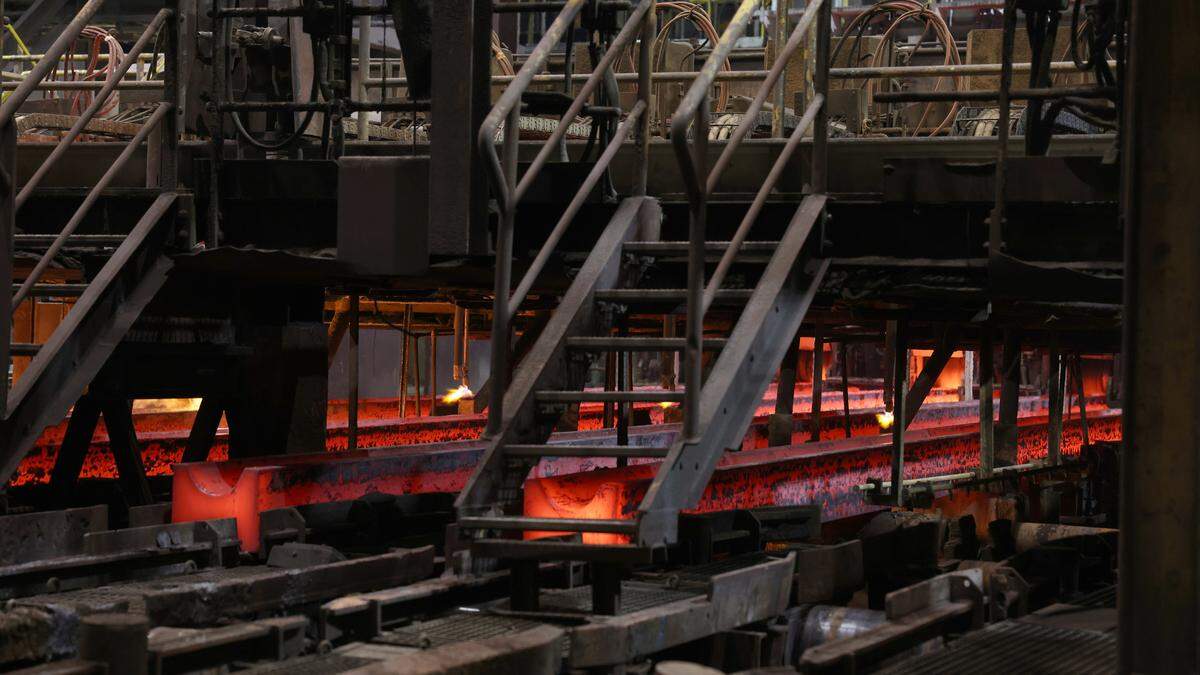
South Africa’s government is locked in crisis talks with the local unit of Luxembourg’s ArcelorMittal to decide the fate of the company’s loss-making construction-steel mill, people familiar with the matter said.
The government’s trade department and one of its state-development banks, the Industrial Development Corp. is in discussions with ArcelorMittal South Africa about the potential closure of the Newcastle mill, said the people, asking not to been identified because the discussions aren’t public. The operation located in the eastern province of KwaZulu-Natal makes steel grades used in the country’s crucial automotive, mining and construction industries.
On 1 April, the company said the IDC — its biggest shareholder after its parent — would conduct a due-diligence exercise with a view to taking a bigger stake in the firm known as Amsa.
A decision could emerge in coming days and the mill is hemorrhaging cash, with the entire group being unprofitable, the people said. ArcelorMittal has set a date of 30 September for its closing along with another mill in Vereeniging, which also produces so-called long products.
That’s the latest deadline for the closure of the plants, which Amsa first said it intended to shutter in November 2023. This would affect 3,500 direct jobs and tens of thousands more in industries that depend on the mills. The steel grades aren’t made by local competitors and would have to be imported.
The trade department “has been in ongoing discussions with Amsa on the potential closure of Newcastle,” it said in a response to questions. “Since the beginning of this process, the department’s objective has been to maintain the country’s long-steel capacity.”
Amsa, which didn’t respond to a request for comment, on 11 August reiterated that unless a solution is found, the mills will be closed.
The company has said unfair discounts on the price of scrap metal used by local competitors — who produce some of the more basic products made by Amsa — are among the causes of its losses.
The steel producer has also complained about high power prices, limited protection against steel imports from China and a poorly run state-owned rail service.
The company’s stock has declined 31% this year in Johannesburg to 0.93 rand, giving it a market value of 1.06 billion rand, down from a peak of 116 billion rand in 2008. In its most recent financial year, its revenue was almost 40 billion rand.
Sign up here for the twice-weekly Next Africa newsletter, and subscribe to the Next Africa podcast on Apple, Spotify or anywhere you listen.