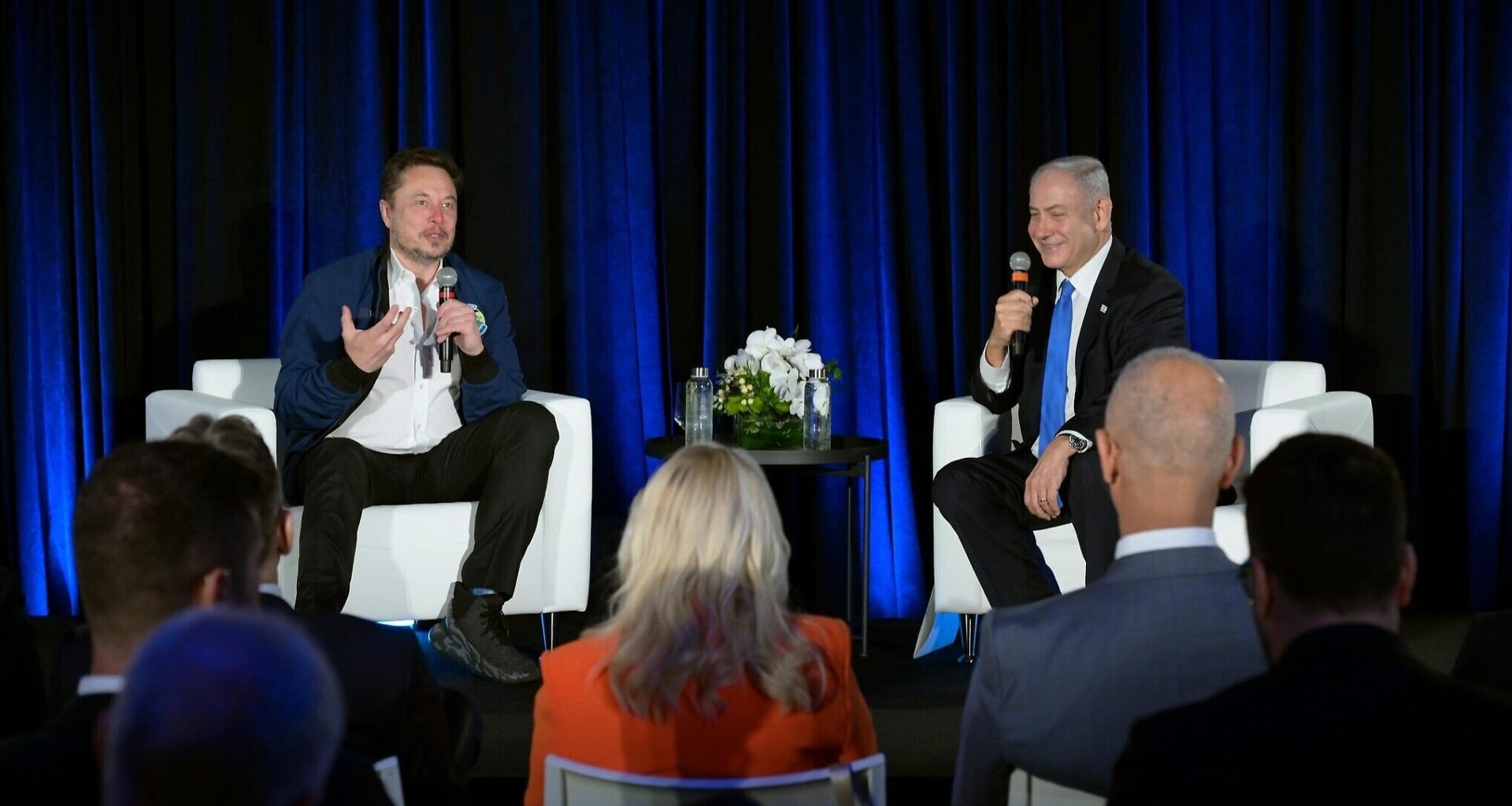
Prime Minister Benjamin Netanyahu said he wants to do away with restrictive bureaucratic red tape and confirmed he is looking for a candidate to fill a new position similar to that held by billionaire Elon Musk in the United States, who led the country’s Department of Government Efficiency.
Speaking with i24News in an interview broadcast on Wednesday, Netanyahu praised non-democratic Gulf states for their efficiency, which he explained is due to them being free from a restrictive “deep state.”
Asked about a report a day earlier by the Kan public broadcaster that he is searching for “an Israeli Elon Musk,” Netanyahu affirmed he was, but denied setting a three-week deadline to find someone, which was claimed in the report.
“We have to deal with our bureaucracy,” he said.
Israel, he noted, is the only democracy in the Middle East. Alongside that, it is a free economy.
In the Gulf area, he said, “there is no democracy, but there is no bureaucracy. There isn’t the crazy deep state, that you can’t move… There are so many bureaucratic binds on business.”
By contrast, he continued, in the Gulf, there are “crazy initiatives.”
“You see crazy investment in research and development… in artificial intelligence,” he said.

Screen capture from video of Prime Minister Benjamin Netanyahu during an interview with i24 News broadcast on August 13, 2025. (Screenshot: i24News)
Israel today is a “great success story, but we are no longer the only success story. And we always need to be better. To be better, we need to deal with the bureaucratic tape, the over-judicialization, in every office, in every clerk.”
“You can’t move here, you can’t replace a secretary here,” Netanyahu lamented, alluding to the judicial overhaul plan his government has pushed.
Netanyahu, who has been in power since 2009 except for an 18-month period, has in the past charged that there is a “deep state” running the country that is out to thwart him.
On Monday, Kan reported that Netanyahu had told ministers that “regulation needs to be taken apart.”
Netanyahu reportedly pointed at advanced Arab countries such as the United Arab Emirates, where leaders are “not chosen and send their instructions from the top down. With us, [officials are] chosen, and everything goes down down.”
According to the report, the prime minister asked for a candidate to be found within three weeks who would “take apart regulation at the government level.”
He reportedly pointed at three entities that he said are hindering the government’s work: legal advice, the Finance Ministry’s budgeting department and the Israel Land Authority.
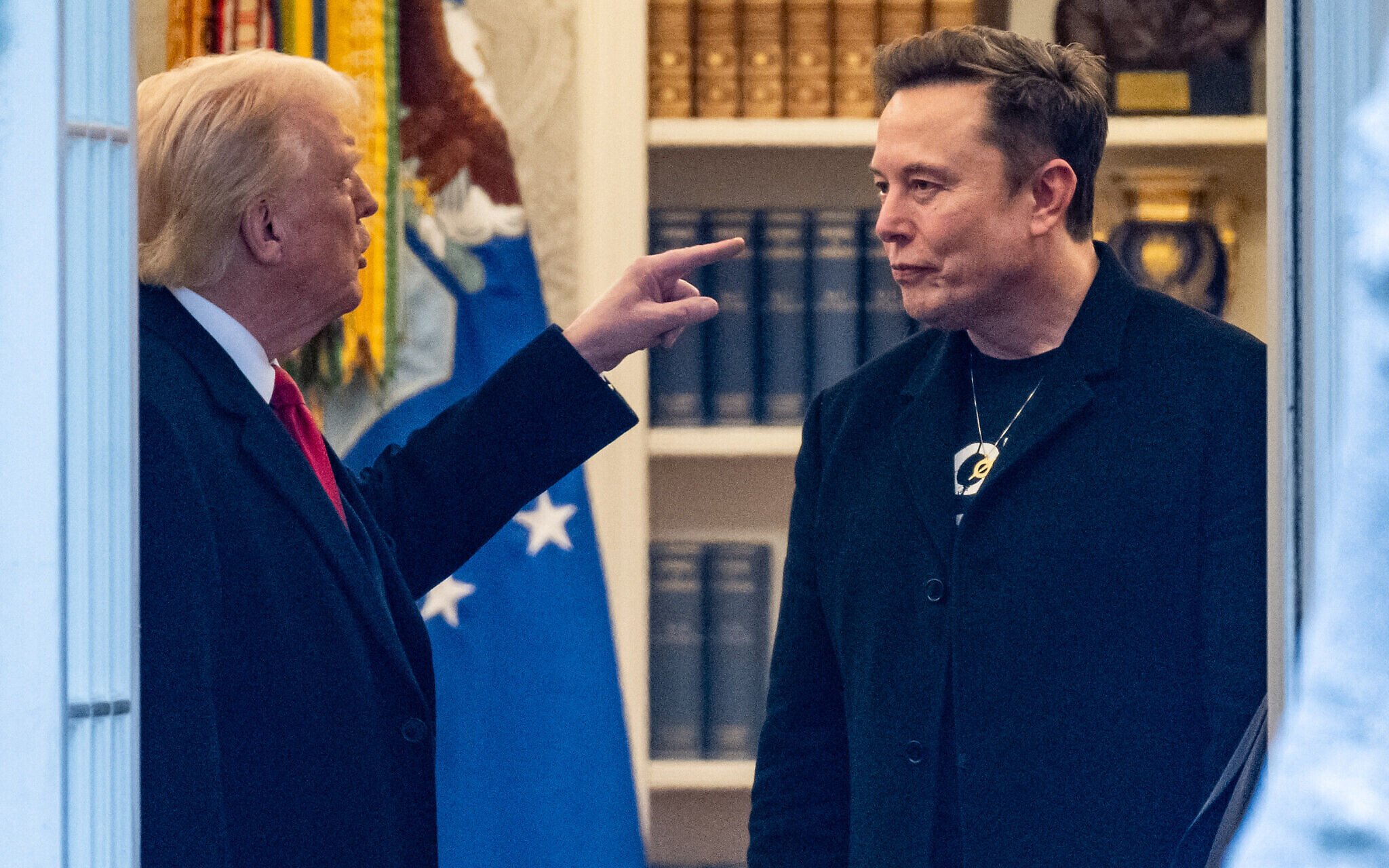
US President Donald Trump (left) and Elon Musk speak in the Oval Office before departing the White House in Washington, DC, on March 14, 2025. (Roberto Schmidt/AFP)
Head of Strategy at the Histadrut Labor Federation Itamar Avitan told the broadcaster: “Of all of Trump’s failures, we don’t need to bring to Israel the worst of them. Elon Musk resigned in embarrassment after the efficiency authority he led caused unprecedented damage to the United States and American countries.”
Avitan said that Netanyahu wants to deal with bureaucracy because he sees the civil service as an “obstacle to transforming Israel into a dictatorship.”
The government last week fired Attorney General Gali Baharav-Miara, following months of confrontation with her, but the move was frozen by the High Court.
According to Kan, Netanyahu is planning to appoint close acquaintance Yossi Shelley as head of the Israel Land Authority. The move comes as Shelley is reportedly to lose his current position as envoy to the United Arab Emirates due to an incident of ‘undignified’ conduct at an Abu Dhabi bar.
Musk in May left his position in the Trump administration after a turbulent four months in which his Department of Government Efficiency (DOGE) cut tens of thousands of jobs, shuttered whole agencies and slashed foreign aid.
DOGE’s achievements fell far short of Musk’s original goal of saving $2 trillion.
The White House says DOGE has made $170 billion in savings so far. The independent “Doge Tracker” site has counted just $12 billion, while the Atlantic magazine put it far lower, at $2 billion.