At first, it appeared to be a calmer than usual morning.
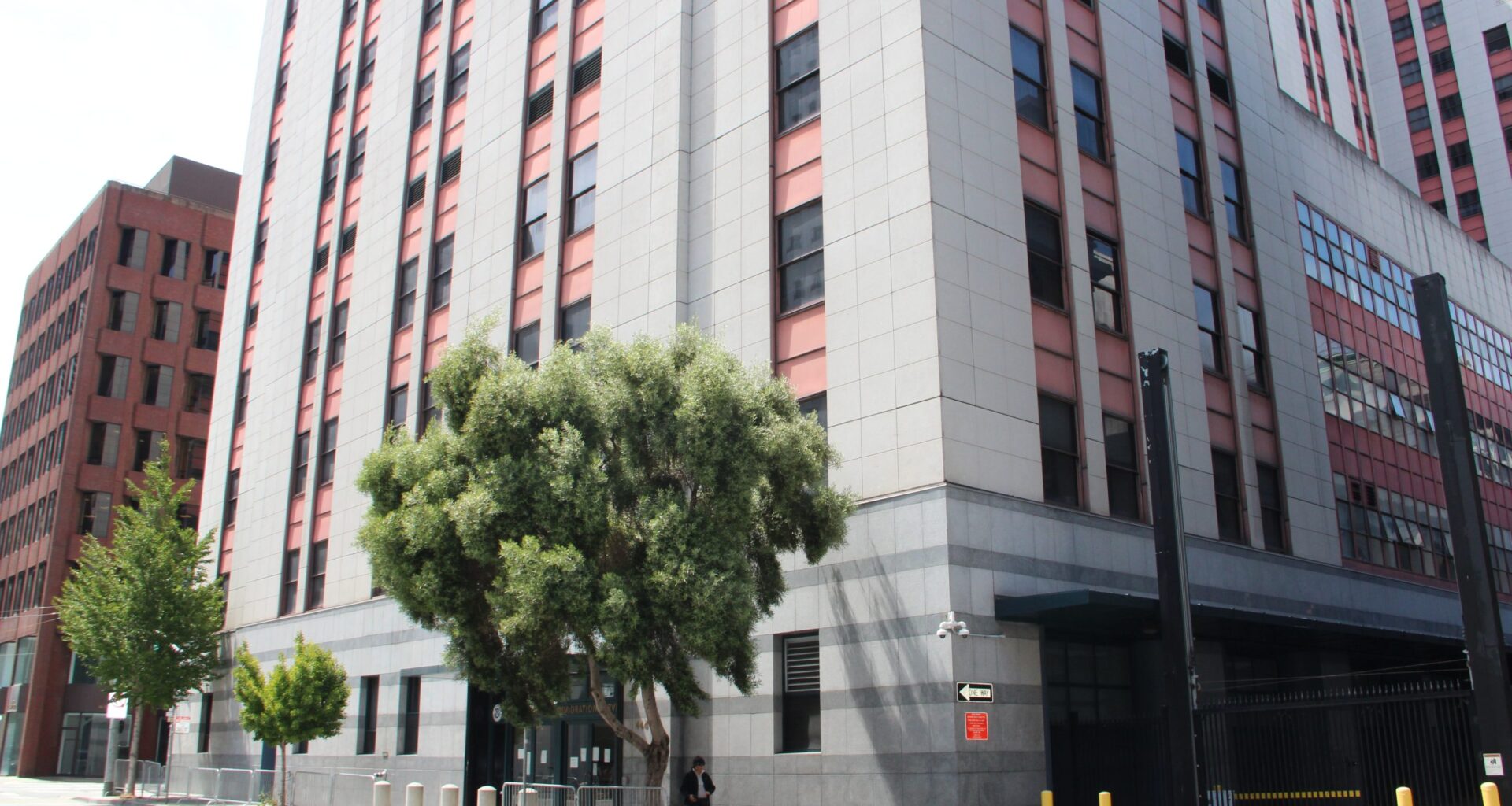
For at least the past three weeks, Immigrations and Customs Enforcement officers have arrested asylum-seekers following routine court hearings at Judge Patrick O’Brien’s immigration courtroom at 630 Sansome St. in downtown San Francisco.
This Thursday, about a dozen people made it out of the court unscathed. One man joyfully shouted with relief the moment he stepped out of the courtroom and didn’t see ICE officers waiting for him in the hallway.
But the last person on Judge O’Brien’s 8:30 a.m. docket would not be so lucky.
The Department of Homeland Security filed a motion to dismiss that case of that woman, an asylum-seeker from Colombia, the attorney representing the department told O’Brien.
DHS attorneys typically move to dismiss an asylum-seeker’s case to fastrack them out of the country. Judges in San Francisco typically do not rule on those motions immediately, which should protect asylum-seekers from immediate removal. But regardless of what the judges do, ICE swoops in and makes arrests the second anyone steps outside the courtroom.
On Thursday, O’Brien let out an audible sigh after he heard the news: “All right.”
O’Brien has said in court, in recent weeks, that those motions make conducting business as usual in the courtroom “difficult.”
As he has started to do in recent weeks, O’Brien allowed the woman four weeks — two more than is standard — to respond to the department’s motion in writing. He then tried, in coded language, to warn the woman that she may be detained.
“Have you heard about this happening in immigration court?”
The woman at first answered no, then said yes when O’Brien asked again.
“Do you understand what’s happening right now?” O’Brien asked. “You understand it’s not likely that you’re coming back to my court?”
Through an interpreter, the woman responded: Yes.
“Can you tell me what you think is going to happen after this hearing?” O’Brien asked.
Through the court interpreter, the woman said, “I don’t have much time left here.”
“Well, I guess that’s one way to think about it,” O’Brien said.
Around 10:30 am, as O’Brien was quizzing the woman, three ICE agents gathered discretely in the hallway outside the courtroom.
O’Brien’s final advice to the woman was to get an attorney, as fast as she can.
Often, there is a volunteer attorney in the courtroom to give unrepresented asylum-seekers free advice the day of their hearing.
On Thursday, as has also been the case in recent weeks, there were none — it is unclear why. A court observer instead gestured to the asylum-seeker the moment her hearing finished, calling her over to gather contact information.
Then, the woman stepped into the hallway. Three ICE officers — two women and a man — immediately swooped in. The woman panicked. She tried to shrink back towards the door. The ICE officers pulled her forward. The man grabbed her arm, and walked her down a hallway, likely taking her to the sixth floor of the same building where many immigrants are processed before being sent to longer-term detention facilities elsewhere. (The courtrooms are on the fourth floor.)
Back inside the hearing, O’Brien was starting his 10:30 a.m. docket.
He already had a new problem to solve.
The Department of Homeland Security informs some asylum-seekers that they must appear in court via a document called a Notice to Appear. DHS made an error: It put the wrong court address — 100 Montgomery St., the other location of San Francisco immigration court, which is about a half a mile away — on the notices for two families.
One family still arrived on time. The other family never turned up.
if an asylum-seeker is late to or misses a court hearing, their asylum case can essentially be cancelled and they can be deported.
Despite the error on DHS’ part, its attorney argued that the family should be deported regardless: Had they arrived at 100 Montgomery St., the attorney said, they would have been directed to 630 Sansome St.
O’Brien is a stickler for punctuality. He regularly quizzes tardy asylum-seekers — including, on Thursday, the Colombian woman who was about to be arrested — why they are late for court. But, for O’Brien, the DHS error was a bridge too far.
“I used to have a lot of confidence that that happened without fail,” O’Brien said, referencing the attorney’s assertion that someone at 100 Montgomery St. would direct the family to 630 Sansome St. “I don’t have that confidence anymore.”
“We have to tell them where to go,” O’Brien added. He dismissed the case without prejudice, which allows the family to refile their asylum case again.
The DHS lawyer said the department would likely appeal.