Only 39% of cross-border journeys (among the 109 trips between 31 countries studied) were cheaper by train, according to the report, which analysed the prices of each itinerary over nine separate days, divided into three booking periods: a few days before the trip, one month and three months before departure.
Of the 109 journeys analysed by Greenpeace, only 43 were cheaper by train on at least six of the nine days analysed, while 59 were more expensive by train on at least six of these days.
Also read:Night bus service to link Luxembourg to other European cities
In France, 95% of train journeys more expensive
There are major disparities between European countries. In France, cross-border rail travel is the most expensive compared to flying, with 95% of all journeys to and from France more expensive by train on at least six of the nine days analysed.
This figure stood at 92% for Spain, 90% for the UK and 88% for Italy.
Further down the rankings are Belgium, where 60% of journeys are more expensive by train, and Germany, where 48% of train journeys are more expensive. In the Netherlands, only 22% of train journeys are more expensive, compared with just 11% in Poland.
‘Contrasting picture’ in Luxembourg
“An analysis of routes to and from Luxembourg presents a mixed picture,” the study said. “The fact that the train or the plane is cheaper depends largely on the country of destination.”
Five routes to and from Luxembourg were analysed: Hamburg, Amsterdam, Zagreb, Barcelona and Milan, with 40% of its cross-border routes mostly more expensive by train and 40% mostly cheaper.
Connections from Germany and to the Netherlands are much cheaper by train. For a trip to Amsterdam, the plane costs more than five times as much as the train (€262 compared to €51 for the journeys analysed).
For the Zagreb-Luxembourg route, the cheapest mode of transport – train or plane – depends entirely on the day of travel, since there are no direct flights and train travel on this route requires two connections.
Also read:I tried giving up… flying and wasting food
Connections to Spain and Italy, on the other hand, are always more expensive by train. The biggest difference between rail and air fares was seen on the Luxembourg-Milan route, where the train cost almost 12 times – or 11.6 times – more than the plane for a medium-distance journey (€214 compared with a low-cost €18.49 easyJet flight).
Although no Luxembourg-UK routes were analysed, it is likely that “train travel is more expensive than air travel”, the study said, “because of the very low fares generally charged by Ryanair to London.”
Slightly positive” trend, but too slow
Generally speaking, however, Greenpeace notes that “a slightly positive trend is emerging” compared with a similar analysis carried out in 2023, with an increase in the proportion of routes where the train is cheaper than the plane.
This improvement is due to a greater number of direct rail connections and a reduction in low-cost connecting flights via hubs such as London and Dublin. “However, the trend is still too slow, and a complete overhaul of the pricing system is needed to effectively meet the climate challenge and make rail cheaper than air on all routes,” said Greenpeace.
“The European tax system continues to favour the most polluting mode of transport,” said Herwig Schuster, campaigner at Greenpeace Europe. “Aviation benefits from unfair tax privileges, while rail passengers are left out in the cold. These prices do not reflect a functioning market – they reflect a rigged system,” he said.
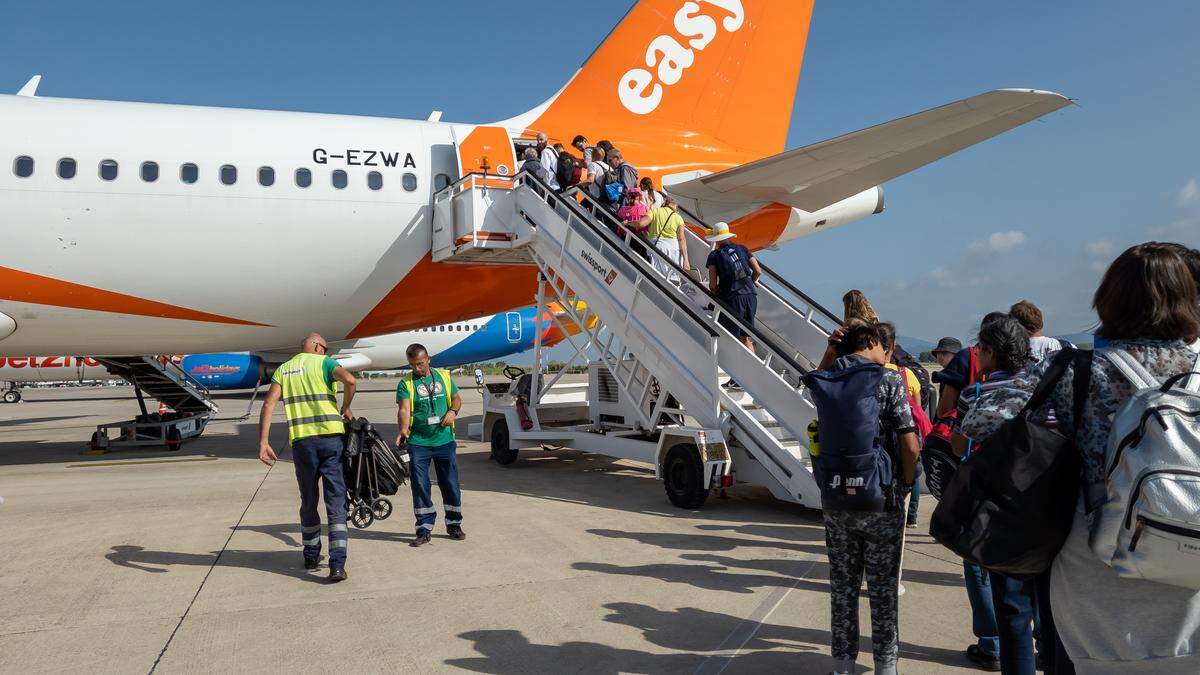
Greenpeace is primarily targeting low-cost airlines such as easyJet, Ryanair, Wizz Air and Vueling and their “aggressive and unfair pricing strategies.”
The Luxembourg-Milan route offered by easyJet is a case in point, as is the Barcelona-London route, which has the biggest price difference of the entire analysis (€14.99 for a plane ticket sold by easyJet compared with €389 for the train on a medium-haul journey, i.e. up to 26 times the price of the plane for a journey made on the same day).
These prices only exist because of tax-free aviation fuels and the fact that international air tickets are exempt from VAT. “Meanwhile, rail operators often pay full VAT, suffer from rising energy costs and high track access charges,” said Greenpeace.
The group is therefore calling for flights and rail transport to be subject to fair taxation, starting with a tax on business and first class flights, and a VAT exemption for international train tickets.
Towards a European rail ticketing system?
The NGO also puts forward the idea of a unified European rail ticketing system that would allow passengers to buy a single affordable ticket for the whole journey, rather than having to buy two or more tickets for different legs of an itinerary, which is generally more expensive.
It also advocates the introduction of affordable “climate tickets” – flat-rate passes valid on national and cross-border public transport.
“Every journey where the plane is cheaper than the train is a political failure,” said Schuster. “We cannot continue to reward the most polluting mode of transport. Europe must make rail the cheapest and easiest option – not the last resort.”
(This story was first published in Virgule. Translated using AI, edited by Cordula Schnuer.)