The Luxembourg Times is looking at the rising impact of financial influencers (finfluencers) and the quality of financial information shared on social media. In the eighth of ten instalments, finfluencers share their perspective.
“Finfluencers see themselves as advocates of financial education rather than promoters of investment products or services, even though their business models might suggest otherwise,” according to a paper by Marius Mölders at HHL Leipzig Graduate School of Management and others, which will be published in the Journal of Business Research in September 2025.
A survey of German-speaking finfluencers by Mölders and his colleagues found that the largest number (38%) dedicated between one and three hours per day on research and content creation, although 10% said they spent more than six hours daily. “Additionally, roughly one-third of the respondents reported receiving staff support for content creation and research,” the paper says.
Four personal finance personalities, the majority of whom do not consider themselves finfluencers, agreed to answer Luxembourg Times questions about their backgrounds and how they approach their craft.
How did they initially get into providing financial advice?
“When I was 19, I met a 47-year-old diesel mechanic who was a self-made millionaire,” said Canadian personal finance author Andrew Hallam, who has spoken at investing events in Luxembourg. “He taught me that I didn’t necessarily need a high salary to build wealth. I just needed to learn how to spend responsibly and invest effectively. That inspired me. At the time, I was a university student, studying to be a teacher. And teachers typically like to share what they learn.”
Hallam contributed to a Canadian finance magazine while working at a high school, teaching English, in Canada. After moving to Singapore, he started hosting financial seminars for fellow expat teachers, who needed to navigate a unique financial and retirement situation.
That led to his first book, Millionaire Teacher, first published in 2011. Two more books and public speaking engagements followed.
Grégory Guilmin started finfluencing in 2021, after working at a multi-family office and insurance company. He gives investing courses and runs the Les Tutos de Greg newsletter and Youtube channel (in French). “I wanted to share my knowledge and expertise with as many people as possible, which is why I started creating content,” he said.
What motivates them to share financial information online?
Guilmin said he wants to help “one million people get started in the stock market and become financially independent.”
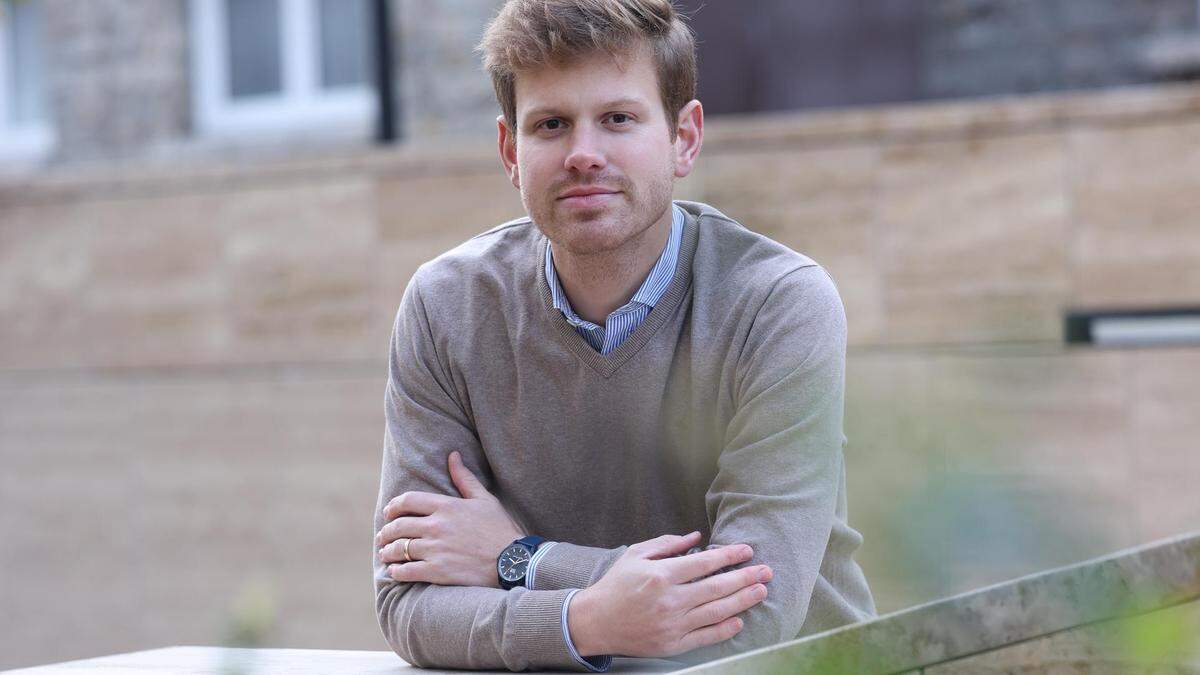
Sacha Heck said he founded the Smart Investor Luxembourg newsletter (in French and German) and Facebook group “to connect people and to show them in the end that everybody can manage money on their own without a degree or further studies, that it is not as difficult as they want you to believe.”
The old mindset that stocks are evil and only the rich can invest has to be overthrown
Sacha Heck
Smart Investor
“However, you have to understand a few things and make your first moves and find a broker with good conditions to set up everything,” Heck stated. “The old mindset that stocks are evil and only the rich can invest has to be overthrown, that’s what motivates most finfluencers.”
How can they be sure they provide good quality advice?
Guilmin has a master’s in business engineering and a doctorate in economics and management, with a focus on finance in both degrees.
“I’ve always enjoyed sharing concepts and information that I fully understand,” Guilmin said. “That’s why I take the time to read, to dig deep, and to ask questions when I don’t have the answer. My past experiences have also helped me build an extensive professional network that I can rely on whenever needed.”
“From the beginning, I was held to a high, old-school journalistic standard,” Hallam stated. His editors at MoneySense magazine and book publishers Wiley & Sons “insisted that everything be referenced to the highest standard.”
“I don’t consider myself a ‘finfluencer’,” said Romain Boyer, who posts about finance and investing in his spare time. “I have a relatively small audience and only post occasionally. That said, I’m aware that sharing anything related to finance or investing carries a degree of responsibility, no matter the size of your audience.”
Romain Boyer has appeared on the “Money Talks” podcast produced by the Association of the Luxembourg Fund Industry. © Photo credit: Christophe Olinger
“Even with a background in finance, I’m always careful to stay within an educational and personal perspective,” Boyer wrote in a message. “I don’t promote specific financial products or give investment advice. Most of what I share is based on my own experience, with the goal of supporting financial education.”
“When it comes to financial content on social media, I’ve personally learned a lot from creators who are thoughtful, transparent and focused on education,” Boyer added. “I believe they can play a valuable role in educating people and making financial topics more accessible.”
I regularly raise awareness about the risks of financial scams
Grégory Guilmin
Les Tutos de Greg
“Unfortunately, financial fraud is becoming increasingly common, and the rise of artificial intelligence won’t change that,” Guilmin warned. “I regularly raise awareness about the risks of financial scams” in his newsletter and social media posts.
How are they compensated for their finfluencing or personal finance education activities?
“You met me at Swissquote Bank Europe’s Investment Day conference [in March 2024],” Hallam told this journalist. “But I don’t typically speak at financial firms. Typically, I speak at non-finance related corporations” such as pharmaceutical, technology and hospitality firms.
“I also speak at plenty of international schools,” he said. “This lets me help teachers, students and their parents. […] I get paid a speaker’s fee for the talks, plus transport and accommodation,” Hallam stated.
What I share comes from personal use and interest, not from any commercial obligation
Romain Boyer
“I’m not paid for what I share, but as an ambassador for certain platforms I use and believe in, I may receive non-monetary benefits such as early access, test features or direct interaction with the team,” Boyer explained. “What I share comes from personal use and interest, not from any commercial obligation.”
“I earn income through training sessions tailored for families – for example, I’ve worked with four siblings and with two teenagers aged 13 and 17 – as well as through workshops in corporate settings,” Guilmin said. “For instance, I’ve led half-day workshops for tax advisory firms and accounting professionals.”
He also has a “digital training programme, which runs through automated processes.”
In addition, “sponsors pay me to feature their brands across the media I produce, including my newsletter, YouTube channel and other social platforms,” Guilmin disclosed. “Today, my revenue is fairly evenly split between family trainings and corporate workshops, the digital course, and sponsorships linked to my content creation.”
The Luxembourg Times sent messages to several other finfluencers via Linkedin and Tiktok, but they did not respond.
Read more from the series: