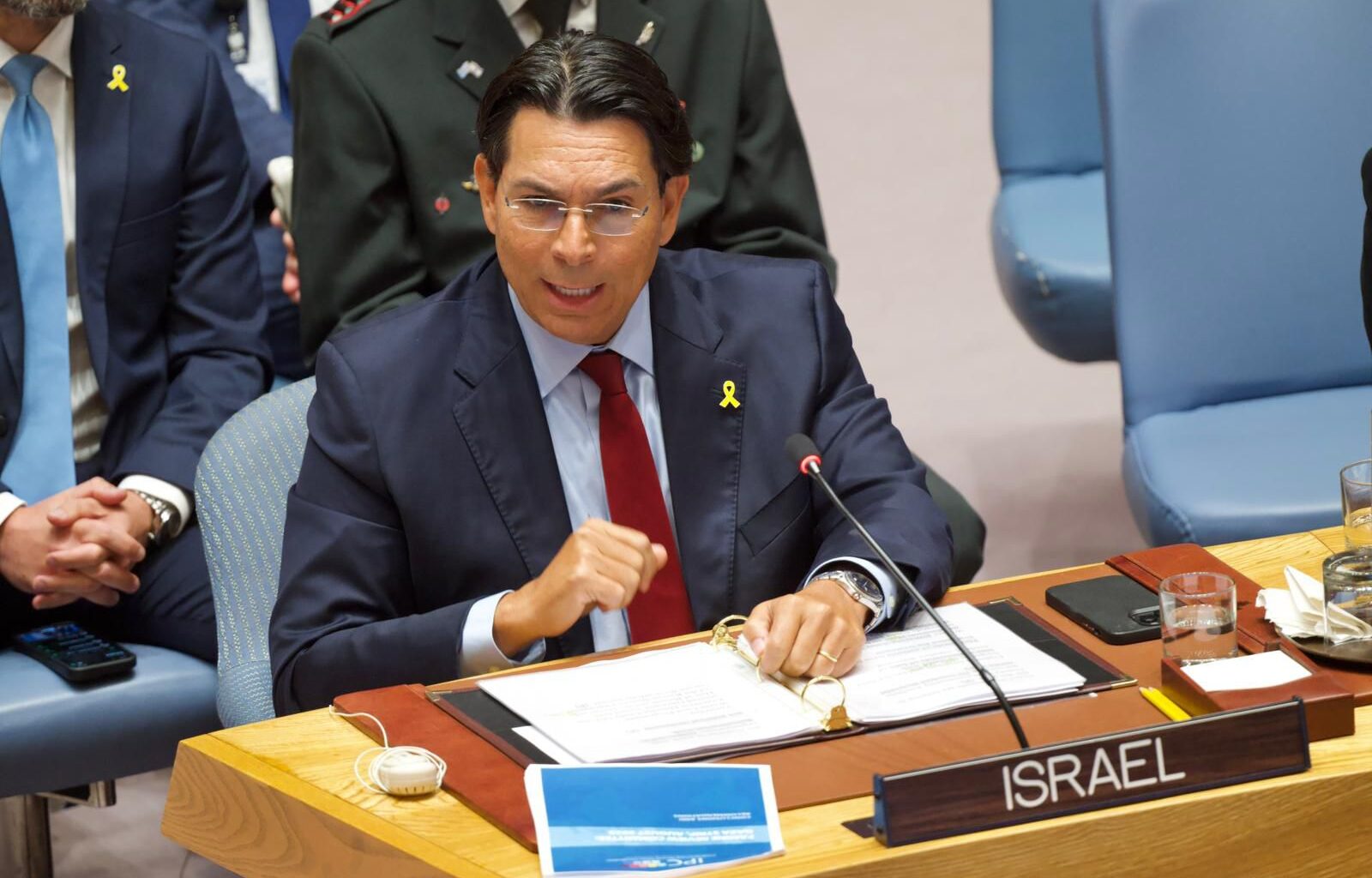
Even before Western leaders began announcing plans to recognize a Palestinian state at the United Nations General Assembly next month, the Israeli-Palestinian conflict was poised to be at the top of the confab’s agenda.
The Gaza war could well be nearing a grim second anniversary then, with dozens of hostages abducted during the Hamas-led attack that began the conflict still in captivity and the Palestinian death toll continuing to mount in the war-ravaged enclave.
“These countries want to show that they are doing something, so they blow off steam by coming up with these declarative statements,” Israeli Ambassador to the UN Danny Danon said in a Wednesday interview with The Times of Israel, referring to the plans of France, the United Kingdom, Australia and Canada to recognize the state of Palestine.
The Israeli envoy argued that the announcements won’t actually advance the establishment of a Palestinian state on the ground, which Jerusalem vehemently opposes. What they have practically impacted, though, are the negotiations for a ceasefire and hostage release deal in the Gaza Strip, Danon said.
“I have no doubt that these decisions are hindering the negotiations,” he asserted, noting that US Secretary of State Marco Rubio has made the same argument.
An Arab diplomat and a second source involved in the negotiations told The Times of Israel that Hamas’s new demands that led the US and Israel to pull out of hostage talks were submitted several hours prior to French President Emmanuel Macron’s announcement on July 24 that Paris would recognize a Palestinian state at the UN General Assembly in September.
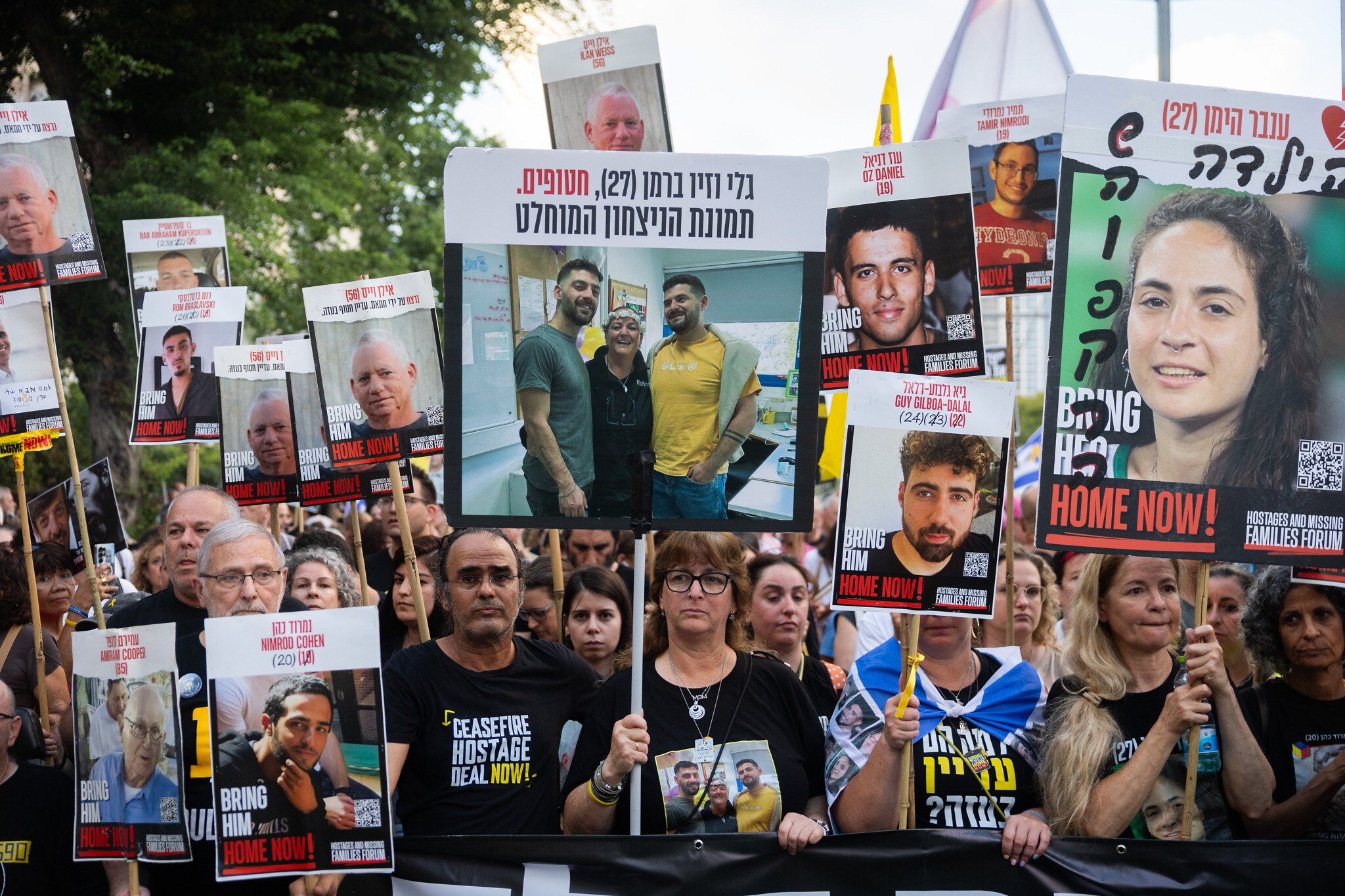
Families of hostages, living and dead, who are held in the Gaza Strip, and supporters, march in Tel Aviv calling for a deal to secure their return, August 26, 2025. (Chaim Goldberg/Flash90)
Since then, Egypt and Qatari mediators managed to coax Hamas to come down from its new demands and agree to their proposal for a phased ceasefire that is nearly identical to the one accepted by Israel last month, according to the two sources.
Israel has avoided responding to the proposal, though, and is moving ahead with plans for the IDF to take over Gaza City.
“Things are currently being considered and reviewed. We have agreed to many proposals to date, and the government will have to make a decision [on the latest proposal], while making sure that we are still able to achieve our war aims,” Danon said, apparently referring to Israel’s effort to defeat Hamas in addition to releasing the hostages.
Danon argued that the “disconnected” Western leaders planning to recognize a Palestinian state are the ones ignoring the ongoing ceasefire negotiations, with their announcements actually aimed at improving their respective domestic political standings.
Proponents of recognizing Palestinian statehood argue that it is a moral imperative amid the ongoing humanitarian crisis in Gaza and is a necessary step to revive prospects for a two-state solution by actualizing the establishment of a Palestinian state that they want to exist alongside Israel.
But with no Israeli buy-in, with Hamas still the most dominant Palestinian force in Gaza and Israeli steps that risk collapsing an already-weak Palestinian Authority in the West Bank, it’s unclear how recognition will shift dynamics on the ground.
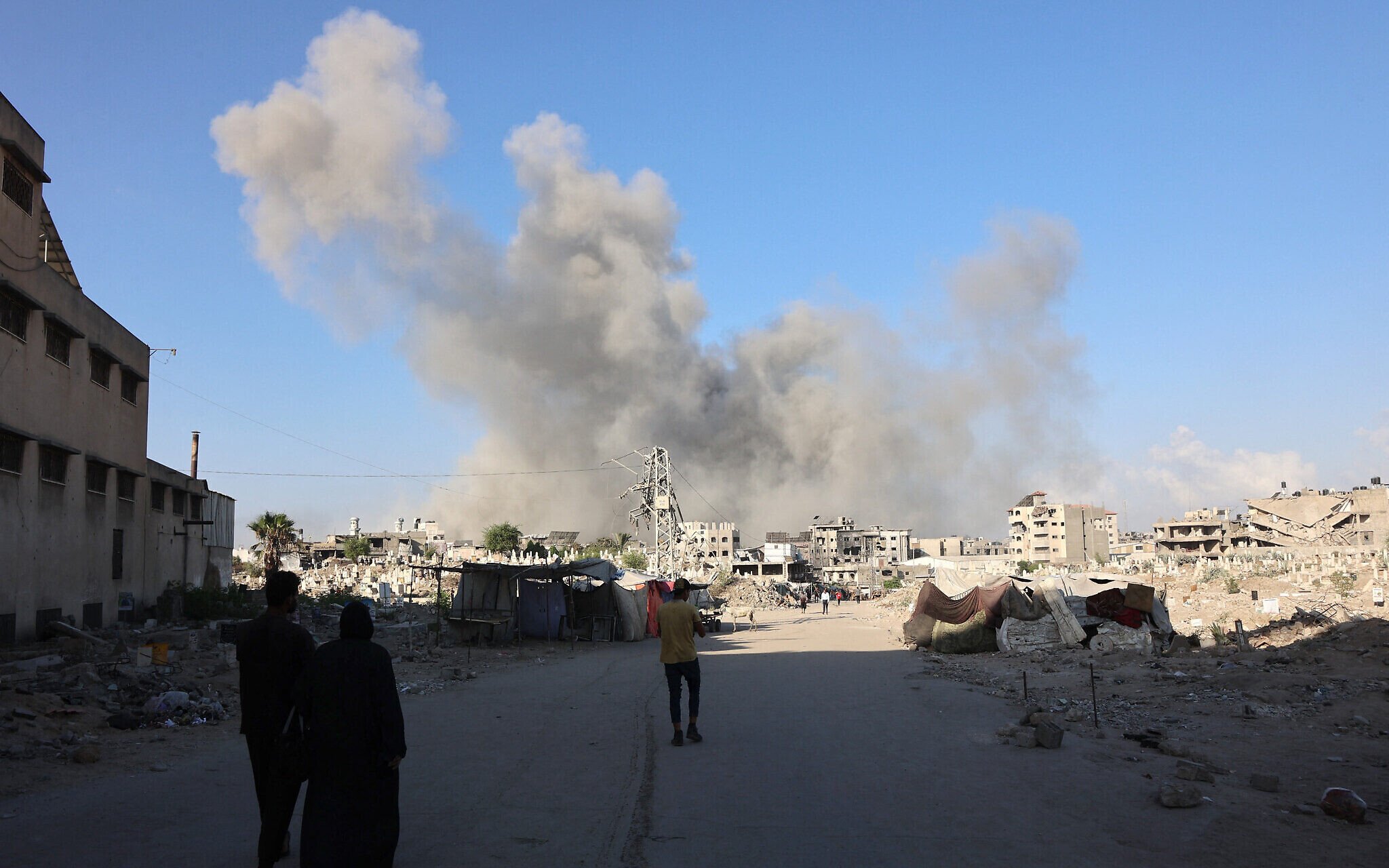
Smoke billows after an Israeli army operation in the Zeitoun neighborhood of Gaza City on August 26, 2025. (Omar Al-Qattaa / AFP)
How would Hamas be removed, if not by Israel?
Danon acknowledged that France’s statehood recognition initiative was coupled with a joint statement backed by the entire Arab League calling for Hamas to disarm and end its rule in Gaza.
“But when I asked my colleagues how exactly Hamas would be removed from Gaza, they didn’t have a good answer,” the Israeli envoy recalled.
The Biden administration secured commitments from several Arab countries to provide funding and troops to help secure and revive the Strip after the war, including by working to disarm the remnants of Hamas, a former US official and an Arab diplomat have told The Times of Israel.
However, that assistance from Arab countries remains conditioned on the Gaza reconstruction’s inclusion of a reformed Palestinian Authority, as part of the establishment of a pathway toward a two-state solution — while Israel vehemently opposes any PA role
Danon was dismissive of the Arab offer, suggesting international forces would not be willing to enter Gaza so long as Hamas is still active in the Strip.
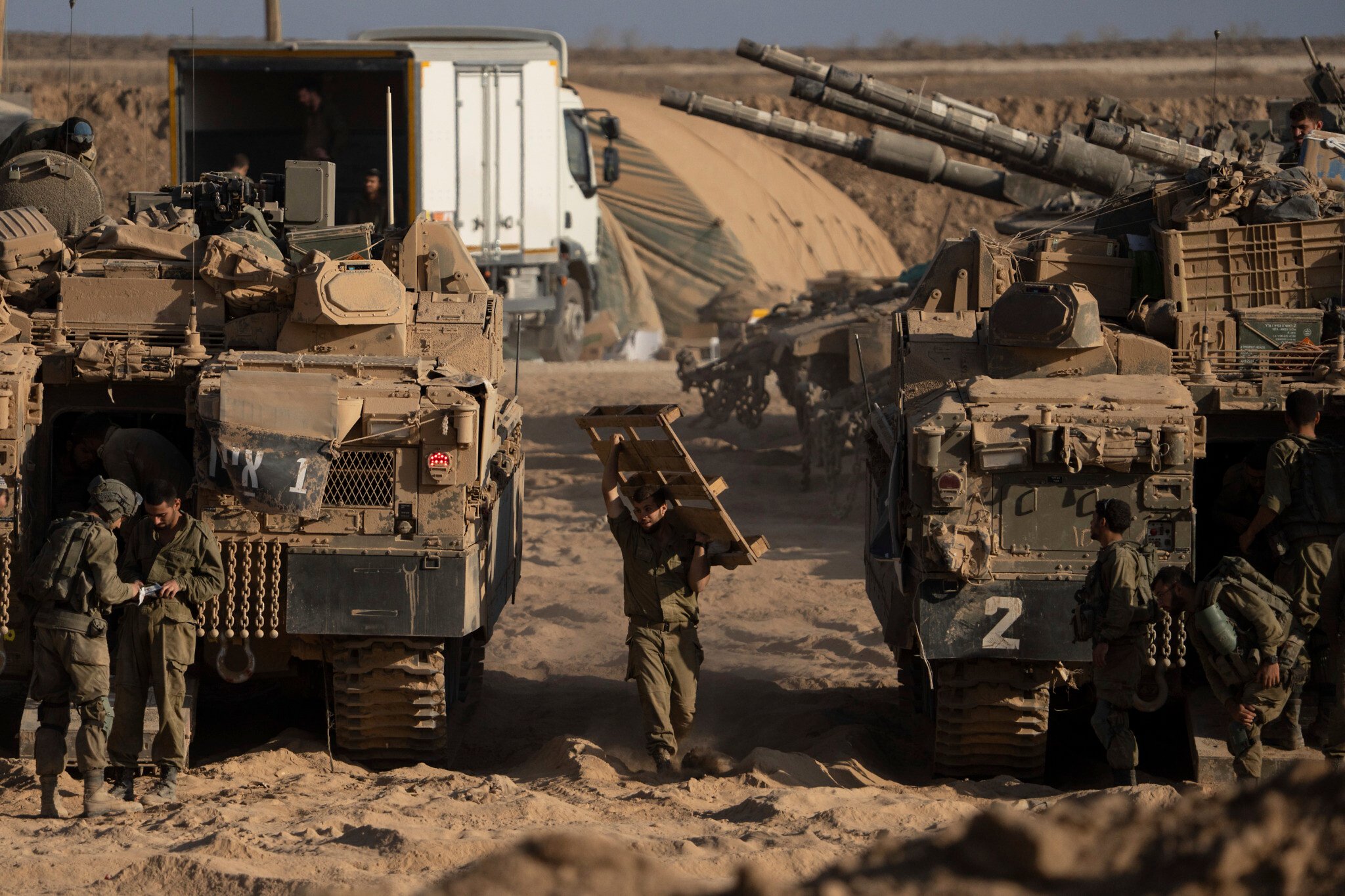
Israeli soldiers near their armored vehicles parked in a staging area near the Israeli-Gaza border, as seen from southern Israel, Tuesday, August 26, 2025. (AP/Maya Levin)
In the meantime, Israel is going about trying to eradicate Hamas on its own, with Prime Minister Benjamin Netanyahu framing an upcoming operation to take over Gaza City as being aimed at dismantling the terror group’s final stronghold. However, the premier characterized a 2024 invasion of Rafah in a similar manner, while Hamas has adapted from an organized militia to a guerrilla insurgency that aims to thrive off an extended Israeli presence in Gaza.
Danon insisted that Israeli military pressure on Hamas is what brought the terrorist organization to release hostages in the past — “Not declarations at the UN or discussions in the Security Council.”
“We are fighting so that today’s Hamas is not the Hamas of October 7, rather than issuing statements at the UN in an air-conditioned room,” he said.
‘Campaign run from Paris’
Danon surmised that the drive behind the latest plans to recognize a Palestinian state is not coming from Ramallah this time, but rather Paris.
“The campaign is being run from Paris, which is not only recognizing [a Palestinian state], but is also pressuring other countries” to do the same, Danon said, while highlighting that the recognitions have been hailed by Hamas as the “fruit” of its October 7 onslaught.
The Israeli envoy said he has been in touch with French officials who have kept Jerusalem informed of their plans “after the fact.”
As for whether any of the countries planning to recognize a Palestinian state next month could backtrack, Danon was not definitive. Still, he did note that countries such as Germany have resisted the trend, arguing that the conditions aren’t ripe and that it won’t improve the situation on the ground.

British Prime Minister Keir Starmer, left, and French President Emmanuel Macron hold a joint press conference in London, July 10, 2025. (Leon Neal/Pool via AP)
Asked whether there is a way to minimize the impact of the Palestine recognitions, Danon said Israel is in dialogue with various countries on the matter.
“We are conveying our messages, but it is clear to us that right now the atmosphere is a challenging one, given that we are almost two years since the events of October 7,” he explained. “We are fighting every day to remind the world about the hostages, about whom we hear less and less from other countries.”
No US-Israeli retaliation planned
Danon said Israel is closely coordinating with the US on the matter, but that there is no joint campaign aimed at sanctioning countries that choose to recognize a Palestinian state.
Washington has come out against the move and has criticized countries that have taken the step, but US President Donald Trump has also said the leaders involved have a right to their opinions on the matter.
Still, the Israeli envoy hailed the Trump administration’s effort to support Israel at the UN, including securing invitations for former Hamas captives and hostage families to brief the Security Council.
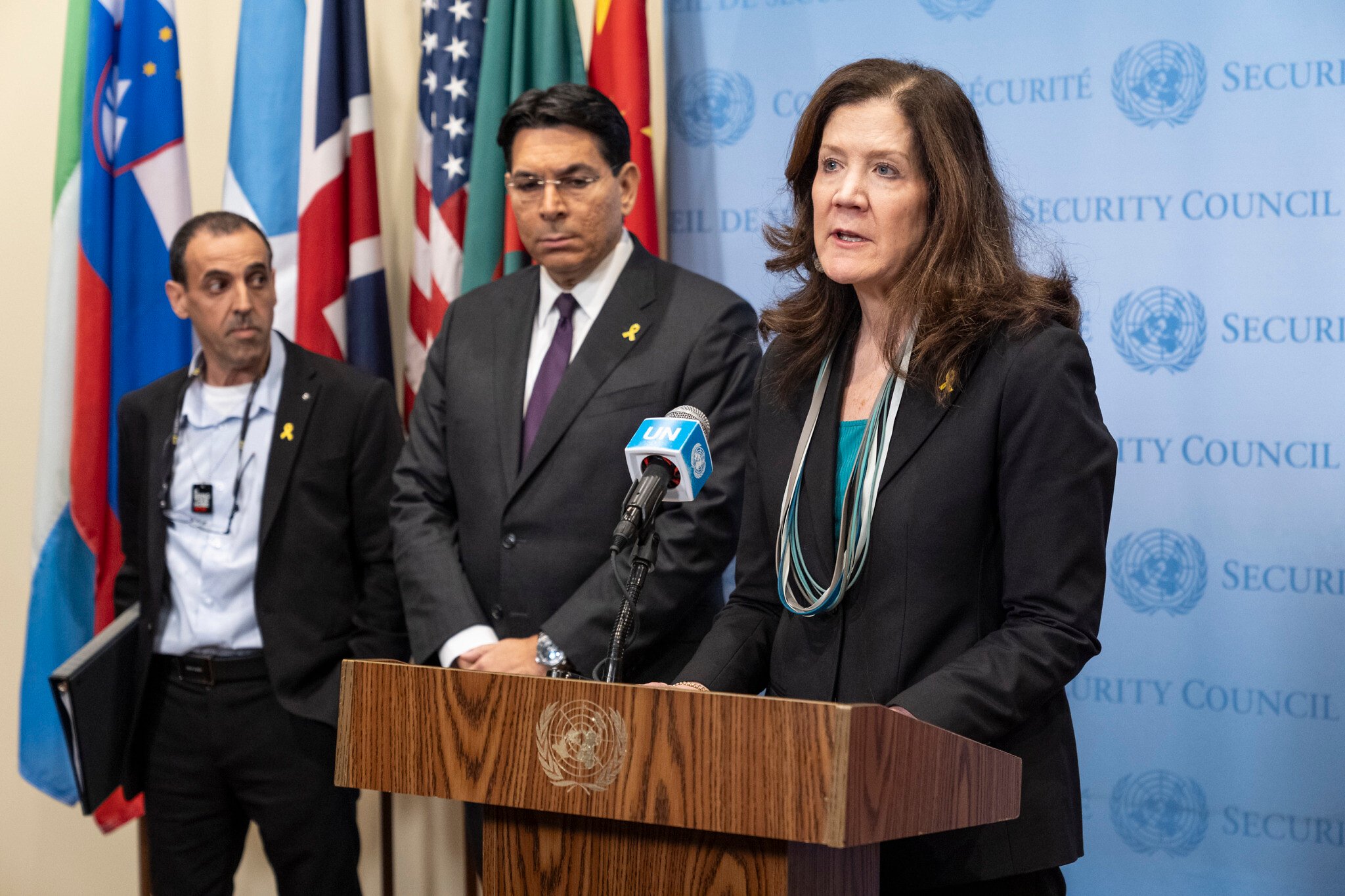
March 20, 2025, New York, New York, UN Ambassador Dorothy Shea of USA speaks to the press ahead of a Security Council meeting on the situation in the Middle East at UN Headquarters in New York (Credit Image: © Lev Radin/Pacific Press via ZUMA Press Wire)
While the Biden administration took similar steps, Danon argued that Israel had to work harder to secure its support than it has since Trump took office.
The Biden administration blocked repeated Security Council resolutions and joint statements calling for an immediate ceasefire in Gaza, but allowed two measures opposed by Israel to pass — one that called for increasing aid into the Strip and another that called for an unconditional hostage release and ceasefire during the Islamic holy month of Ramadan in March 2024.
“It felt sometimes as if it was costing them [to support the Israeli government’s positions]. It wasn’t easy for them,” Danon maintained. “With the current administration, you can see that they’re genuinely proud to be supporting us, and the decision to do so is more natural for them.”
Ignoring Smotrich and Ben Gvir
Ties with just about every one of Israel’s other allies have not been nearly as warm as the Gaza war has dragged on, with many of them taking particular issue with remarks by National Security Minister Itamar Ben Gvir, Finance Minister Bezalel Smotrich and other far-right members of Netanyahu’s government who have spoken in favor of clearing the Strip of Palestinians and building Israeli settlements in their stead.
Danon pushed back on the notion that countries should be citing such comments when justifying their stances against Israel, saying “they know better than that.”
“They know politics, the parliament and the system in Israel; and they know that what ultimately counts are the decisions made by the cabinet,” Danon said. “Therefore, it is convenient for them to focus on various statements, but they know well that those are not what has an impact.”
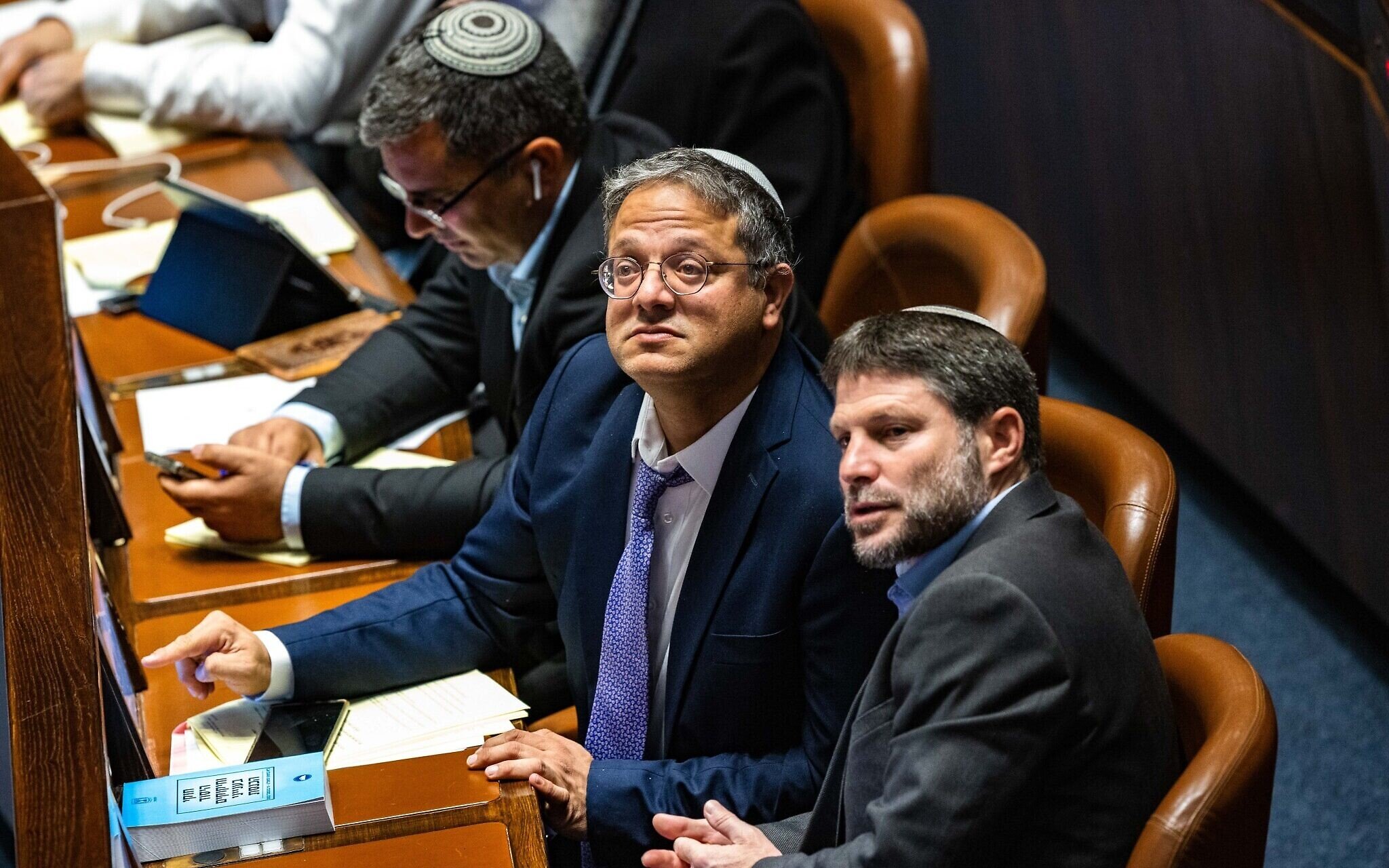
Religious Zionism party party chief Bezalel Smotrich (right) and Otzma Yehudit party chief Itamar Ben Gvir are seen during a vote at the Knesset in Jerusalem, on December 28, 2022. (Olivier Fitoussi/Flash90)
However, Netanyahu’s critics retort that he is beholden to those same far-right coalition partners to keep his government intact and that he has prosecuted the war to date in a manner that leaves open the option that their hardline agenda will be realized.
The premier himself has said he opposes establishing settlements in Gaza, but he has also expressed support for a Greater Israel and backs “voluntary migration” of Gazans, which critics claim is a euphemism for ethnic cleansing.
Still, Danon pushed back against those who are focusing on Israel’s hardline ministers, arguing that “the government is responsible.”
“Even though we decided to pursue an aggressive [military] policy, we did it in an orderly manner and have minimized harm to the civilian population by allowing them to evacuate and for a humanitarian response to be stood up,” he said.
‘Hamas hunger campaign’
Rights groups have pointed to repeated instances where Israeli strikes have killed scores of civilians, while the IDF maintains that it takes steps to avoid civilian casualties even as Hamas hides among them.
But Israel also instituted a 78-day blockade from March through May that international organizations say has brought Gaza to the brink of widespread famine.
Pressed on whether that blockade was a mistake, Danon faulted a “successful Hamas campaign” aimed at convincing the international community that there is widespread hunger in Gaza.
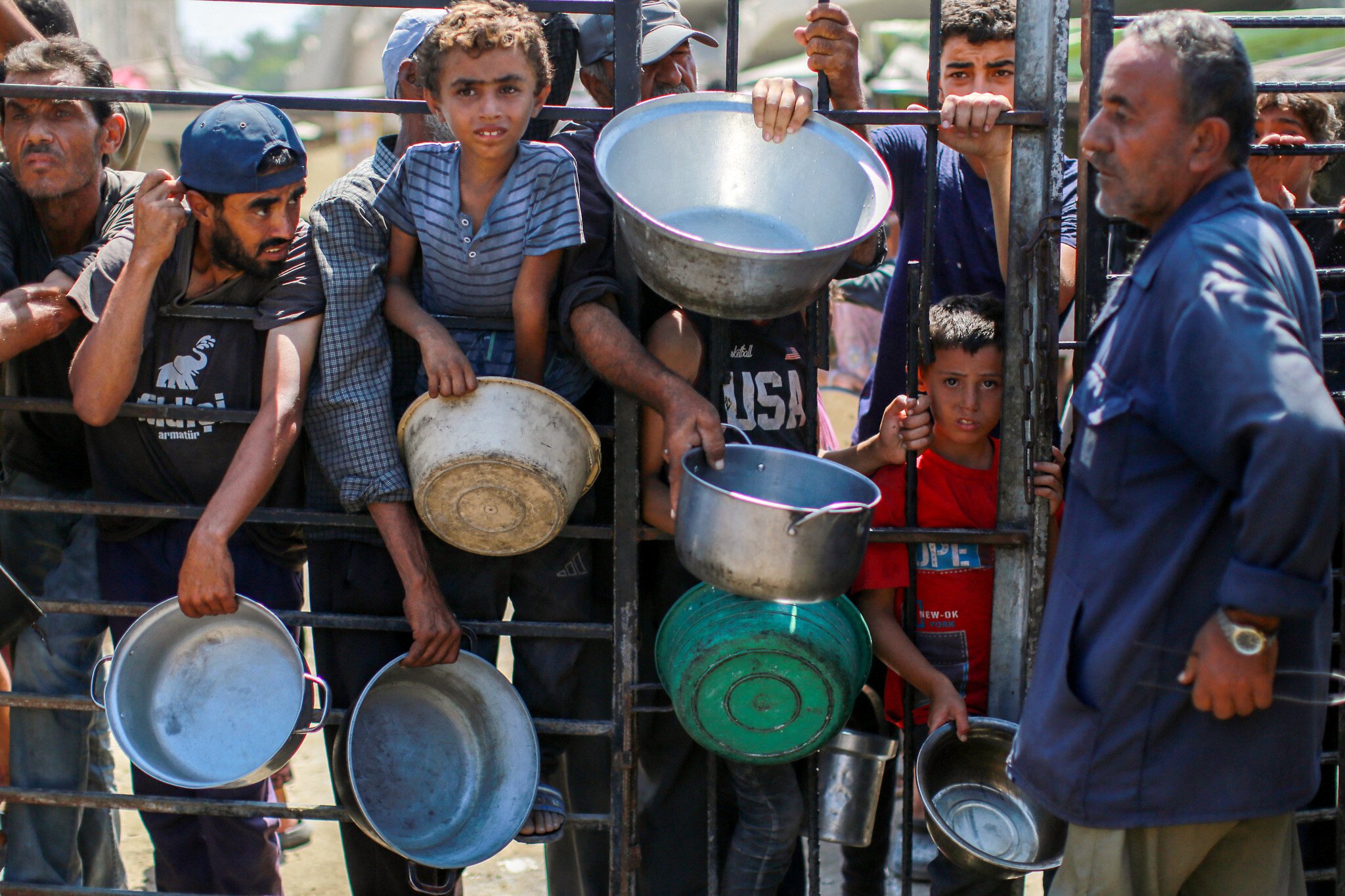
People wait for rice from a charity kitchen providing food for free in the west of Gaza City, on August 28, 2025. (Bashar Taleb / AFP)
He likened it to the effort to portray Israel as intentionally targeting hospitals, without mentioning that Hamas uses them for military purposes.
He defended the decision to implement the blockade, arguing that Israel believed in March that enough aid had entered the Strip during the six-week ceasefire that preceded the move.
“We see today that even when the crossings are open and there is no food shortage, Hamas’s hunger campaign continues,” Danon said. “I assume they would have run a similar campaign, regardless of whether we had made the decision” to halt aid.
Fatigued Diaspora Jewry
On top of Israel’s fraying diplomatic standing has been the war’s strain on Jerusalem’s ties with Diaspora Jewry, something to which Danon has been more exposed, given his posting in New York City.
“I definitely recognize that there is fatigue,” he said. “Fatigue exists both in Israel and among friends of Israel and Jewish communities after two very, very intense years.”
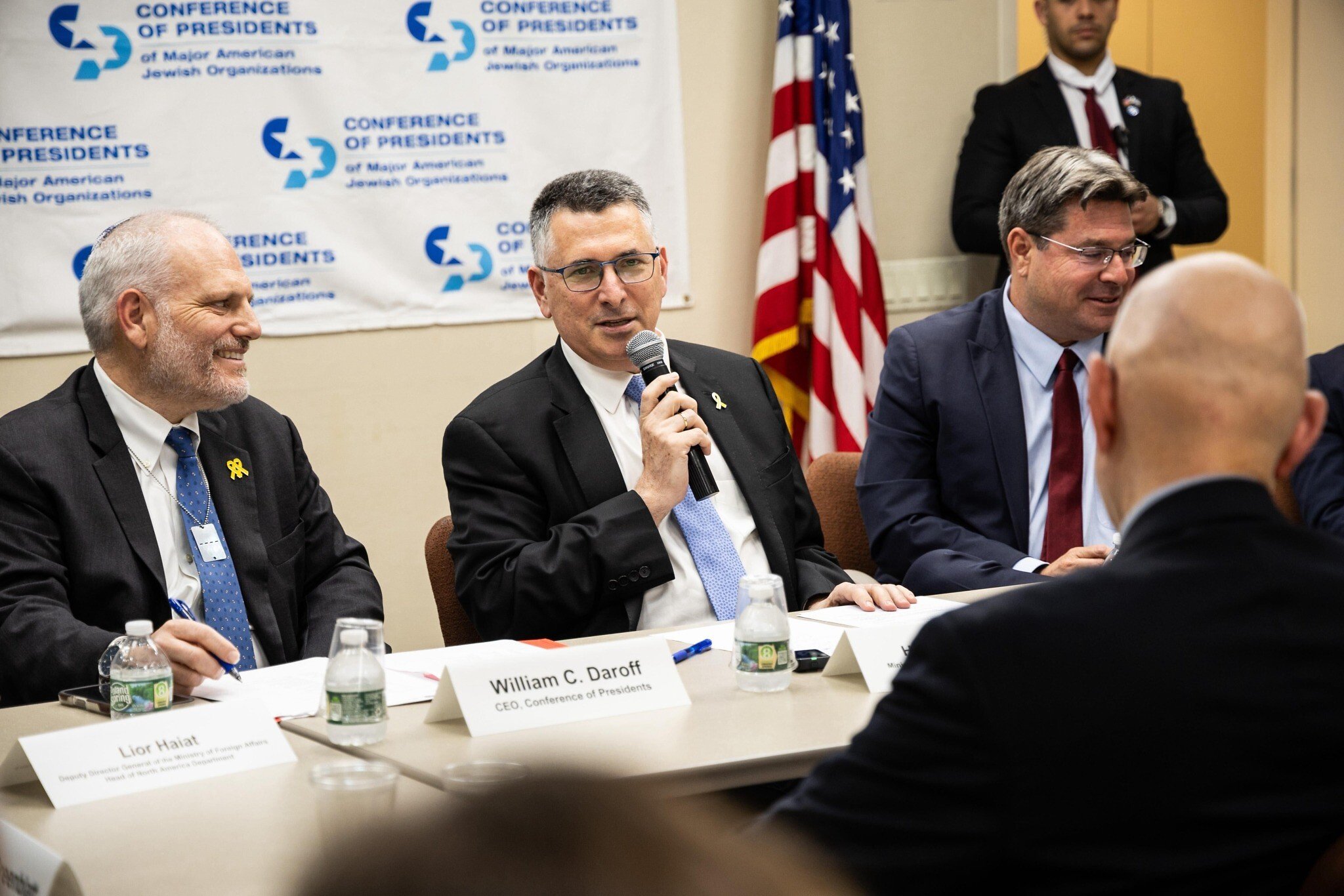
Foreign Minister Gideon Sa’ar speaks at the Conference of Presidents of Major American Jewish Organizations in New York, in an image released on August 26, 2025. (Ohad Kab/Foreign Ministry)
“In my conversations with [Jewish community] leaders, I tell them that this is indeed a challenging time but that we need to demonstrate strength and patience and continue to fight” to defend Israel’s war, Danon added.
Danon said he’d be taking that approach to the upcoming General Assembly high-level week that he expects will be “hostile and challenging” for Israel.
“If previous General Aassembly’s focused on Ukraine or South Sudan, I think it’s clear that this time all eyes will be on what’s happening by us,” Danon said, adding that Israel was using the opportunity to raise the plight of the hostages by having their families come to the UN to “remind the world why we are continuing this war.”