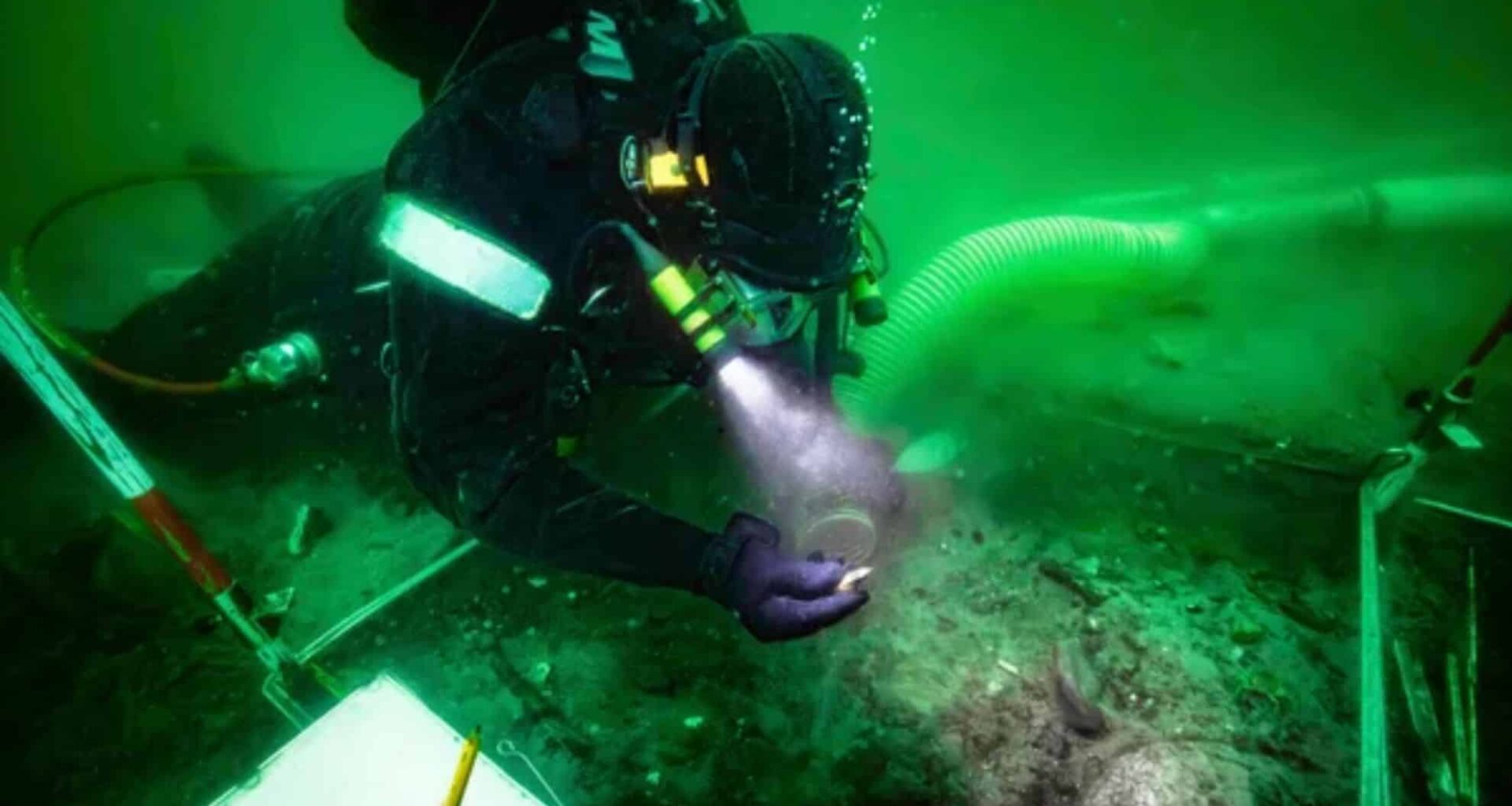
A remarkable discovery off the coast of Denmark has revealed a Stone Age village that was lost to rising seas approximately 8,500 years ago. Researchers conducting excavations in the region uncovered well-preserved structures, artifacts, and natural remains, providing an unprecedented glimpse into life during this formative period. The find, reported by CBS News, offers new insights into how early humans adapted to changing coastlines and environmental conditions in northern Europe.
Uncovering A Submerged Settlement Frozen In Time
Archaeologists describe the site as a rare example of a coastal settlement preserved under layers of sediment and water, creating an environment almost untouched for millennia. “Here, we actually have an old coastline. We have a settlement that was positioned directly at the coastline,” said Moe Astrup, one of the lead researchers. “What we actually try to find out here is how was life at a coastal settlement.”
The conditions under which the village was submerged proved essential for preservation. The oxygen-free layers beneath the rising sea prevented organic material from decaying, leaving wooden structures, plant remains, and other artifacts intact. “It’s like a time capsule,” Moe Astrup explained. “When sea level rose, everything was preserved in an oxygen-free environment … time just stops.”
Preservation Of Wood, Plants, And Artifacts
Excavations revealed extensive wooden structures from houses and other community buildings, alongside preserved hazelnuts, seeds, and other botanical remains. “We find completely well-preserved wood,” Astrup added. “We find hazelnut. … Everything is well preserved.” These discoveries allow researchers to reconstruct both the diet and material culture of the settlement, offering a vivid picture of Stone Age daily life.
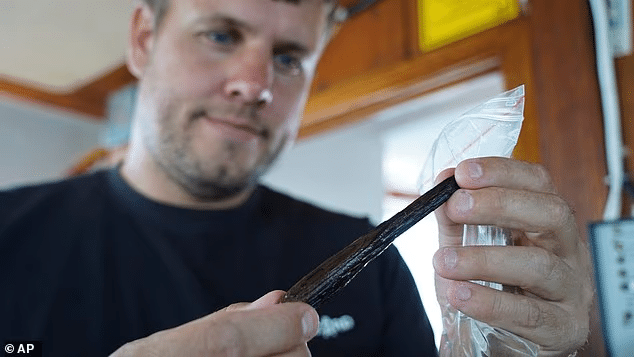 A small wooden tool. (AP)
Dendrochronology studies provided even more precise insights. Jonas Ogdal Jensen, a dendrochronologist at the Moesgaard Museum, examined sections of Stone Age tree trunks and said, “We can say very precisely when these trees died at the coastlines. That tells us something about how the sea level changed through time.” Such analyses are key to understanding not just individual settlements, but broader environmental trends that shaped prehistoric human communities.
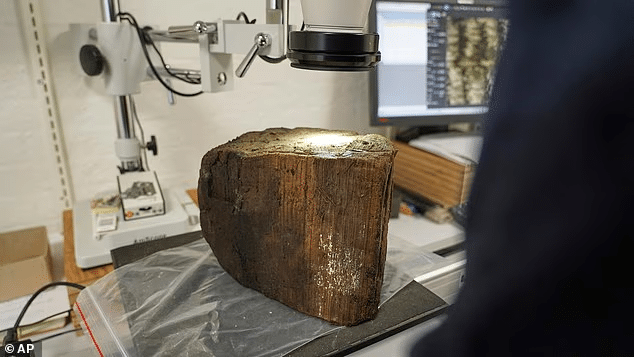 Image: AP
How Rising Seas Reshaped Prehistoric Landscapes
The site offers a rare perspective on the effects of post-glacial sea level rise on human habitation. As seas encroached on low-lying coastal areas, settlements were abandoned or adapted, leading to new patterns of migration and subsistence. “It’s hard to answer exactly what it meant to people,” Moe Astrup said. “But it clearly had a huge impact in the long run because it completely changed the landscape.”
By combining archaeological excavation with environmental science, researchers are piecing together how these early communities interacted with their changing environment. Every artifact, piece of wood, and plant remain contributes to a growing understanding of the resilience and adaptability of humans during the Stone Age.