For men, there was a time not too many decades ago, when wearing a T-shirt meant donning a loose-fitting, logo-ed, cotton garment so comfortable it was hard to tell it from something he might have slept in.
Then along came Giorgio Armani. He introduced fitted T-shirts in subtle, nuanced shades — no longer plain grey, but “greige” — and paired them with nonchalant jackets, another of his innovations. Suddenly, casual chic menswear became a global trend, worn by Italians and film and TV stars worldwide.
But nowhere was the the shift in men’s attire felt more strongly than in Italy. Here, Armani offered men options not for sloppy T-shirts, but for the constrictive suits and starched shirts that formed the workaday uniform for office stiffs.
“He revolutionized the way men were permitted to dress in Italy while still keeping the love of style,” said Leone Pietropaolo, a salesperson for a competing brand outside the Armani store in Rome.
In the wake of his death, the outpouring of tributes across Italy reflects not only the respect Armani commanded, but also the recognition of Made In Italy fashion as a vital sector for the country’s economy and exports worldwide.

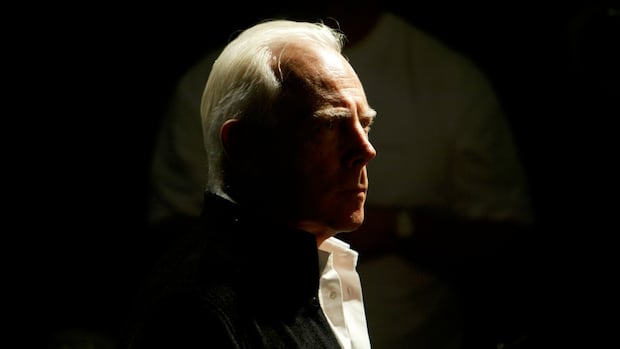
Giorgio Armani, the Italian designer who was one of the most recognizable names and faces in the global fashion industry, has died, his fashion house confirmed. He was 91.
A ‘teacher of elegance’
Born in Piacenza in 1934, Armani initially studied medicine but moved into fashion while working at Milan’s Rinascente department store. Despite lacking formal training, by 1965 designer Nino Cerruti had entrusted him with a collection. In 1975, with friend and partner Sergio Galeotti, he founded the Giorgio Armani brand. Weeks later, his debut collection at Milan’s Plaza Hotel marked him as a major force in fashion. He was 41.
All the way through to his 90s, Armani remained hands-on. In June, too frail to attend his last show, he followed rehearsals via FaceTime and chastised staff for starting late. At the time of his death, he was preparing the September runway to mark 50 years in fashion.
“He wasn’t just a fashion icon — he was a teacher of elegance,” said Emily Haberi, designer at a haute couture boutique she owns with her mother in Rome. “His death marks the end of an era.”
Armani also reshaped women’s fashion, creating designs that freed them from fleeting trends and introducing a more relaxed and androgynous alternative to the rigid office “power suit.”
“I was the first to soften the image of men, and harden the image of women,” he wrote in his 2015 book. He was quick to capitalize on women’s growing presence in the workplace, as well as a changing, more fluid take on masculinity.
In 2020, he complained to the Italian news agency ANSA that other designers “violate” women by forcing them to constantly change styles and disregard their needs. His work, he insisted, combined elegance with practicality, reflecting a core Italian value: fashion that respects the wearer and the craft.
Fashion as national pride
And in a country where fashion can feel more like a moral imperative than a mere expression of taste, owning an Armani product — from a jacket or pants to bags or sunglasses — is not a mark of elitism or being a fashion victim, but a sign of national pride and, daresay, common sense. Why wouldn’t you own the best design made in your own backyard?
Italian politicians were quick to react to news of the designer’s death. In a statement, Italian President Sergio Mattarella called Armani a “maestro of style and a symbol of Italian creativity.”
Prime Minister Giorgia Meloni described him as “an icon and an indefatigable worker,” underscoring a trait widely admired in Italy: his tireless professionalism, rising from a department store employee to the head of a multibillion-euro fashion empire.
Indeed, Armani’s designs and strategy were integral to giving Italy as a whole its reputation in the fashion industry today. His company was one of the first Italian brands to expand into new markets, establishing a presence in Asia, and creating new, less expensive fashion lines to reach more demographics. Others, like Prada and Dolce & Gabbana, would later follow a similar strategy. Meanwhile, his popularity beyond his home countryshot up when he dressed Richard Gere for 1980’s American Gigolo, kicking off a long-running link with Hollywood.

Movie stars Richard Gere, left, and Lauren Hutton, were both dressed in Armani clothes when they starred in the film American Gigolo, seen in October 2003. (Richard Lewis/The Associated Press)
Beyond clothing
Armani’s influence extended beyond clothing, as well. During the COVID-19 pandemic, he cancelled live runway shows before others and redirected production to support health-care needs. In 2022, he paused a show in respect for victims of the Ukraine war.
At his death, Armani’s empire was worth over $10 billion US, which also included accessories, home furnishings, perfumes, cosmetics and even chocolates, ranking him in the world’s top 200 billionaires, according to Forbes. The brand recently opened a restaurant in Beijing — its first in China — serving, as expected, Italian food.
Milan, the city that Armani helped turn into the Italian fashion capital, will observe a day of civic mourning on Monday, Sept. 8, the day of his funeral.
Mayor Giuseppe Sala said Armani “was and will always remain one of the greatest representatives of Italian and Milanese fashion worldwide.”