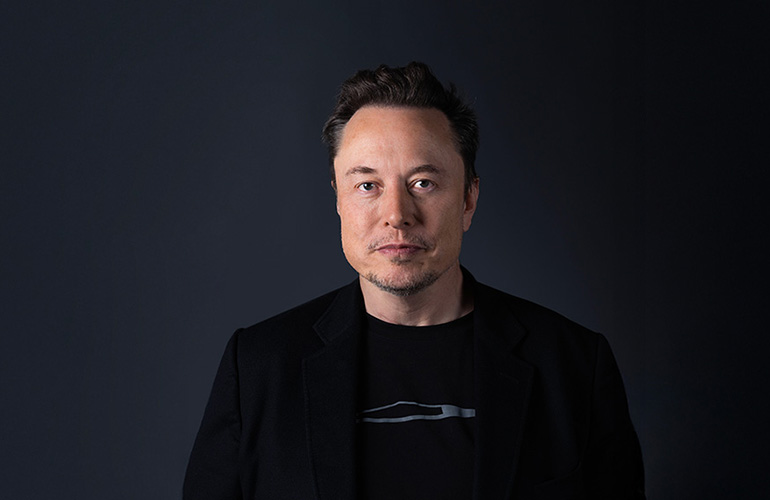
Elon Musk [Image from Tesla]
Months after nationwide showroom protests over Elon Musk’s now-ended role in President Trump’s Department of Government Efficiency, a little over four months, from Jan. 20 to May 30, 2025, and a 13% year-over-year slump in Q2 deliveries to 384,122 vehicles, Tesla is trying to pivot the narrative to development-led profits. The board is asking shareholders to back a performance-only CEO award that outside media values at up to $1 trillion. That package ties Musk’s payout to commercializing robotaxis and Optimus (pictured below) and to stretching market value toward $8.5 trillion: Tesla began piloting robotaxi rides in Austin in June, and this week opened an iOS waitlist to expand access, while the board’s plan would pay only if Musk clears 12 milestones that start at a $2 trillion market-cap threshold and culminate at $8.5 trillion, alongside product goals like one million robotaxis and one million humanoid robots.
That pivot landed amid a very public break between Musk and Trump that followed Musk’s departure. Musk criticized Trump’s signature Big Beautiful Bill as bloated while Trump retorted that Musk had “lost his mind.” Musk’s non-appearance at the Sept. 4 White House tech dinner was the latest in the saga.
R&D revamp overview
Tesla’s Sept. 5 shareholder letter casts Master Plan Part IV: Sustainable Abundance as the organizing theme, shifting value creation to AI-in-the-physical-world, FSD, Optimus and robotaxis, backed by a board-run retention process and proxy items for the 2025 meeting.
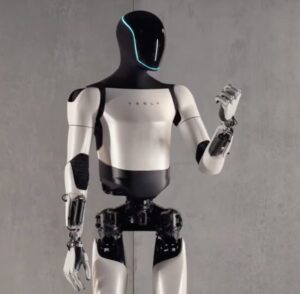
Optimus
Product and supply anchors (2025)
Company materials state Tesla launched limited robotaxi service in Austin in June 2025 and signed a nearby Samsung foundry deal to support future AI chips; an iOS waitlist is now live as the service scales in stages. Texas has also moved to a formal statewide permit framework for driverless AV operations effective Sept. 1, 2025, reinforcing that near-term operations remain staged/monitored.
How the proposed 2025 CEO award measures R&D outcomes
The board proposes 423.7M performance-based restricted shares (~12% of TSLA) in 12 tranches. Each tranche requires (i) a market-cap step from $2T up to $8.5T, tested on 30-day and 6-month averages, and (ii) an operational/financial gate from a defined set—20M cumulative vehicles, 10M paid FSD subscriptions, 1M robotaxis in commercial operation, one million Optimus units, and an Adjusted EBITDA ladder topping at $400B. Earned shares vest 7.5–10 years, with continued service conditions.