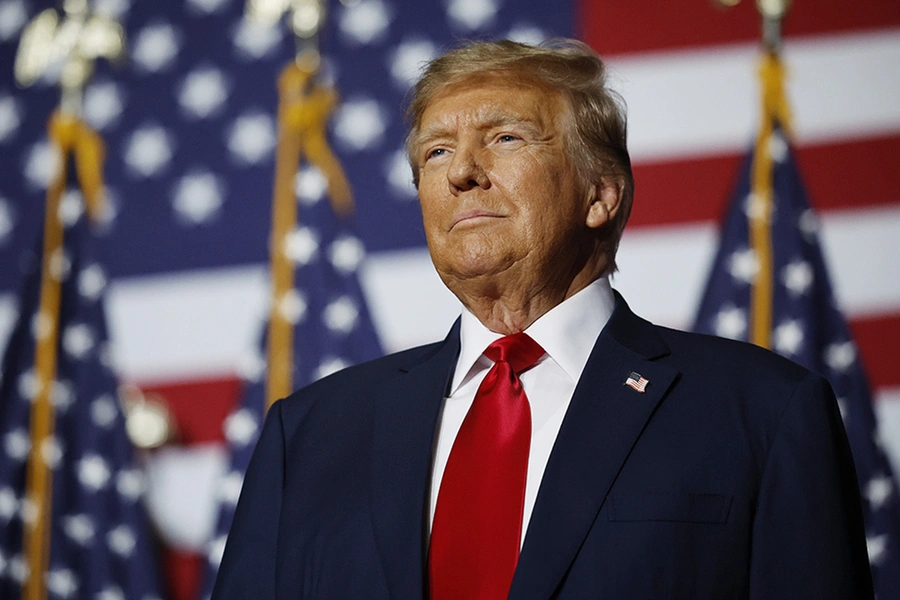
WASHINGTON: US President Donald Trump signed an executive order providing some tariff exemptions to trading partners. The modifications regarding exemptions for countries with US trade deals will take effect on September 8, 2025.
The order modifies the scope of the reciprocal tariffs first announced on April 2, 2025, while also establishing a framework to implement current and future trade agreements with US trading partners.
On April 2, Trump imposed historic global reciprocal tariffs to address the national emergency caused by the United States’ large and persistent trade deficit. This deficit is largely driven by the absence of reciprocity in trade relationships and harmful policies from other countries.
These tariffs applied to nearly all imports, with exceptions for specific product classes, including those subject to 50 U.S.C. § 1702(b), articles under other tariff regimes such as pharmaceuticals, semiconductors, and lumber, as well as items listed in Annex II of Executive Order 14257.
Now, the President has deemed it necessary to revise the scope of Annex II to better address the national emergency and safeguard America’s economic and national security. The new order has identified some categories for zero import tariffs from “aligned partners” who sign trade deals with US.
As per the order, certain tariff exemptions will be offered to trading partners that finalize agreements on industrial exports, including nickel, gold, other metals, pharmaceutical compounds, and chemicals. Consequently, some goods, such as bullion-related items, specific critical minerals, and pharmaceutical products currently under pending Section 232 investigations, have been added to Annex II and will now be exempt from reciprocal tariffs. Conversely, items like aluminum hydroxide, certain resin, and silicone products have been removed from Annex II and will now be subject to tariffs.
President Trump is taking decisive action to bolster the United States’ economic position on the global stage and to protect American workers by adjusting the range of products subject to reciprocal tariffs.
The Executive Order also introduces a new “Potential Tariff Adjustments for Aligned Partners (PTAAP)” Annex, thus providing a path for future trade deals. . This includes products that may qualify for Most-Favored-Nation (MFN) tariff rates under future reciprocal trade and security agreements.
“Additionally, to advance reciprocal trade, the President has introduced a new “Potential Tariff Adjustments for Aligned Partners” (PTAAP) Annex, which outlines products that may qualify for Most-Favored-Nation (MFN) tariff treatment if a reciprocal trade and security agreement is reached. These products include certain aircraft and aircraft parts, specific generic pharmaceuticals and their ingredients, critical natural resources, and select agricultural goods not produced in sufficient quantity domestically. For a trading partner to benefit from reduced tariffs under the PTAAP, they must enter into an agreement with the U.S. that addresses the trade deficit emergency and demonstrates commitments to resolving key trade concerns. The authority to implement such agreements has been delegated to senior officials, including the Secretary of Commerce and the United States Trade Representative,” the order said.
Agencies