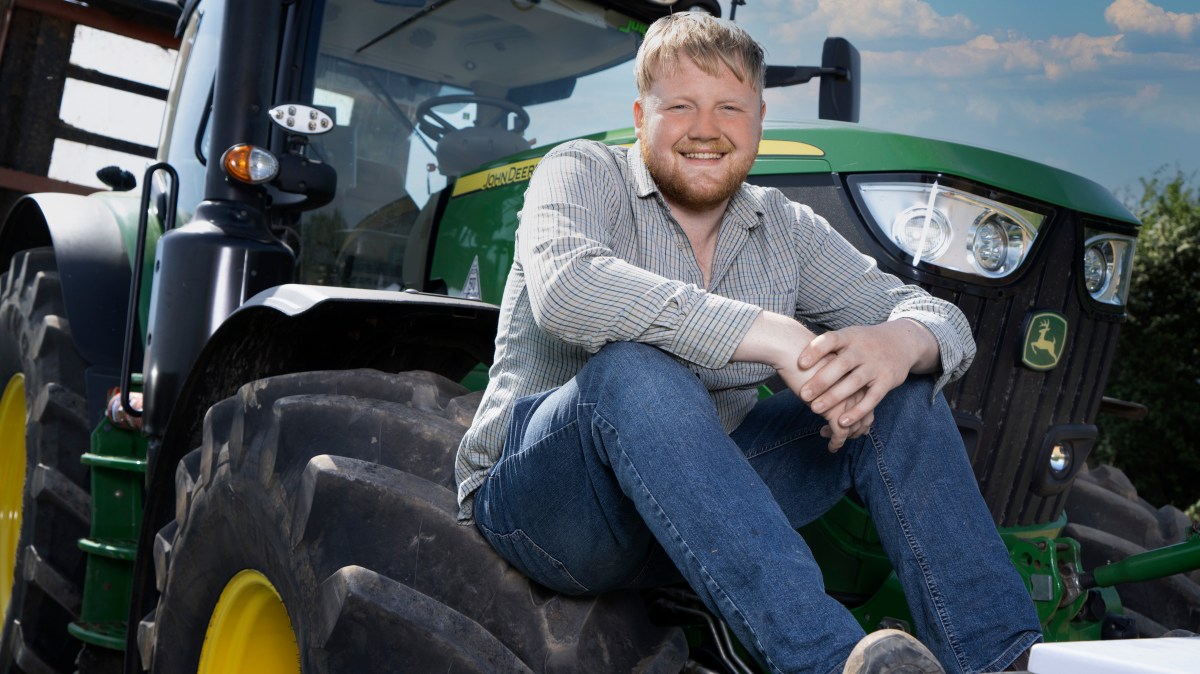
Some people are impossible not to like. Kaleb Cooper, humble Oxfordshire farmer and scene-stealing star of Clarkson’s Farm, is one such. From first saying hello in the pub in Chipping Norton to saying goodbye two hours later (“I’m off to do some muckspreading!”) he is delightful company. He’s a smart guy too. He loves farming, but he loves being an entrepreneur as much, maybe more.
It wouldn’t be fair to say he has milked his TV popularity, because after advice from Jeremy Clarkson he has turned down a lot of offers. But he has certainly taken shrewd advantage.
Besides doing contract work with 50 or 60 farmers, he’s done an “audience with” tour, he’s set up a website selling meat, he has a share of Clarkson’s brewery, he’s about to launch a clothing line and (the occasion for this interview) he’s written a children’s book.
And he’s just finished filming series five of Clarkson’s Farm. Busy man. Oh, and he’s just had his third child with his partner, Taya. Oscar is four, Willa is two and new arrival Ashton is mere days old. And their dad is only 27.
I thought you Gen Zers were supposed to be workshy, I say. “Workshy? I wish! I work 18 hours a day. That’s why I look like this.” With his blond hair, guileless baby blue eyes and ruddy cheeks, he doesn’t actually look older than his years, but he is wiser than most of the youngsters I come across.
He attributes this to his parents’ acrimonious divorce (“they still hate each other”) when he was 12. “That grew me up quickly. I wanted kids early, and I’ve been with Taya for ten years. So I thought, ‘If we have kids now, I’ll have more time to be a businessman in my thirties.’”
Is it his ambition for Oscar to farm? “Oh yeah, 100 per cent. I’d never force him, but he’s showing an interest.” Will they have more children? “I hope not, but I’m an easy-calving bull. You probably don’t know what that is,” he adds. I tell him I can take a wild guess.
Cooper worked on farms from a very young age. For his 13th birthday his mum bought him three chickens, and he went into the egg business, for several years only attending school on a Friday — to sell eggs. His mother was routinely fined for her son’s nonattendance. He was making so much money selling eggs he covered the fine.
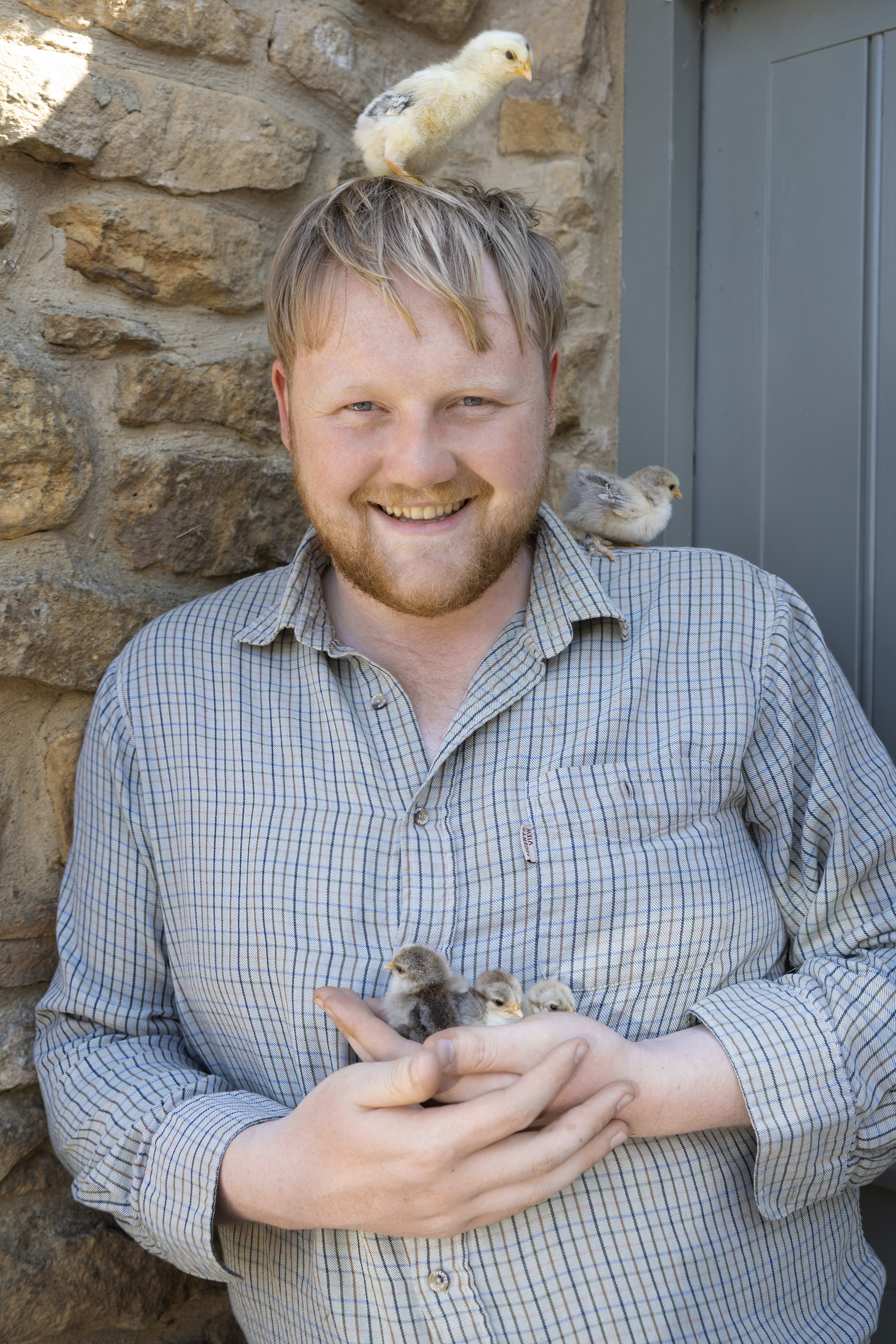
“I was put on this earth to grow food”
CODY BURRIDGE
Part of Cooper’s appeal is undoubtedly his defiant parochialism. Before going on TV, he’d been to London once. “School art trip in Year 10. All the buildings spooked me, so I stayed on the coach.” Which gallery was he supposed to be visiting? “The one in London. Why? Are there loads?” Was he good at art? “No, I was shit. I chose the easiest subjects.”
• Read more wildlife and nature stories
I ask what he makes of all the famous people buying property in the Cotswolds — rumour has it even Beyoncé has been looking. “I don’t know who that is.” Come on, you must know Beyoncé? American? Pop star? Possibly the second most famous woman in the world? “Ah, right, is it, y’know [he holds up his ring finger, then slaps his rump] Single Ladies woman? I’m terrible with names.”
Cooper is also funny. In his book, Kaleb’s Farmyard Tales, there’s a moving passage about the joy of reviving the ninth and smallest of a litter of piglets. He tells the story well, he and Taya massaging the little animal back to life in the barn on a beautiful autumn morning. “To us, in that moment, that little piglet was the most important thing in the universe.” Then adds, in bolder, bigger type: “We called the runt Jeremy.”
And he’s canny too. When I asked if he resented the incursion of so much London wealth into his rural idyll, he said not at all. “I just think about how I can get the money out of their bank accounts and into mine. So I’ll knock on their door. ‘Can we look after your farm? Oh, you’ve got 20 acres, I can help you with that.’” So are some of these people what you might call hobby farmers? “Yeah, I’d say so. They play at it, which is fine. I don’t blame anyone for doing it.”
Another factor in Cooper’s rise to stardom is, I think, his optimistic, commonsense and solution-orientated approach, not just to farming but to life. He’s an antidote to the agonised introspection that has gripped many in the country since the pandemic.
• Meet Harriet Cowan, the breakout star of Clarkson’s Farm
In one of several moral messages dropped into his book, he writes, after a minor catastrophe with an escaped pig, “I was a little bit glum … but I pulled on my wellies and got on with things.”
“Yeah, that’s my creed,” he confirms, “that’s the farming creed as well.”
The farming community is, he says, having to call on all its can-do resilience at the moment. The announced capping of inheritance tax relief on farms, due to take effect next April, “is mentally f***ing farmers up”, with several reported suicides.
The economic squeeze imposed by the supermarket chains makes the work “a constant struggle”. And now the prolonged spring and summer drought has resulted in the second poor harvest in a row. Yields are way down: a 40 per cent drop in wheat and barley, he reckons, in his part of Oxfordshire. “Farmers can withstand one bad year, but two is hard. Last year everything drowned, this year it just didn’t f***ing start raining. The plants stopped growing.”
In that situation, he explains, farmers have no choice but to harvest before crops die. “We were three weeks early. In a normal year I wouldn’t be sat in the pub at 11 in the morning at the end of August, but we’re all done.”
The knock-on effect of the drought, he says, will be a lack of animal feed (and bedding) this coming winter. “Dairy farmers will all be selling their cows,” he predicts. At 27, he can put in the brutal hours and weather the latest crisis. As he crisscrosses the Cotswolds, part of his mission is to keep spirits up. “I try to make everyone I visit smile,” he says. Even so, older farmers he knows are selling up. “You can only do it for the love of it for so long.”
• Kaleb Cooper: My favourite book? My own — it was the first one I read
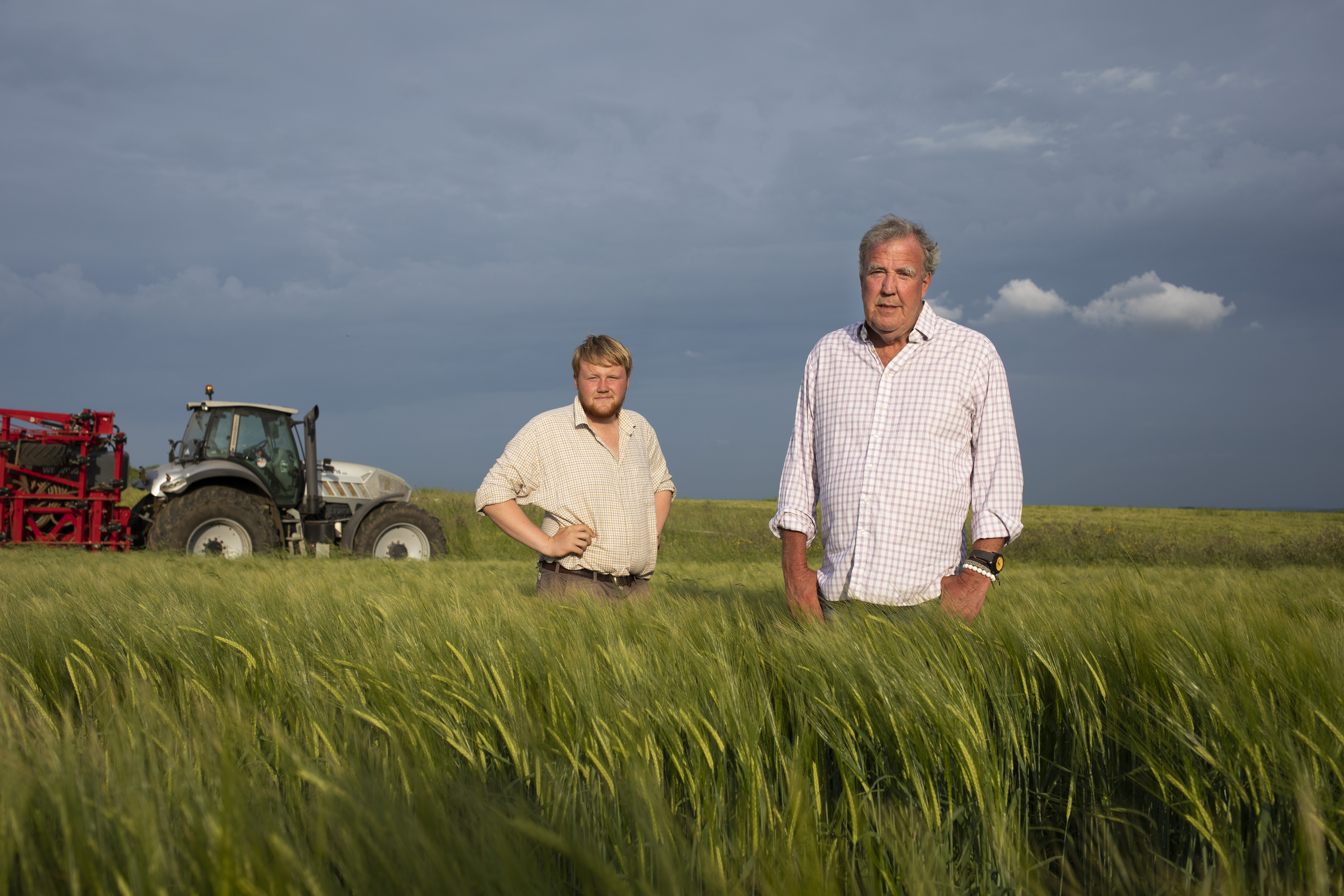
With Jeremy Clarkson
ANDREW FOX FOR THE TIMES
All that said, Cooper’s dream, his life goal, is to own his own farm. “I was put on this earth to grow food.” At the moment he has four acres. “Calves, chickens and a few pigs.” He rents grassland for his herd of 200 beef cows. He says agricultural land around Chipping Norton — “Chippy” to locals — costs £20,000 an acre.
That’s an overestimate, according to figures I’ve seen, but even so, 150 acres (which is small, Clarkson has 1,000) is easily £2 million, with a farmhouse it’s probably more. How will he get hold of that sort of money? “I’m saving everything,” he says. “But because it’s the Cotswolds the prices are going through the f***ing roof.”
Just as his famous boss has diversified (the queues snaking around the Diddly Squat Farm Shop are insane, several hundred strong on a Thursday morning), so, I suggest, perhaps it would be more lucrative for Cooper to do more celebby stuff, rather than sitting on a tractor all day (and half the night).
“Yeah, but I like sitting on a tractor,” he counters. “When I started Clarkson’s Farm I didn’t think much of it. Six months into it, the director said to me, ‘Kaleb, you’re gonna be a massive celebrity.’ The day after it came out, I gained a million followers on Instagram. I went to Jeremy, ‘What do I do?’”
“He went, ‘Kaleb, you’ve got two options. You go out there and make all the money you can, and you fall off the face of the earth in five years’ time, or you go for longevity.’ I said, ‘I’ll go for longevity.’ He said, ‘Right, OK, then you’ve got to be really careful what you do and what you don’t do.’ So when someone says, ‘D’you want to do an advert for a brand, the money’s great,’ I think, ‘Probably not. I’d rather go sit on the tractor, actually.’”
Smart advice from Clarkson, smart of Cooper to follow it. He could have played the nation’s favourite yokel (“a rural halfwit”, as he puts it) for a spell. But he’s in it for the long haul. He wants his own slice of Cotswold heaven, and is prepared to be patient.
• Kaleb Cooper: ‘I want to make my money now. Then chill in Ibiza’
Another aspect of Cooper’s appeal is, undoubtedly, his rootedness to one spot of England, conjuring a folk memory for viewers, whose own connection to the land was probably severed three or four generations ago.
He had never (until recently, for television) been abroad. His vibe is medieval, Merrie England, Falstaffian. When the US vice-president JD Vance was staying locally this summer, Cooper, hurrying to his shed with 14 tonnes of wheat in an open trailer and rain threatening, found his way blocked by an officious policeman clearing the route for Vance’s motorcade.
“You could tell he was really loving the power trip,” Cooper recalls, “which I didn’t like.” So, like the classic freeborn Englishman he is, Cooper ignored the copper and went on his preferred way.
Yet he is not a caricature. He barely drinks, doesn’t smoke, tries to watch his weight with weekly games of football, doesn’t really approve of hunting for sport, and is a self-confessed workaholic, bursting with ideas for new ventures. Switching off, he admits “is my biggest problem”.
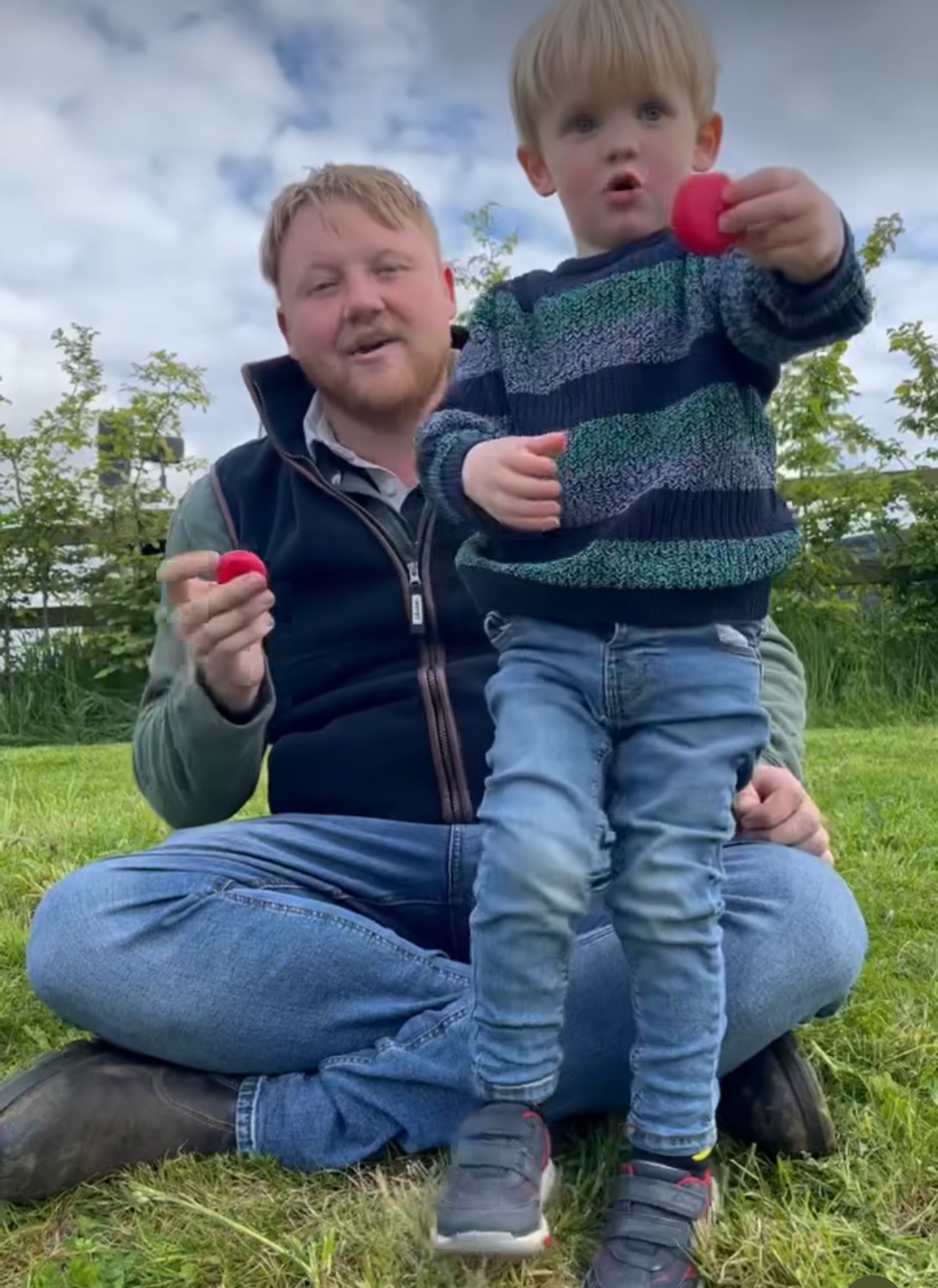
“I wanted kids early, and I’ve been with Taya for ten years. So I thought, ‘If we have kids now, I’ll have more time to be a businessman in my thirties’”
INSTAGRAM / @COOPER_KALEB
He barely seems to sleep. Family holidays involved visiting farms in Cornwall and Devon. “I just knock on the door. Everyone’s lovely. Then I ask them how many pumpkins they grow and how much they fetch. I can’t help it.”
He gets business advice from Ben Francis, the local wunderkind who founded Gymshark. “We just clicked in a way where you just go, ‘You could be my best friend, and why didn’t we meet each other earlier?’”
Occasionally he and Taya will venture to Oxford or Banbury to the cinema. More often they’ll take in an agricultural show with the kids. He loves the animals, the kit, the people. His people. The people who keep the nation fed.
“What keeps us alive on a day-to-day basis? Is it your phone? Is it your car? Is it your Xbox or your PlayStation or your TV? No, you can live without all of that. What you can’t live without is food.” Kaleb Cooper’s mission is to provide it.
Kaleb’s Farmyard Tales by Kaleb Cooper, illustrated by Tom Knight, is published on Thursday (Wren & Rook £14.99)