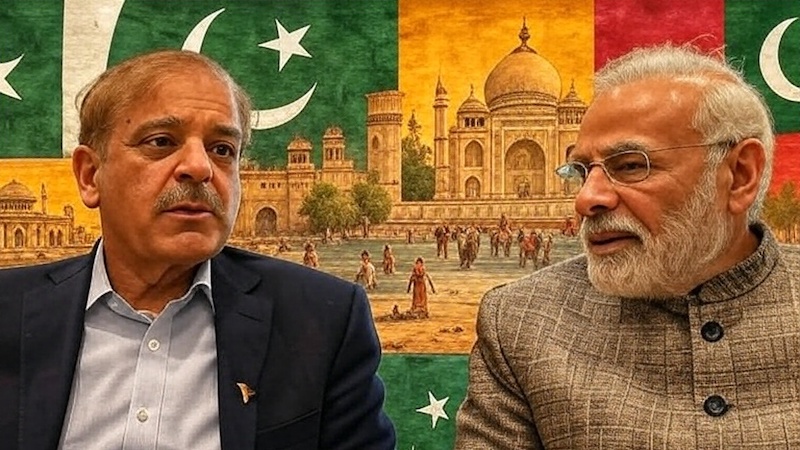
In May 2025, the two nuclear-armed adversaries – India and Pakistan – came face-to-face in a conflict that lasted 87 hours, with many fearing that it could escalate to a nuclear level. One of the shortest India-Pakistan conflicts in history, India’s air attack on May 7 involved 72 Indian fighter jets as opposed to Pakistan’s 42 aircraft, whereby it launched air strikes at several points, hitting civilian population in mainland Pakistan and in Azad Jammu and Kashmir. (1) The Indian attack killed 40 Pakistani civilians, including women and children, and injured 121. (2) Pakistan shot down six Indian fighter aircraft, including three French Rafales.
India had alleged that Pakistan-backed terrorists were involved in the attack in Pahalgam in the Indian Occupied Jammu and Kashmir (IOJK) that killed 26 tourists on 22 April 2025. Notably, India neither held any worthwhile investigation nor shared any evidence to support its allegations. Islamabad strongly denied any involvement and accused India of staging a false-flag operation as well as sponsoring terrorism within Pakistan. After the initial attack of 7 May, the two nuclear-armed states traded fire at the LoC, and India later launched drone attacks within Pakistan followed by missile attacks. Pakistan responded through Operation Bunyanum Marsoos, hitting a range of military targets within India on May 10. A U.S.-facilitated ceasefire was effected the same day. How close did the two South Asian adversaries come to a nuclear exchange? Several questions have intrigued the policymakers, strategic community, and the public at large, within the region as well as in the international arena.
For context, India has been looking to wage a limited war under the nuclear threshold for decades now. It first formulated the ‘Cold Start’ doctrine in 2004, (3) which envisaged launching swift, limited conventional offensive operations within Pakistani territory using Integrated Battle Groups (IBGs) without crossing Pakistan’s nuclear redlines. Then came the Pulwama attack of February 2019, whereby India tried to establish a so-called ‘new normal’ by conducting a strike within Pakistani territory, again, following a false-flag operation. Pakistan made a swift, precise strike in response, thwarting any Indian attempts to establish military strikes inside Pakistani territory as a ‘new normal.’ Now, again, India conducted military strikes deep inside Pakistani territory. Indian strikes of May 2025, under Operation Sindoor, were extensive in nature and extent. Once again, like on previous occasion, Pakistan gave a befitting “quid pro quo plus” response.
During the four days of conflict, hostilities between the two nuclear-armed countries continued to escalate. Pakistan conducted its counterstrike on May 10, hitting 26 military targets within Indian territory. There were fears internationally that the conflict might spiral into a nuclear exchange. Underscoring the risks inherent in India’s escalatory actions, the Pakistan Ministry of Foreign Affairs noted: “India’s reckless action has brought the two nuclear-armed states closer to a major conflict.” (4) The U.S. intervened at the highest levels and brokered a ceasefire. President Donald Trump posted on X that “India and Pakistan – after four tense days of cross-border clashes – had agreed to a ‘full and immediate ceasefire,’ (5) brokered by the U.S. In another post, he said: “I will work with you both to see if, after a thousand years, a solution can be arrived at, concerning Kashmir.” (6) However, India’s Foreign Secretary Vikram Misri, during a briefing session with a parliamentary panel, claimed that the U.S. had no role in mediating the ceasefire between the two countries, and asserted that it was entirely bilateral. (7) He also said there was no nuclear signaling from Pakistan. Notwithstanding India putting a question mark on the U.S. role in facilitating the ceasefire, India and Pakistan did come to a level of conflict that the region had not seen since the war of 1971.
While Pakistan’s conventional response was robust and deterred India from further escalating the conflict, the fact remains that the conflict was escalatory and highly destabilizing. Indeed, it was completely reckless and irresponsible on India’s part to conduct strikes deep inside Pakistan. The Foreign Office iterated: “On false pretext of terrorism, and despite Pakistan’s restraint, India recklessly provoked the situation further by targeting Pakistan’s military bases, risking an uncontrollable escalatory spiral.” The Foreign Office further highlighted the dangers of Indian action: “Indian actions set a dangerous precedent for aggression, dragging the entire region to the brink of disaster. This reflects the mindset of a revisionist actor that seeks to upend strategic stability in South Asia without regard for consequences.” (8)
India’s dangerous posturing and reckless conduct have been followed by irresponsible statements by its top leadership, which are both inflammatory and escalatory. Prime Minister Narendra Modi, in his address on May 12, said India has only “paused” its military action against Pakistan and “will not tolerate nuclear blackmail.” (9) Defence Minister Rajnath Singh provocatively and mischievously stated that Pakistan’s nuclear weapons were not in safe hands and should be given under the protection of the IAEA. (10) This evoked a sharp response from Pakistan, where its Foreign Office spokesperson Shafqat Ali Khan said: “These irresponsible remarks reveal his [Indian Defence Minister] profound insecurity and frustration regarding Pakistan’s effective defence and deterrence against Indian aggression through conventional means. Pakistan’s conventional capabilities are adequate to deter India, without the self-imposed ‘nuclear blackmail’ that New Delhi suffers.” (11) The spokesperson went on to point out the ludicrousness of Rajnath Singh’s assertions: “The comments of India’s Defence Minister also show his sheer ignorance of the mandate and responsibilities of a specialized agency of the United Nations like the IAEA.” (12) Pakistan further pointed out that the world and the IAEA should be more worried about “repeated theft and illicit trafficking incidents involving nuclear and radioactive material in India.” (13) Pakistan alluded to the Indian nuclear black market that has essentially been operational since the late 1980s. (14) Pakistan Foreign Office also categorically denied the “unfounded allegations circulating in certain segments of the Indian media, which falsely claim that Pakistan employed the Shaheen missile during Operation Bunyanum Marsoos.” (15) The claims originated from the release of a video on the Indian Army’s official X handle, showing the use of Pakistan’s Shaheen missile. The video was subsequently taken down, but no clarification was issued regarding the erroneous claims, which the Foreign Office said were part of deliberate disinformation campaign in an attempt to obscure India’s setbacks in Operation Sindoor.
The latest India-Pakistan conflict has established a number of facts. India carried out a false flag operation and subsequent military aggression against Pakistan for political gains. Elections are to be held in Bihar from October to November 2025, and the BJP always seeks to garner voters’ support by claiming a ‘win’ against Pakistan. Pakistan showed restraint, but was obliged to retaliate in a swift and effective manner in order to deter Indian aggression in the future. Military action was imperative to quell President Modi’s proclaimed ‘new normal’. The myth of Indian conventional superiority was further busted during this conflict. Pakistan demonstrated operational superiority in air warfare, whereby it shot down six Indian aircraft, including French Rafale; destroyed a Russian origin missile defence system; and inflicted damage on 26 military targets. Besides, huge economic losses also accrued to India. Both conventional and nuclear deterrence were thus effectively upheld. Deterrence requires capability, credibility, and a demonstrated war-fighting resolve. Pakistan amply demonstrated that it was capable of deterring any conventional attacks by India.
The importance of nuclear weapons for strategic stability in South Asia was reinforced. It was the fear of nuclear escalation that deterred India. It also galvanized the U.S. into brokering a ceasefire between the two adversaries. For decades now, nuclear weapons have been a guarantor of peace in South Asia. India seeks escalation dominance and wants to change the status quo in its favor vis-à-vis the Kashmir dispute. Pakistan, through its resolve and capacity, established again that nuclear deterrence holds. It successfully demonstrated a multi-domain warfare capability that integrated high-tech aerial confrontation, drone warfare, and precision strikes using missiles. It practically demonstrated its doctrine of full-spectrum deterrence, whereby Pakistan can seamlessly deter the full spectrum of threats from conventional to nuclear.
Here, it may be pertinent to recall that Pakistan was forced to pursue a nuclear weapons path after India’s so-called ‘peaceful nuclear explosion’ of 1974 that resulted in nuclearisation of South Asia. Ever since Pakistan has acquired the nuclear weapons capability, it has maintained a modest, India-centric posture with limited warheads, a missile program with ranges limited to Indian territories, and all civilian reactors placed under voluntary IAEA oversight. In contrast, India operates several nuclear facilities outside comprehensive IAEA safeguards, allowing diversion of civilian fissile material to weapons. Similarly, India’s delivery systems continue to expand toward intercontinental reach, with Agni V approaching 8,000 km, and Agni VI projected at 12,000 km. India’s belligerence and hegemonic behavior not only pose a threat to its neighbors in the region but also to global peace and security.
In conclusion, the recent India-Pakistan conflict, once again, demonstrated that there is no room for ‘limited conventional war under the nuclear threshold.’ It busted the myth of Indian conventional superiority. It also laid to rest any Indian efforts to establish a ‘new normal’ of conducting strikes within Pakistani territory. The ‘new normal’ is that PAF is now the dominant air power in South Asia. It also highlighted that Indian actions can destabilize the region. India has long been trying to find the space to wage a limited war under the nuclear threshold. However, in a nuclear environment, this is fraught with dangers. The crisis brought home the point that it is easy for a conflict, limited or otherwise, to escalate to a highly dangerous and unimaginable level. Pakistan proved the effectiveness of its doctrine of full-spectrum deterrence. It once again proved that its nuclear capabilities retain the promise of what Lt Gen Khalid Kidwai called ‘the Great Equalizer’ against a larger adversary. (16) Pakistan responded in a calibrated manner in line with its Quid Pro Quo Plus (QPQP) approach. (17) It again established the Kashmir dispute as a major flashpoint. It also brought the Kashmir issue into renewed limelight in the international arena. The international community needs to hold India accountable.
This is not likely to be the last military misadventure by India. The leadership in both countries needs to prepare for future conflicts to prevent a nuclear catastrophe. The need for a strategic restraint regime and Confidence Building Measures (CBMs) between the two nuclear-armed states cannot be overemphasized. As the P-5 reiterated in January 2022, “nuclear wars cannot be won, so they must never be fought.” (18) India and Pakistan need to put concrete measures in place that ensure nuclear war never happens, and above all, they need to find a just and lasting solution to the Kashmir dispute.
Endnotes
“Pakistan Strongly Condemns India’s Blatant Aggression” Pakistan Ministry of Foreign Affairs, Press Release, 126/2025, May 7, 2025, https://mofa.gov.pk/press-releases/pakistan-strongly-condemns-indias-blatant-aggression
No PR-154/2025-ISPR, May 13, 2025, https://ispr.gov.pk/press-release-detail?id=7285
Walter Ladwig III, “A Cold Start for Hot Wars? The Indian Army’s New Limited War Doctrine,” International Security, Winter 2007/08
“Pakistan Strongly Condemns India’s Blatant Aggression” Pakistan Ministry of Foreign Affairs, Press Release, 126/2025, May 7, 2025
“Trump offers to work with India, Pakistan on Kashmir ‘solution’,” Al Jazeera, May 11, 2025, https://www.aljazeera.com/news/2025/5/11/trump-offers-to-work-with-india-pakistan-on-kashmir
Ibid
“Indian Foreign Secretary says no U.S. Mediation in Ceasefire with Pakistan,” Dawn, May 20, 2025, https://www.dawn.com/news/1912153/indian-foreign-secretary-says-no-us-mediation-in-ceasefire-with-pakistan
Ministry of Foreign Affairs, Press Release, May 13, 2025, 136/2025, https://mofa.gov.pk/press-releases/pakistan-rejects-provocative-and-inflammatory-assertions-by-the-indian-prime-minister.
“India’s Modi says fighting ‘only paused’ in wake of conflict with Pakistan,” Al Jazeera, May 12, 2025, https://www.aljazeera.com/news/2025/5/12/indias-modi-says-fighting-only-paused-in-wake-of-conflict-with-pakistan
“India and Pakistan Trade Accusations of Nuclear Weapons Mismanagement,” Al Jazeera, May 15, 2025, https://www.aljazeera.com/news/2025/5/15/india-and-pakistan-trade-accusations-of-nuclear-weapons-mismanagement
Pakistan Condemns the Remarks of Indian Defence Minister, Press Release No. 139, May 15, 2025, https://mofa.gov.pk/press-releases/pakistan-condemns-the-remarks-of-indian-defence-minister
Ibid
Ibid
For details, please see Ghazala Yasmin Jalil “India Nuclear Black Market” ISSI, Issue Brief, Sep 12, 2024, https://issi.org.pk/issue-brief-on-india-nuclear-black-market/
“Statement by the Spokesperson in Response to Indian Media’s Baseless Claims Regarding Pakistan’s Use of Shaheen Missile in Operation Bunyanun Marsoos (BM),” Press Release, MOFA, May 19, 2025 https://mofa.gov.pk/press-releases/statement-by-the-spokesperson-in-response-to-indian-medias-baseless-claims-regarding-pakistans-use-of-shaheen-missile-in-operation-bunyanun-marsoos-bm
Remarks by Lt. General (R) Khalid Ahmed Kidwai, NI(M), HI, HI(M), AD NCA at the seminar on “The Future of Deterrence and Emerging Challenges” at ISSI, May 28, 2025, https://issi.org.pk/ad-nca-chief-guest-the-future-of-deterrence-and-emerging-challenges-issi-seminar/
Ibid
“A Nuclear War cannot be Won and must never be Fought,” Jan 3, 2022, https://uk.ambafrance.org/A-nuclear-war-cannot-be-won-and-must-never-be-fought.