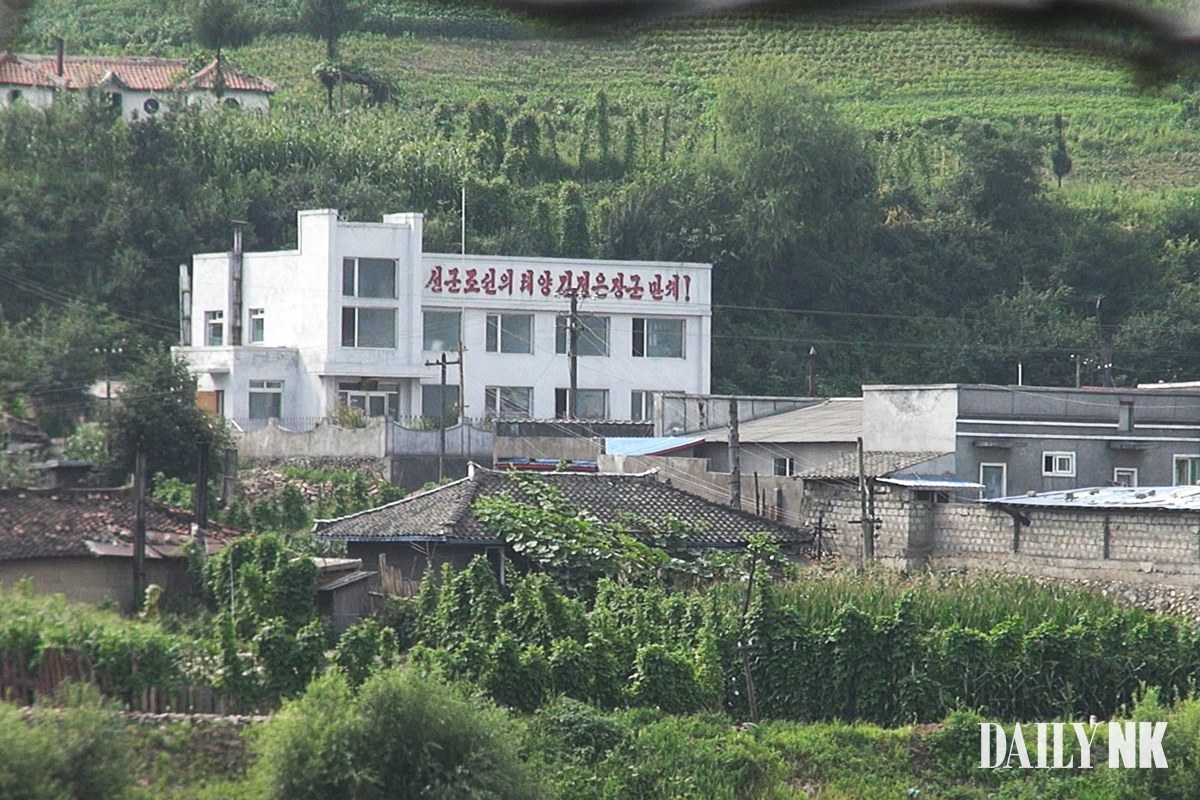
 FILE PHOTO: A view of Ryanggang province from the Chinese side of the China-North Korea border. (Daily NK)
North Korean smugglers are facing significant difficulties as Chinese partners increasingly refuse to accept shipments of medicinal herbs.
“In Hyesan, medicinal herb exports—which used to be thriving—have practically ground to a halt,” a Daily NK source in Ryanggang province said recently. “This is happening because Chinese buyers not only refuse to pay our asking prices, but sometimes won’t accept shipments at all.”
The source explained that prices for North Korean medicinal herbs have recently plummeted to 50 Chinese yuan ($6.90) for 600 grams as Chinese traders turn away imports. While herb prices vary by type, products that previously sold for 100 to 150 yuan ($13.80 to $20.70) per 600 grams now fetch only one-third of that amount.
The disruption stems from intensified inspections of medicinal herbs in China.
“Smugglers typically mix counterfeit herbs with genuine ones when shipping to China to boost their profits,” the source said. “But now Chinese authorities have set quality standards so high that even shipments without any fakes fail inspection, so Chinese traders simply won’t take them.”
“Chinese traders don’t pay upfront with their own money—they usually accept the goods first, sell them, then pay after turning a profit,” the source explained. “But since they’re not even accepting the items now, the situation has become dire.”
Border tensions compound the crisis
Some North Korean smugglers are trying to export herbs to China by finding new trading partners. However, smuggling itself has become increasingly difficult recently, with water levels on the Yalu River—the border between North Korea and China—rising due to recent rainfall. Combined with significantly tightened border controls related to North Korean leader Kim Jong Un’s visit to Beijing, smuggling operations have essentially stopped.
North Korean smugglers are struggling to obtain foreign currency as herb exports decline. Smugglers who have already invested heavily in large herb inventories find themselves in an especially difficult position—they can neither ship their goods to China nor sell them profitably in North Korean markets.
Chinese traders who have long profited from selling North Korean medicinal herbs also find themselves in a challenging situation.
According to a source in China, Chinese traders who previously made substantial money importing North Korean herbs for Chinese markets now shake their heads in frustration, saying that with inspections tightening and conditions deteriorating, “we could end up in debt if we try to sell goods, so it’s better to avoid accepting consignments and just wait it out.”
The real problem is that ordinary North Koreans who relied on herb collection for their livelihood have been severely impacted now that Chinese market access is blocked.
“Rural residents have long earned money to buy rice or corn and pay for their children’s education by gathering herbs and selling them at market,” the source in Ryanggang province said. “But now nobody is buying herbs at the markets, so they can’t make any money.”