
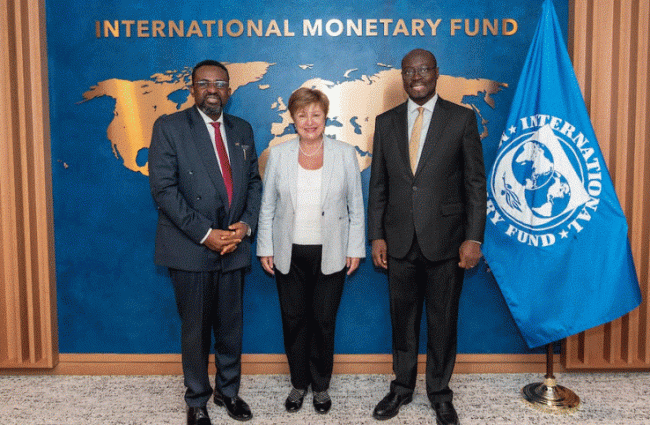
 Imf Africa
The International Monetary Fund has delivered unqualified support for Ghana’s intensified foreign exchange enforcement, describing the Bank of Ghana’s controversial new directives as crucial safeguards for currency stability and financial transparency.
Julie Kozack, IMF Communications Director, endorsed the measures during a Washington press briefing on September 11, dismissing business community resistance while emphasizing that the regulations strengthen Ghana’s compliance with international anti-money laundering standards.
“The Bank of Ghana’s directives are intended to reinforce the role of the cedi as the sole legal tender in the country,” Kozack stated, addressing recent criticism of the central bank’s enforcement activities. “They’re meant to tighten controls on foreign currency transactions and promote formal channels for remittances and trade.”
The IMF’s backing comes amid mounting pressure on the Bank of Ghana over strict implementation of foreign exchange guidelines that have frustrated businesses accustomed to informal currency practices. Recent enforcement actions have targeted unauthorized forex dealings, black market transactions, and domestic pricing in foreign currencies.
Governor Johnson Asiama has defended the crackdown, telling journalists that the measures represent intensified enforcement of existing regulations rather than new restrictions. “These are not new issues, but the difference now is that we are closing the gaps, tightening oversight, and enforcing discipline,” Asiama explained.
The central bank’s August 27 amendments to import-export currency guidelines sparked particular controversy by prohibiting travelers from carrying more than $10,000 without declaration and reinforcing bans on unlicensed forex dealings under the Foreign Exchange Act 2006.
Kozack characterized these steps as essential progress toward “broader financial integrity, compliance with anti-money laundering rules, and broader transparency in the FX market,” rejecting suggestions that the measures are economically counterproductive.
Financial analysts increasingly support the Bank of Ghana’s approach, arguing that reduced dollarization will stabilize domestic pricing and eliminate the unpredictable cost fluctuations that occur when suppliers demand dollar payments for local transactions.
The enforcement framework also encourages formal banking channels for trade settlements and remittances, potentially reducing foreign exchange leakages while creating more transparent access to foreign currency for compliant businesses.
IMF endorsement carries particular weight as Ghana continues implementing its $3 billion Extended Credit Facility program, which requires comprehensive economic reforms including fiscal discipline and monetary policy tightening. The Fund completed its fourth program review in July 2025, disbursing additional financing while praising Ghana’s corrective measures.
The international backing addresses concerns that aggressive FX enforcement might conflict with Ghana’s IMF program commitments. Instead, the Fund views the measures as complementary to broader economic stabilization efforts under President Mahama’s administration.
Critics argue that strict enforcement creates operational difficulties for legitimate businesses requiring foreign currency access, particularly in import-dependent sectors. However, the Bank of Ghana maintains that consistent application will ultimately benefit compliant firms by creating a level playing field.
The success of Ghana’s FX reforms depends heavily on sustained enforcement capacity. If rigorously implemented, the measures could restore confidence in the cedi, reduce speculative activities, and align Ghana with international financial compliance standards.
The IMF’s public endorsement signals strong multilateral support for Ghana’s monetary policy direction, potentially encouraging other African central banks to adopt similar enforcement approaches for their own foreign exchange regulations.