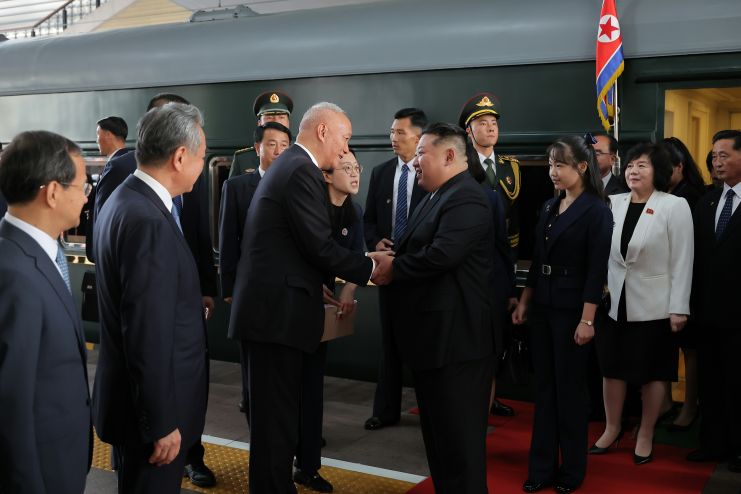
North Korean authorities have dramatically intensified surveillance of the population following Kim Jong Un’s visit to China and the regime’s founding anniversary on Sept. 9, with citizens reporting extreme fatigue and pressure from constant monitoring.
A Daily NK source in South Pyongan province said recently that “these days, even leaving home for just a few hours means being hounded by everyone from the neighborhood watch unit leader to security officers and state security agents to report your destination — people don’t even have room to breathe.”
The source added that “quite a few people have gotten into trouble after leaving home thinking ‘a few hours should be fine’ only to be caught unexpectedly.”
According to the source, neighborhood watch unit leaders visit each household in their districts, asking who is leaving home and when, recording expected return times, then actually returning during those time slots to verify whether people have come back — tracking people’s every movement.
People are voicing their frustration with this behavior, often using sarcasm to express their feelings. Comments like “it’s surprising they don’t make us report going to the bathroom” and “we even have to watch ourselves breathe” highlight their sense of suffocation under the authorities’ excessive surveillance.
Case highlights intensified control
On Sept. 5, a woman in her 50s from a district in Pyongsong faced major trouble after going out without prior notification to the neighborhood watch unit leader.
The unit leader, making his usual morning rounds to check on members’ whereabouts, discovered the woman’s absence and questioned her family about where she went and when she would return. The family replied they didn’t know where she went or when she would come back.
The unit leader instructed them to notify him immediately when the woman returned, but when there was no word of her return past 2 p.m., he reported to the responsible security officer and state security agent.
The woman received phone calls from the security officer and state security agent asking “where are you” and “why are you wandering around without reporting.” She even heard insulting words from the security officer saying her “mental state was rotten.”
As a result, the woman was summoned to the Ministry of Social Security and Ministry of State Security to write a self-criticism and couldn’t engage in her market activities that her family’s livelihood depended on.
The source said if the woman’s family had simply told the neighborhood watch unit leader “she went somewhere for business and will return around such-and-such time,” it wouldn’t have interfered with her market work.
“Since treatment varies depending on the relationship with the neighborhood watch unit leader, the relationship between unit leaders and people’s households has become even more important now,” the source said.
The source continued: “If this is the situation for leaving home just a few hours, there’s no need to mention what happens for being away one or two days. Some people even complain about having to report everything, including leaving home after marital fights.”
The situation is similar in other regions. A Ryanggang province source said that “if it was difficult to move to other regions during COVID-19, now you have to report even moving within the same area.”
“But people aren’t used to reporting, so they frequently clash with people’s unit leaders,” the source added.
The source highlighted that Kim’s visit to China coincides with the day celebrating the founding of the DPRK, creating an atmosphere of heightened management over people’s movements.
In light of this situation, people are voicing strong complaints, saying things like, “If this were the old days when we could freely cross the Yalu River, we might understand,” and “Now we can’t even take a single step, so we have no idea why they’re so worried that they keep us so tightly restricted.”