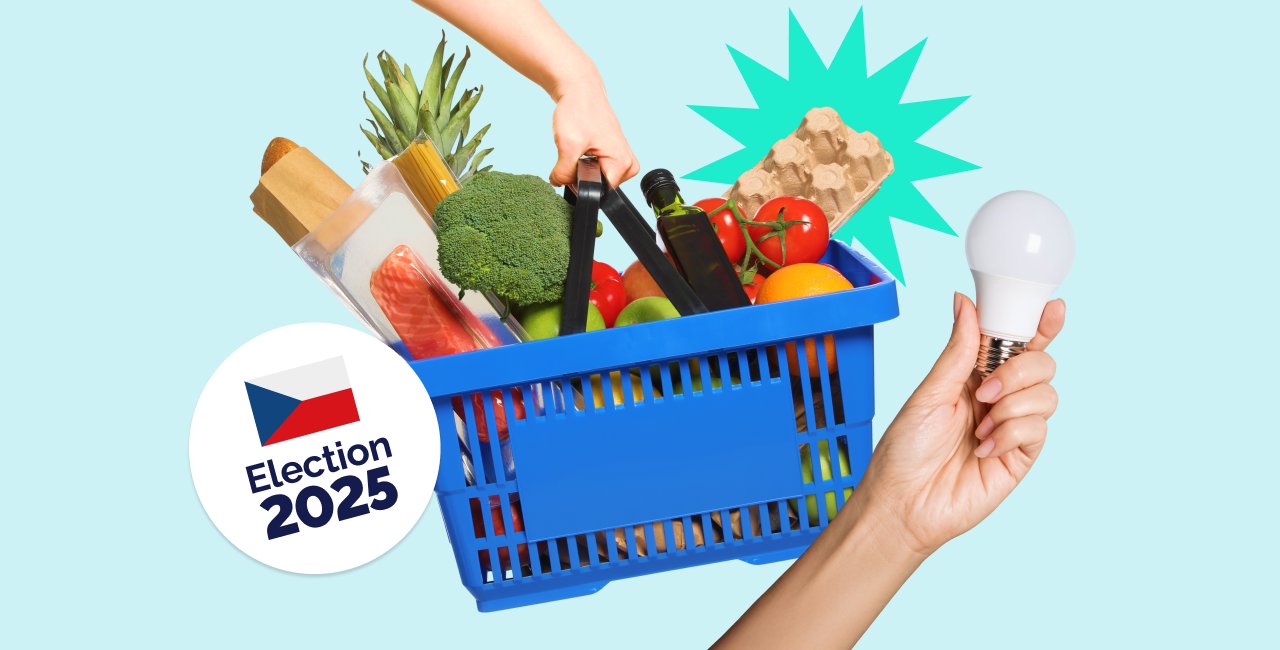
With Czechia’s October parliamentary elections on the horizon, voters are hearing a flurry of promises from political parties across the political spectrum, from lower food prices to cheaper electricity. Experts, however, deliver a stark warning: consumers must be wary of empty promises and instead focus on what parties can, and cannot, control.
Could new parties really make food cheaper?
Several opposition parties, including ANO and Freedom and Direct Democracy (SPD), have repeatedly pledged to make food more affordable for Czech families by changing the face of Czechia’s farming and agricultural landscape.
Prices of many food items have soared in the last 12 months. The latest Czech Statistical Office data shows that eggs are 31 percent more expensive than this time last year, and the price of poultry is up by around 16 percent annually. Beef and veal prices have also soared 24 percent since August 2024.
Analysts, however, caution that price-slashing claims—especially those by fringe parties that aren’t in parliament—often lack concrete implementation plans.
According to agricultural analyst Petr Havel, these parties, including the populist Stačilo!, Oath, and Motorists, “demonstrate great ignorance of the sector’s issues in discussions with farmers.” The expert added: “Many opinions are based on populist, but unverified, data.”
Experts note that while reducing bureaucracy in the agricultural sector is a realistic goal, directly lowering supermarket prices without addressing supply chains is unlikely. Analysts imply that this is determined mainly by markets rather than politics.
Additionally, promises to support farmers could bring some efficiency gains, but they will not result in dramatic price drops for consumers.
Do electricity promises lack a spark?
Meanwhile, ANO is offering voters a more concrete financial incentive, promising that households could save roughly CZK 5,000 on electricity if the public chooses the right-wing party to lead the next government.
ANO Deputy Chairman Karel Havlíček told Czech media outlet Novinky.cz that the plan involves reducing the state-regulated portion of electricity prices by half and reallocating fees currently supporting renewable energy subsidies.
Funding this initiative would cost the state about CZK 50 billion each year, to be offset—according to ANO—by cuts to photovoltaics subsidies and tapping into EU Modernization Funds.
Experts caution that while the plan may deliver tangible savings, it could also result in trade-offs for other sectors, including housing, education, and infrastructure. This also means that while your energy bills could go down, you may end up paying more for other services.
What voters should keep in mind
Czech University of Life Sciences economist Tomáš Maier summarizes the issue succinctly: “Every [party] election program is a bit of a compromise; it must reflect a party’s ideology and be populist enough to appeal to voters.”
In sum, analysts agree that although some reforms and energy price adjustments could produce measurable benefits, ambitious pledges to drastically reduce food prices are more likely to be, overall, more symbolic than practical.
Experts suggest focusing on which promises have concrete, granular plans and assessing how each would affect household budgets and long-term sustainability when heading to the polls in under three weeks.