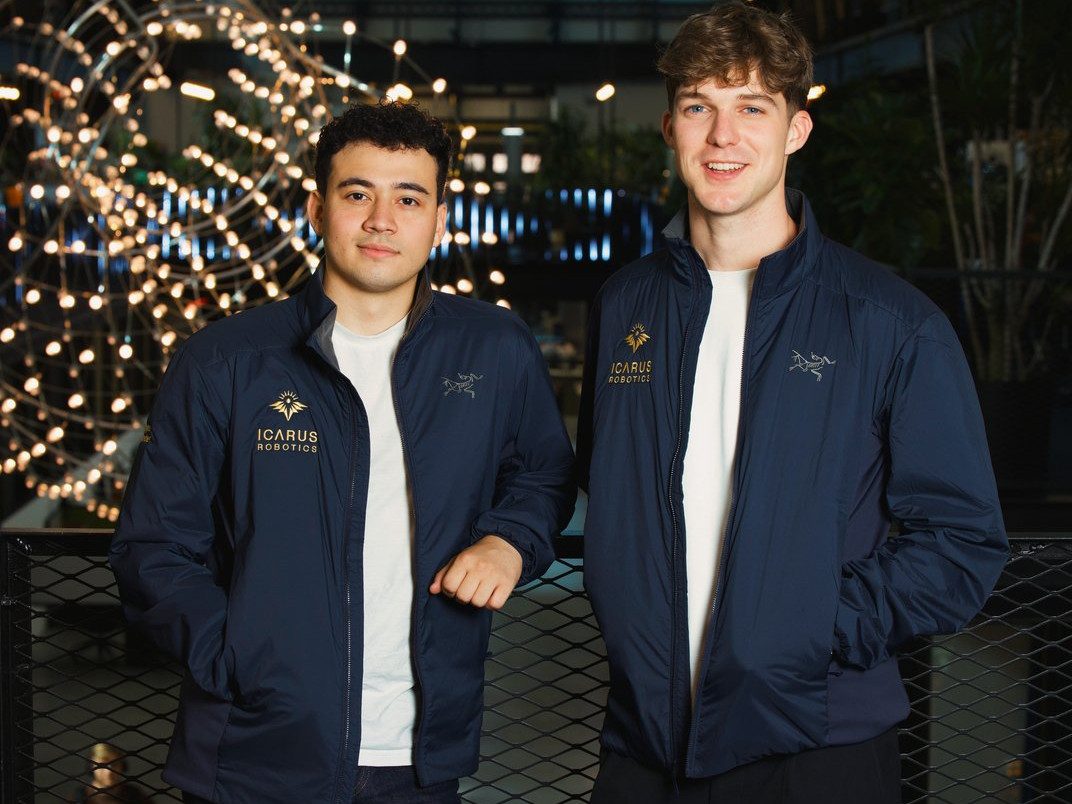
Icarus is building robots that could take over menial tasks in a spacecraft, allowing astronauts to focus on research instead.
Irish co-founded and New-York-headquartered start-up Icarus has raised $6.1m in a seed round to build a robot labour force for space. The round was led by Soma Capital and Xtal, with participation from Nebular and Massive Tech Ventures, among others.
The co-founders, Ethan Barajas and Co Tyrone-born Jamie Palmer, told TechCrunch their key takeaway from speaking to astronauts was that their work in space consists of a majority of logistics and cargo movement as opposed to conducting scientific experiments.
To solve this problem, the founders want to create intelligent robots that take over the time-consuming and menial tasks. The start-up isn’t aiming for a humanoid model, rather, a fan-propelled robot with arms fitted with grippers. The one-year-old company’s first robot will unpack and stow cargo.
The duo is planning to conduct flight testing in the next year, followed by a year-long demonstration on the International Space Station to test the robot’s capabilities, starting with moving cargo, and later the more intricate tasks such as station maintenance.
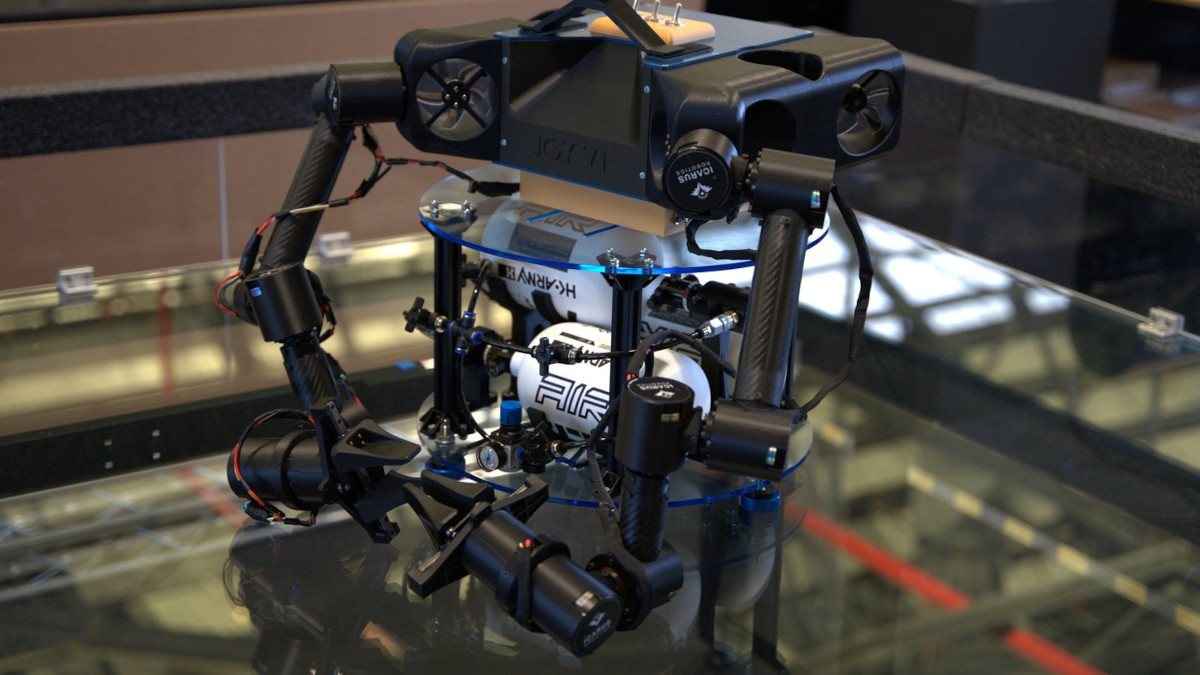
Image: Icarus Robotics
The robots will be initially operated by humans. However, the start-up’s long-term plan is to build autonomous robots powered by artificial intelligence (AI).
Chief technology officer Palmer, who has a bachelor’s degree in engineering from Trinity College Dublin, spent the better part of a year as a robotics research assistant at the university’s Robotics and Innovation Lab.
Later, he worked as a software engineering intern at Dublin’s Akara Robotics before heading to Columbia University for a master’s degree in mechanical engineering. Meanwhile, Barajas, Icarus’ CEO, landed a mechanical engineering internship at NASA at just 17.
“We’re asking hundred-thousand-dollar-an-hour talent to do warehouse work in space – and millions more to transport them there, all paid for by taxpayers,” said Barajas.
“Our robots start by learning from human demonstrations, then handle the repetitive work while astronauts focus on discoveries only humans can make.”
Don’t miss out on the knowledge you need to succeed. Sign up for the Daily Brief, Silicon Republic’s digest of need-to-know sci-tech news.