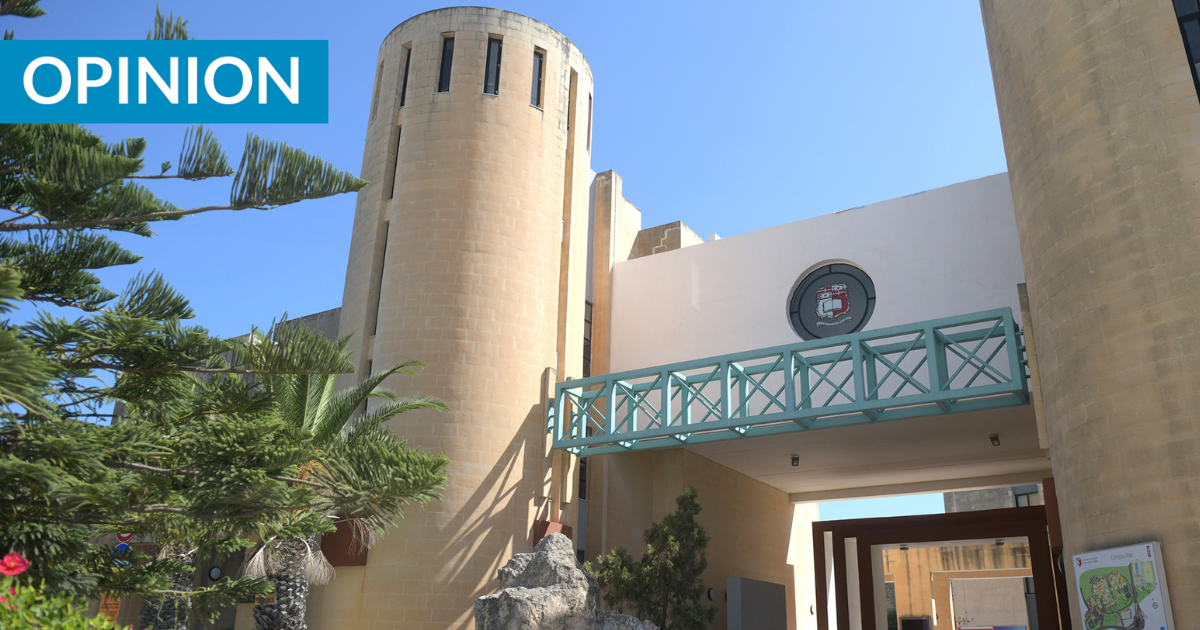
The start of a new academic year at the University of Malta is fast approaching with a cohort of new students preparing to engage in a three-year undergraduate programme and possibly those eligible pursuing another two years to read for a master’s degree.
In the shadow of this is an ongoing cost-cutting exercise triggered by the fallout from the Finance Minister Clyde Caruana’s comments during a pre-budget interview with Times of Malta last October.
Without mincing his words, the minister declared that “…the university needs to get its finances in order… at the ministry of finance we’ve been chasing them for the past two years to send the necessary documents in time but… they have failed to do so”.
It is somewhat contradictory that, as a teaching institution, especially the department I relate to, it emphasises accountability while our house is not in order. Indeed, we must practise what we preach.
The minister had further claimed that “we allocate the necessary funding but the necessary replies never come forward” and went on to say: “I think that they should pull up their socks and roll their sleeves in order to, if need be, generate income which they themselves can make use of.”
The last comment reminded me of my golden years working for the commercial arm of the university, the Malta University Services Ltd, after graduating with my first degree in accountancy. The thought process was to put research and knowledge of all the academic staff to commercial use, wherever possible and earn some extra income which can be ploughed back to finance the university.
While contributing to scholarly work is commendable, it is equally important for all departments to explore opportunities to identify research that has the potential for commercialisation.
The only resource we possess is a well-educated workforce. The better educated our younger generation is, the better the economic success
MUS Ltd doesn’t exist anymore; it has been converted to Malta University Consulting Limited and operates from the Valletta campus.
I beg to differ on the allocation of the necessary funding and I will put forward a few arguments which, maybe, can be taken on board as we fast approach the beginning of a new academic year.
The university is currently undergoing a cost-cutting exercise. For example, it obliges departments to allocate full-time staff to deliver any electives to students. If it is unable to do so, that elective should be scrapped.
It stands to reason that certain professions like mine necessitate certain specialisations and not all members of staff would be conversant with the subject matter. So, unless some sort of sponsorship agreement is achieved with a provider, then it is the students who will bear the brunt.
In recent months we have learned that the government has found no difficulty in fetching millions of taxpayers’ money to purchase the properties which have been leased to musical societies for years. Having been involved myself in such matters, I fully support the government’s initiative as, otherwise, this country would lose an important element of its cultural heritage.
At the same time, however, I am taken aback that the government is – contrary to what the minister claims – not allocating the necessary funding for our university to operate comfortably and offer the full service to our current and future students.
When I switched to academia in 2002, the university invested in me by supporting my journey to acquire my doctorate from the University of Southampton. I have recently learnt that such personnel development does not happen anymore.
If we rightfully boast that we are outsmarting our European counterparts in terms of economic growth then I expect that, in the next budget, all necessary funding is made available to ensure that this unnecessary cost-cutting exercise is scrapped.
Since gaining independence in 1964, this country has made huge strides in developing itself without the presence of any natural resources. The only resource we possess is a well-educated workforce. The better educated our younger generation is, the better the economic success.
It would be a shame if not enough funding is channelled to our own higher educational institution. It is in this context that I emphasise that we should set our priorities right.
Ivan Grixti is a senior lecturer in financial accounting at the University of Malta.