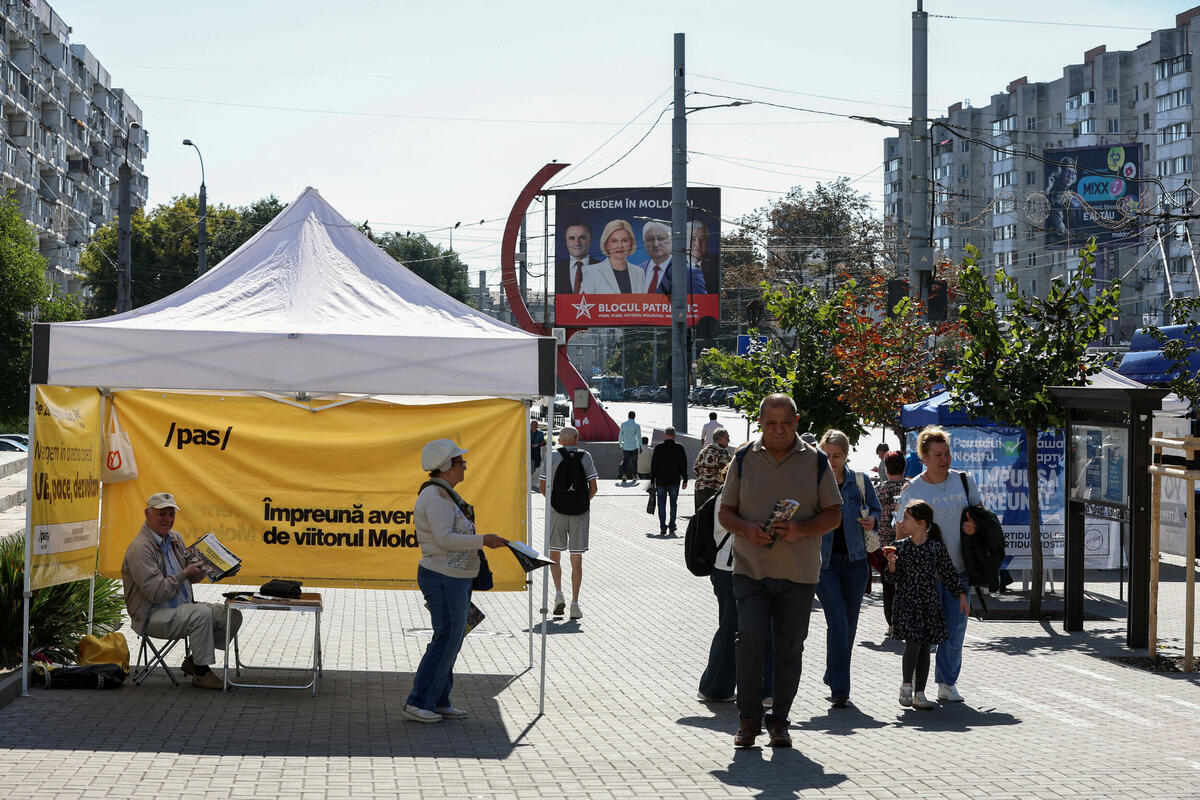
A secret network funded by Russia is trying to disrupt upcoming democratic elections in an Eastern European country, the BBC has revealed.
Using an undercover reporter, the BBC, in the article “How a Russian-funded fake news network is trying to disrupt elections in Europe – a BBC investigation”, states that it discovered that the network promised participants financial compensation if they published pro-Russian propaganda and fake news that undermined the ruling pro-European party in Moldova, ahead of parliamentary elections scheduled for September 28.
Participants were paid to find supporters of the pro-Russian opposition in Moldova in order to secretly film them – and to conduct a so-called poll. This was done on behalf of a non-existent organization, which is illegal. The results of this selective sampling, as one of the network organizers suggested, could serve as a basis for challenging the election outcome.
The results of the so-called poll, according to which the ruling party should lose, have already been published on the internet.
However, official polls show that the ruling Party of Action and Solidarity (PAS), founded by Moldovan President Maia Sandu, is currently ahead of the pro-Russian Patriotic Electoral Bloc (BEP).
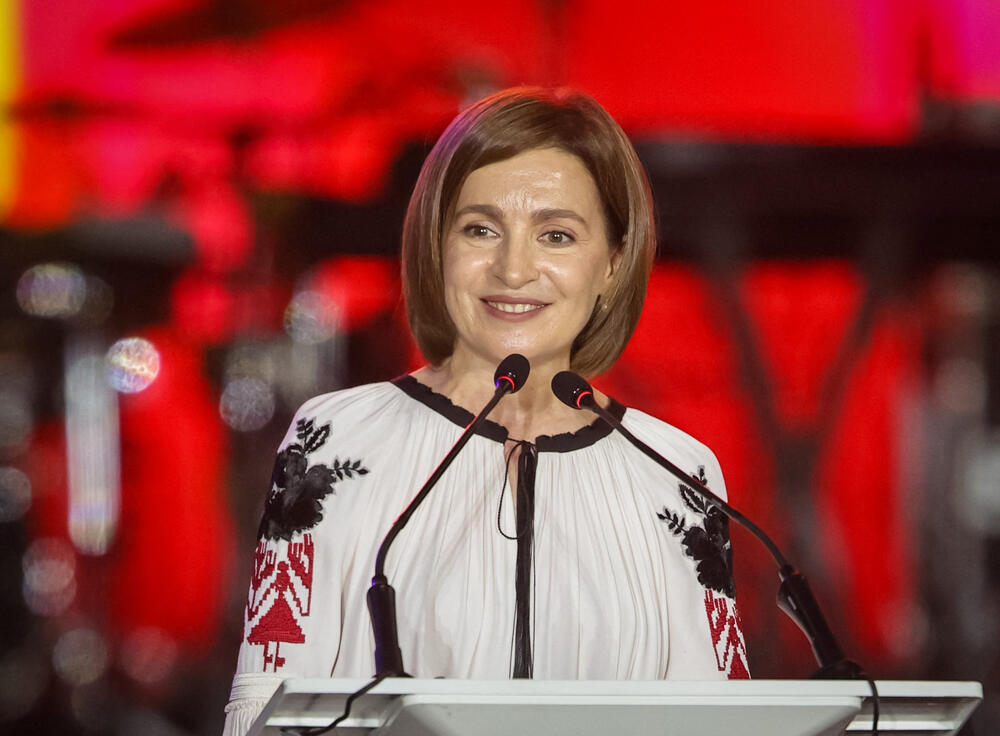
Sanduphoto: Reuters
The BBC says it has uncovered links between this secret network and Moldovan oligarch Ilan Shor – who was sanctioned by the United States for “malign Kremlin operations” and is now on the run in Moscow. He has also been sanctioned by the United Kingdom for corruption.
The media outlet also writes that it has also found links between the network and the non-governmental organization (NGO) “Eurasia”.
Eurasia has ties to Shor and has been sanctioned by the UK, US and the European Union (EU) for allegedly bribing Moldovan citizens to vote against EU membership last year. The referendum on accession passed, but only narrowly.
“In 2024, the focus of (Ilan Shor’s) campaign was money. This year, the focus is disinformation,” Moldova’s police chief, Viorel Cernauteanu, told the BBC World Service.
The BBC asked Ilan Shor and “Eurasia” to respond to their findings – they did not provide a response.
Moldova may be small, but because of its location between Ukraine and Romania, EU members, it has strategic importance for both Europe and the Kremlin, experts believe, according to the BBC.
BBC World Service journalists infiltrated the network – which was coordinated via the Telegram app – thanks to a link sent to them by a whistleblower.
This provided them with crucial insight into how the anti-democratic propaganda network operates.
Undercover BBC reporter Anna, along with 34 other recruits, were invited to attend secret online seminars that would “train operatives.” With titles like “How to turn your kitchen into a national leader,” the seminars seemed like a selection process. Anna and the others had to take regular tests on what they had learned.
Ana was then contacted by the network’s coordinator, Alina Juc. Her social media profile states that she is from Transnistria, a separatist region in eastern Moldova loyal to Moscow, and her Instagram shows that she has traveled to Russia several times over the past few years.
Yesterday, Ani said she would be paid 3.000 Moldovan lei (€156, $170, £125) a month to produce posts for TikTok and Facebook ahead of the election, and that the money would come from Promsvyazbank (PSB) – a sanctioned Russian state bank that is the official bank of the Russian Ministry of Defense and a co-owner of one of Shor’s companies.
Ana and other recruits were trained to create content for social media using ChatGPT. They were told that “content attracts people if the image contains a little satire… about reality,” but also that too much artificial intelligence should not be used, so that the posts appear “organic.”
Within the Telegram group, Ana and the BBC had access to previous instructions to participants. Initially, they were asked to post patriotic content about historical figures from Moldova’s past – but the demands became increasingly overtly political.
Ani was ordered to publish unfounded claims – including that the current Moldovan government plans to falsify election results, that Moldova’s EU membership depends on its citizens becoming part of the LGBT community, and that President Maja Sandu is involved in child trafficking.
Social media campaigns are now often at the heart of national elections.
The BBC writes that it monitored posts on networks supporting Moldova’s ruling PAS party, but did not detect any obvious disinformation campaign.
During the BBC’s undercover investigation within the network, the media outlet claims that it only shared posts that were factually accurate, and that they limited their number.
“We wanted to find out who else was in that network, because we had evidence that it was made up of multiple groups similar to the one we infiltrated. We looked for patterns of similar activity on other accounts that we could track through Telegram access,” the BBC text says.
They say they have determined that the network consists of at least 90 TikTok accounts – some of which pose as media outlets – that have posted thousands of videos with a total of more than 23 million views and 860.000 likes since January. By comparison, Moldova has a population of just 2,4 million.
The BBC states that it shared the findings with the American Digital Forensic Research Lab (DFRLab), and that their analysis shows that the network may be larger.
According to DFRLab, the wider network has amassed more than 55 million views and over 2,2 million likes on TikTok since January.
The network wasn’t just about spreading disinformation. Alina Juc also offered Ana 200 Moldovan lei (11 euros, 12 dollars, nine pounds) per hour in cash to conduct unofficial polls, interviewing people in the Moldovan capital about which candidates they would vote for in the election.
Before taking on the task, participants received training on how to subtly influence respondents during the survey.
They were also ordered to secretly film those respondents who said they supported the pro-Russian opposition.
Juc revealed that this was “to prevent electoral fraud”, suggesting that the poll results and secret recordings, in the event of a PAS victory, would be used as alleged evidence that the victory was illegitimate.
The BBC says their evidence also suggests that the network their reporter infiltrated is funded by Russia. Ana recorded the moment she heard Alina Yuts calling her to ask for money from Moscow.
“Listen, can you bring the money from Moscow… I just need to pay off my people,” he can be heard saying.
It was not clear who was sending her money, but the BBC says it found links between the network and Ilan Shor through the NGO “Eurasia”.
The BBC reports that Ilan Shor and “Eurasia” have not responded to their research findings.
The BBC also claims to have found photos of Ana’s contact person, Alina Juc, on the “Eurasia” website, and that one of the Telegram groups to which Ana was added was called “Leaders of Eurasia”.
The British Foreign Office said that Eurasia is operating “in Moldova on behalf of the corrupt fugitive oligarch Ilan Shor… with the aim of destabilizing Moldovan democracy.”
The BBC states that it asked Alina Juc for comment on their findings, and that she did not respond.
TikTok said it had implemented additional security measures ahead of the election and was continuing to “aggressively crack down on deceptive behavior.”
The BBC also writes that Facebook’s owner, Meta, has not responded to the BBC’s inquiries.
The Russian Embassy in the UK has denied any involvement in the spread of fake news and election interference, claiming that it was actually the EU that interfered in the Moldovan elections.

News