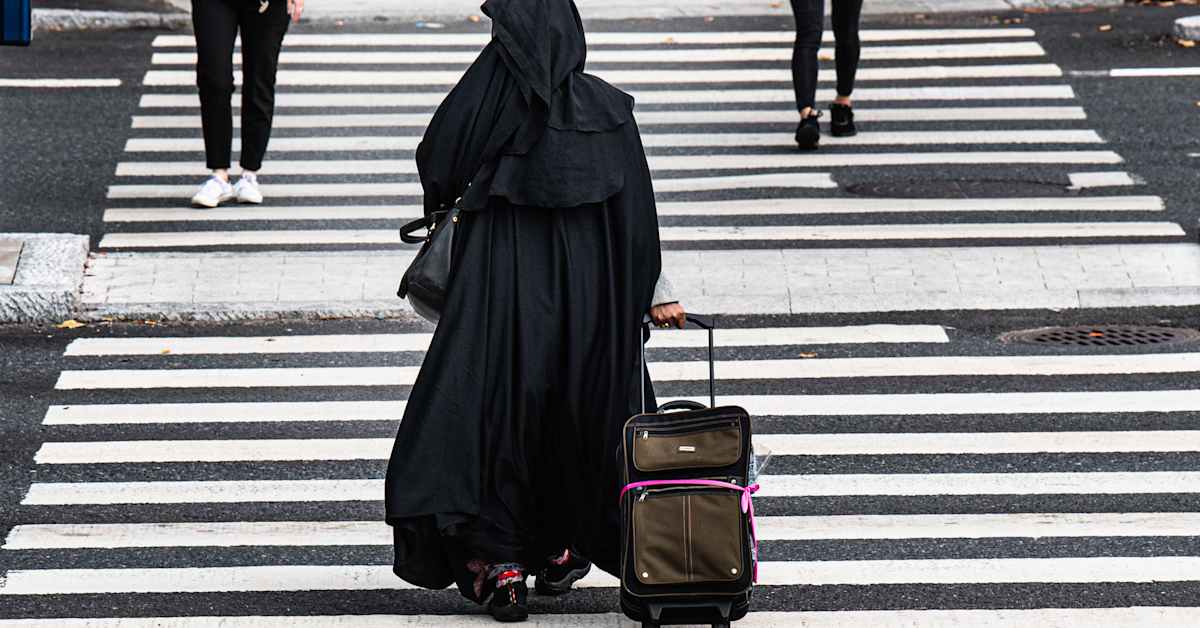
Interior Minister Mari Rantanen (Finns) said this week that the government is currently assessing whether a ban or restriction on face coverings can be introduced during this parliamentary term.
Open image viewer
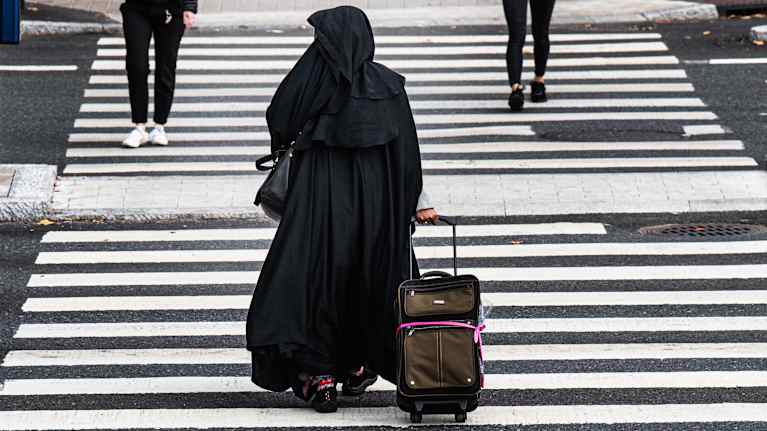
The organisations representing the Muslim community say a ban on the wearing of headscarves would threaten people’s fundamental rights. File photo. Image: Henrietta Hassinen / Yle
A joint statement issued by a total of 40 organisations representing Finland’s Muslim community has sharply criticised the discussion around whether face coverings or headscarves should be banned from public places, such as schools.
The statement added that the Muslim community has followed the debate with “great concern and disappointment.”
“In our view, this discussion represents classic populism, an attempt to fish for far-right votes by creating an artificial problem out of a non-existent phenomenon,” the statement said.
The latest iteration of the long-running debate was sparked last month by a post on social media by Finland’s Social Security Minister Sanni Grahn-Laasonen (NCP), in which she stated that face-covering burqas and niqabs are “not suitable for Finnish classrooms”.
This in turn followed a proposal, put forward by 15 Finns Party members last year, calling for a complete ban on face coverings in all public places.
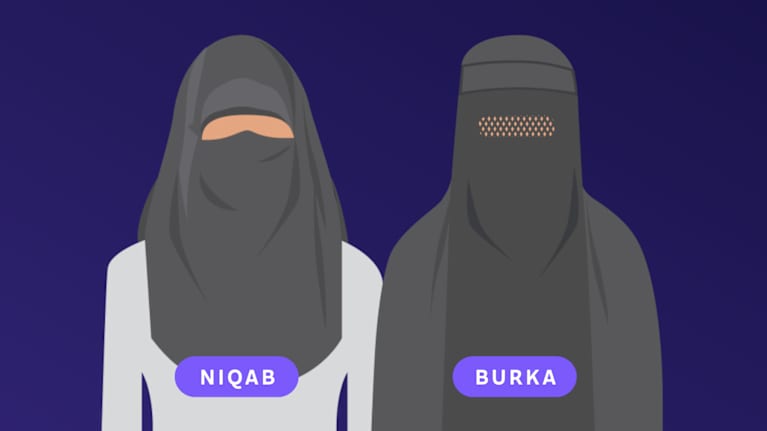
This would effectively mean a ban on the wearing in public of the burka — a traditional garment worn by some Muslim women that covers the face and body — as well as the niqab, a veil for the face that leaves the area around the eyes clear.
Open image viewer
Image: Eetu-Mikko Pietarinen / Yle
Interior Minister Mari Rantanen (Finns) said earlier this week that the government is currently assessing whether a ban or restriction on face coverings can be introduced during this parliamentary term.
The government parties are however divided on the issue.
Minister of Education, Anders Adlercreutz (SPP), has stated publicly that he does not support such a ban, especially in schools, as he noted that burkas are simply not worn in Finnish schools and that the ministry has not received any reports of children wearing them.
This point was backed up in the statement issued by the 40 Muslim-representative organisations, which said that the wearing of niqabs and burqas is very rare in Finland. Most Muslim women wear the hijab, it added, which does not cover the face.
“This statistical reality makes the entire ban discussion absurd,” the statement said.
It further added that women who wear the niqab do so almost always voluntarily, and that the introduction of a ban would be a threat to fundamental rights and would increase discrimination.