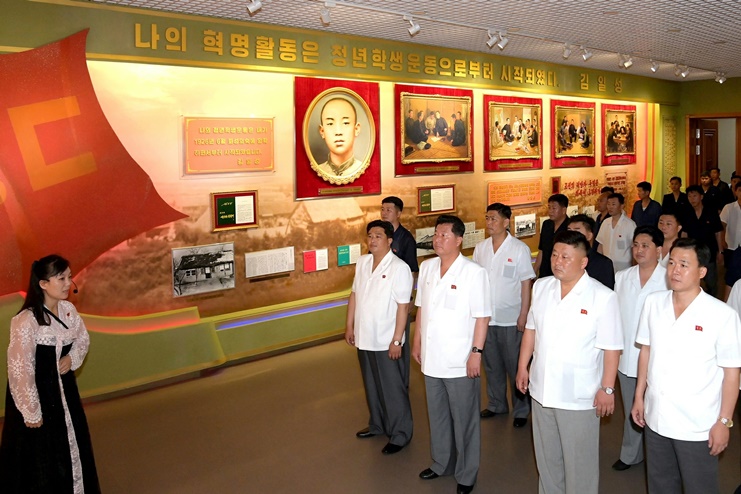
 Workers of the Central Committee of the Socialist Patriotic Youth League visited the Youth Movement History Museum on July 7, a day ahead of the 30th anniversary of the death of North Korean leader Kim Il Sung, according to Rodong Sinmun on July 8, 2024. (Rodong Sinmun-News1)
North Korea has ordered mandatory weekly indoctrination sessions for young people nationwide, deploying revolutionary slogans and historical lessons to counter growing youth dissatisfaction with economic hardships and military deployments to Russia.
The Socialist Patriotic Youth League’s Central Committee ordered chapters nationwide in mid-September to study North Korean youth movement history at least once weekly. Youth league organizations across the country now hold ten-minute mandatory sessions before their regular weekly criticism meetings, according to a source in North Pyongan province recently.
The youth league has declared that the country’s youth movement is entering a golden age and that all young people must focus on understanding Kim Jong Un’s greatness. The campaign centers on a slogan that became a key mobilization tool during the 10th Youth League Conference in April 2021, calling on youth to energetically carry out party decisions and volunteer for the most demanding aspects of building the socialist economy.
Officials want young people to study youth movement history to understand why their generation must lead all state projects, with emphasis on more systematic instruction in continuing the revolution. Youth league organizations must now submit detailed implementation reports, including lesson plans and discussion summaries from the sessions.
Revolutionary traditions and modern pressures
Similar sessions are taking place across the country, including in South Hamgyong province, where today’s young people are being asked to reignite the revolutionary spirit of the past in defending the fatherland and building socialism.
Study session leaders are instructing youth to carry forward the revolutionary traditions of Kim Il Sung’s anti-Japanese armed resistance, the youth shock troops of the Chollima movement, and youth heroes during the Arduous March period.
Sources suggest the campaign responds to growing youth dissatisfaction over economic hardships and troop deployments to Russia. The state is pressuring young people to become the “flames of the revolution” through increased organizational and ideological control, with these history sessions designed to stamp out any signs of disloyalty before they can develop.