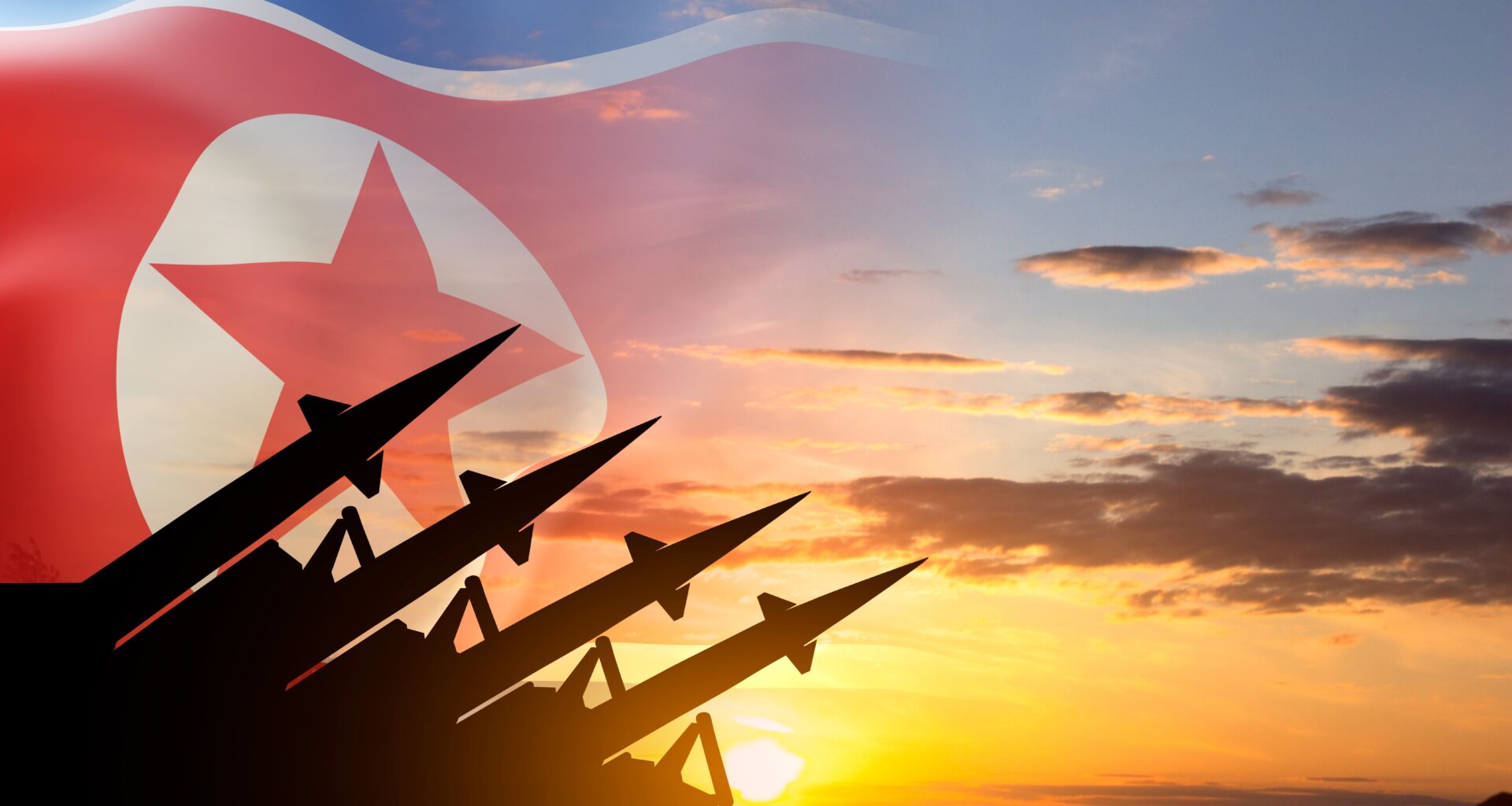
North Korea’s claimed status as a de facto nuclear state—backed by closer ties with Russia and pragmatic links to China—has hardened deterrence dynamics and strengthened Pyongyang’s leverage in any future talks with the US, Japan, and South Korea.Kim Jong Un frames expanding US–Japan–South Korea military cooperation as provocation, arguing that accelerated nuclear and military development is essential for regime security and a credible deterrent.
Analysing the speech made by Kim Jong Un in the 13th session of the 14th Supreme People’s Assembly, and judging from the recent development of Pyongyang’s nuclear-weapons programme, North Korea’s quest for not only a strong but also a nuclear state has tremendous implications for Northeast Asian security relations, especially the international politics of the ideological coalition between North Korea and China and the US–Japan–South Korea alliance on the one hand, and the military pact between North Korea and Russia and the military coalition composed of the US, Japan and South Korea on the other.
 Sonny Shiu-Hing Lo*
Kim’s speech is marked by the perceived success of the byungjin policy (parallel economic and nuclear development), asserting, firstly, that North Korea has made progress in fulfilling its five-year economic plan. Agricultural production is expected to hit the national target of grain production, followed by reforms such as seed revolution, double cropping, scientific farming and mechanised farming. Industrial construction and production have been propelled forward, with the rapid development of the capacities of heavy and light industries. Megaprojects such as the Tanchon Power Station and the Ryongsong Machine Complex have been accelerated and renovated.
The people’s livelihood, according to Kim, has been improved by building 50,000 flats in the capital city of Pyongyang, accompanied by the construction of the Wonsan Kalma Coastal Tourist Area. The Pyongyang General Hospital is nearing completion and inauguration, while public health facilities have been improved across various cities and counties. Kim claimed great successes in the developmental areas of science, education, public health, arts and sports, making the North Korean state much stronger than ever before.
His speech then turned to the area of the defence capabilities of the North Korean state, adding that the country must defend its maritime sovereignty and build up its maritime power. Kim asserted that “we possessed new, secret weapons, and made many achievements in defence science which would make a great contribution to boosting our military forces more radically (KCNA, 23 September 2025: Respected Comrade Kim Jong Un’s Speech at 13th Session of 14th Supreme People’s Assembly of DPRK (oananews.org)).”
Strategic reframing and domestic consolidation
The economic growth and the increasing military strength, according to Kim, are of tremendous significance because they illustrate “the spiritual strength of the people, the motive force, and the preparedness of the politico-ideological force.” In the mind of Kim, North Korea can solve all its problems “by dint of ideology and political offensive,” by utilising strong leadership, and by upholding patriotism and heroism, which have been expressed through the North Korean soldiers who sacrificed their lives in the Russo‑Ukrainian war.
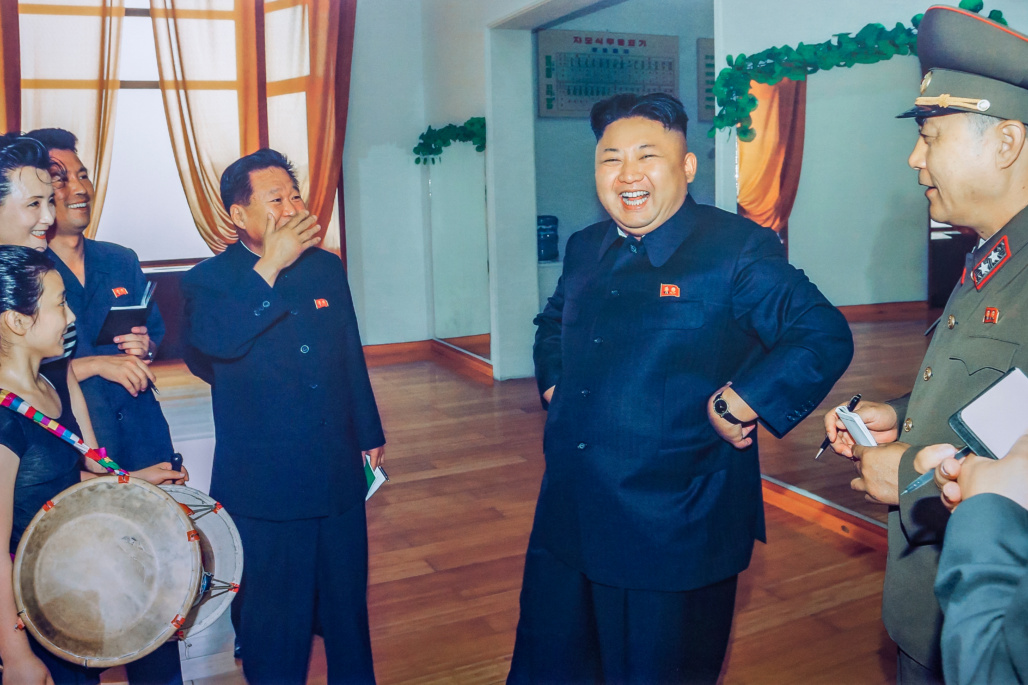
Kim emphasised the role of the people in building up North Korean socialism and criticised those people who took off the shares of farmers on the pretext of trading cereals through illegal channels. He praised the revolutionary spirit and loyalty of the masses but criticised those economic officials who are “working in a subjective manner, acting on impulse, self-centeredness, fame-seeking, irresponsibility and incompetency.” Kim’s objectives are to purge and eliminate those self-seeking and incompetent officials while unleashing the potential of the masses and elites to the full extent, thereby serving the North Korean state wholeheartedly and effectively. His demands on the North Korean bureaucrats are high and clear, especially when he criticised the “low quality of housing construction” in Songchon in 2024, when he paid an inspection visit there. Adopting a grassroots‑oriented governing style, Kim has developed a convention of paying inspection visits to different cities and counties, checking the performance of government officials in implementing various megaprojects.
The 12‑year compulsory education, to Kim, is a must to prepare students to be more advanced in their knowledge and to contribute to the North Korean state; so too for the teachers, who require ongoing training and socialisation. At the same time, the socialist legal system aims to improve the role of law in the state and social life, making all sectors smoother in operation and putting them “under strict control.” Law‑enforcement organs must work out a better strategy of adopting “an aggressive, comprehensive and rigorous approach” for the sake of “frustrating the enemy’s moves to undermine our citizens and combatting all manners of crimes that disturb social and political stability.” In short, law is a tool for social control, while law‑enforcement agencies must prevent the perceived enemies from destabilising North Korea.
Kim then turned to the important topic of utilising military build‑up as “the powerful war deterrent.” He heaped praise on those martyrs who died and who were “liberating” Kursk, and appreciated the young and middle‑aged people’s enthusiasm to join the army voluntarily. All these sacrifices demonstrated an “increasing, positive tendency to turn out in the patriotic struggle staking the dignity of Koreans and the reputation of Korea.” He said the Workers’ Party and the state take full responsibility for taking care of the lives of the bereaved families of the martyrs, returning the donations from ordinary people who expressed their patriotism to construct the memorial museum and memorial monument.
Regional provocations, alliances, and nuclear leverage
The most interesting part of Kim’s speech is his detailed discussion of the US, South Korea and Japan, which have “a decisive impact on the security of our state and the situation in the region.” He sees the security situation around the Korean Peninsula as having “one worst record after another.” This perception is attributable to the US and its “vassal states,” implying both South Korea and Japan without naming them, because they “have regularly committed provocative actions to exacerbate the tension.” Kim referred here to the US’s Indo‑Pacific strategy, the US–South Korea and US–Japan military alliances, the US–Japan–South Korea tripartite military cooperation system, and the various “war exercises” conducted by the US and South Korea in March and August annually. Kim regards the large‑scale joint war exercises, such as Ulchi Freedom Shield, as US–South Korean activities that provoke North Korea. He criticised the US–South Korean nuclear war plans, saying that they enter the stage of “more practical and concrete implementation.”
The recent “nuclear war rehearsal,” namely Iron Mace, between the US and South Korea was perceived by Kim as “getting familiar with the procedures and mode for attacking our state with nukes.” The multi‑realm joint military exercise with Japan’s involvement was also perceived by Kim as a hostile act targeted at North Korea. At the same time, Japan witnessed “a blitz deployment of the US forces’ ground‑based medium‑range missile system for the first time in its history.” This poses a security risk to North Korea, according to Kim.
Kim used all these moves by the US, South Korea and Japan to portray a “more severe” situation with the rising “security index for the prevention of war.” As such, the North Korean nuclear forces are “fully and perfectly performing their deterrent function” in response to the challenges and provocative actions from outside. The rapid development of North Korea’s nuclear deterrent is a must, according to Kim, to defend its territorial integrity, national sovereignty, and the lives and safety of the people.
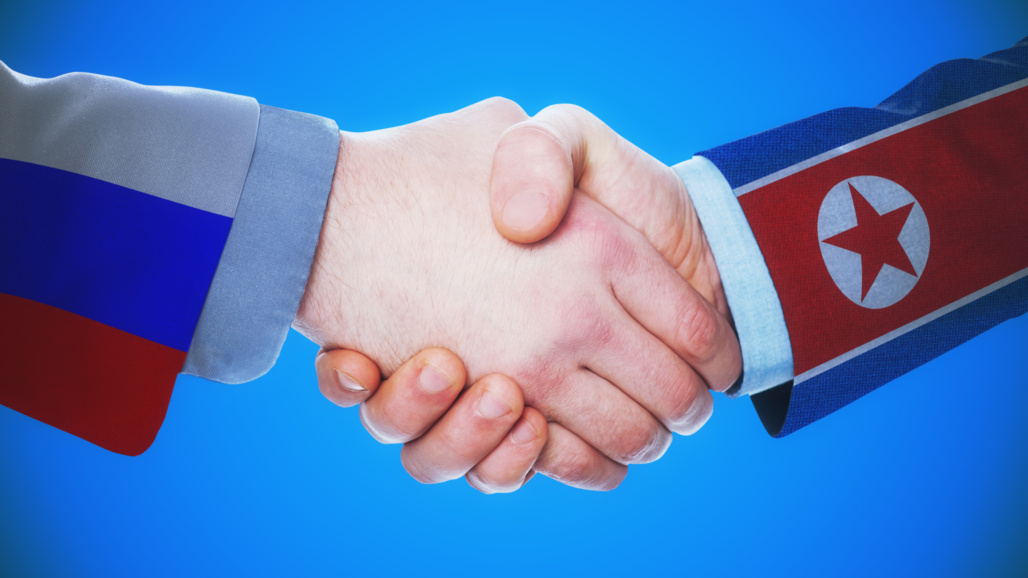
The North Korea–Russia military pact has strengthened Pyongyang’s exports of its military weapons to Moscow, improved its military preparedness for conflicts and war on the Korean Peninsula, and instilled a permanent crisis consciousness in the psyche of the North Korean military
As a politically shrewd leader, Kim said that North Korea needs to be prepared for “both dialogue and confrontation.” He recalled his good relations with US President Trump, but maintained that the call for “denuclearization” has already lost its meaning. The reason is that North Korea has already become “a nuclear state.” After all, the “supreme law” of North Korea enshrines “our nuclear possession.” Asking North Korea to accept “denuclearization” is to go against its constitution, according to Kim. He said: “we will never lay down our nukes,” while the sanctions imposed by “hostile forces” have taught North Korea to get stronger militarily. Kim believes that time is on the side of North Korea, which has already made its economy strong alongside the policy of developing its nuclear‑weapons programme.
Kim remarked that North Korea and South Korea are two “completely” different states, with South Korea’s historical “hostility” to Pyongyang tracing back to the Syngman Rhee regime in 1948, which saw the northern neighbour as an enemy. Kim Jong Un added that North Korea defined the Republic of Korea (ROK) as “a foreign country and the most hostile state.” The ROK, to Kim, is “a deformed entity with hemiplegia and a colonial tributary whose all fields have been Americanized.”
Even though the recently formed Lee Jae‑myung government talked about dialogue and peace with North Korea, Kim said that, behind the scenes, the Lee regime is “building higher the wall of confrontation by expanding and strengthening the war rehearsals for aggression such as nuclear operation drill and multi-realm joint military exercise.” Rather than pursuing “unification by absorption,” South Korea has recently mentioned its coexistence with North Korea peacefully, Kim remarked. He criticised Lee’s so-called three-stage denuclearization theory – suspension, reduction and denuclearization. Kim maintained that reunification cannot be achieved unless one of the two states ceases to exist. As such, he saw the reunification between the two Koreas as a zero-sum game.
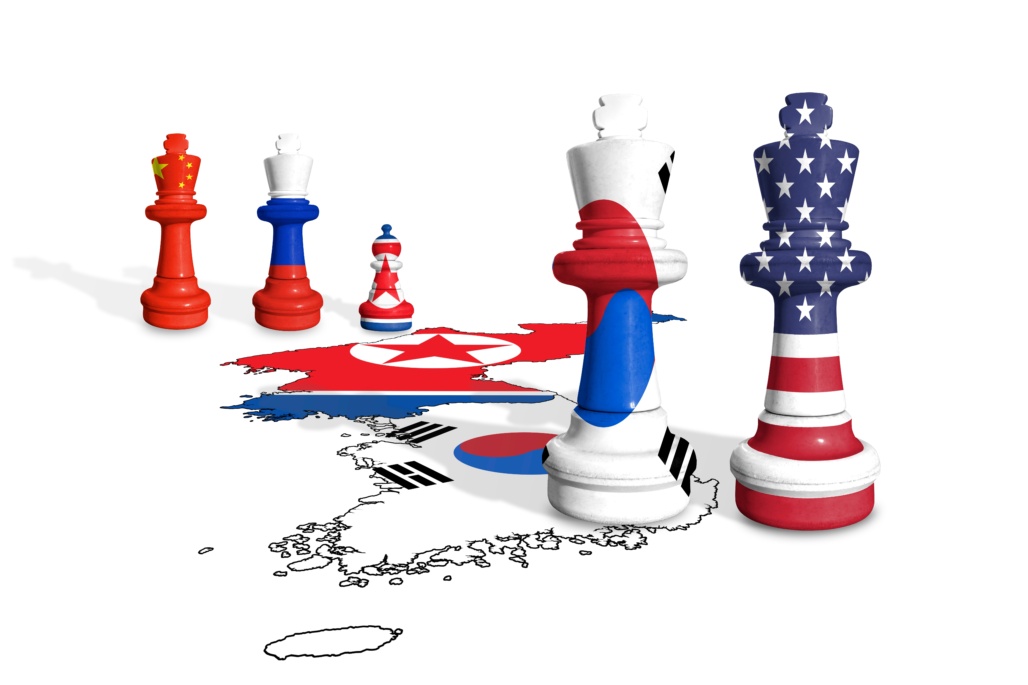
Kim Jong Un’s important speech can be analysed from the perspective of the complex relations between the North Korea–Russia military alliance and the US–Japan–South Korea alliance on the one hand, and between North Korea–China friendship and the US–Japan–South Korea ideological alliance on the other hand.
Bargaining power, exercises, and two‑pronged diplomacy
First and foremost, Kim’s belief that denuclearization should be jettisoned by both the US and South Korea means that he sees North Korea as a de facto nuclear state. It is reported that North Korea possesses 2,000 kg (about 4,400 pounds) of highly enriched uranium at a purity rate of 90 per cent, and that the uranium centrifuges operating at four sites would have the capability of producing roughly 47 nuclear bombs if 42 kg of highly enriched uranium is needed for one nuclear weapon (Al Jazeera, 25 September 2025). No wonder Kim expected US President Trump to abandon the call for denuclearization, as he believes that North Korea has already become a nuclear state.
Second, the bargaining power of North Korea is therefore enhanced to deal with any dialogue with the US and/or South Korea. Unlike the situation in 2018 when Trump met Kim in Singapore to forge a short-lived rapprochement between the two countries, North Korea in 2025 is a much stronger state with the near capability of producing nuclear weapons. Seeing how the US Air Force in June 2025 bombed and attacked three nuclear facilities in Iran, and how the US stopped the further development of Iran’s ability to build a nuclear weapon, North Korea is now raising its capability of producing nuclear weapons to the extent that Trump will likely, sooner or later, start a dialogue with Kim. Such a dialogue will not be an easy one because North Korea is enhancing its bargaining power through its enhanced military capabilities.
An early dialogue between Donald Trump and Kim Jong Un will be diplomatically imperative and politically desirable if all the stakeholders are eager to maintain peace and security on the Korean Peninsula in a mutually beneficial, rather than a perceived zero‑sum, manner
Third, Kim warns again and again in his speech of the military exercises between the US, Japan and South Korea, meaning that such “war rehearsals” will likely provoke North Korea further. The implication here is that any US dialogue with North Korea would have to discuss the issue of de‑escalation of tensions through the reduction of military exercises between the US, Japan and South Korea. However, reducing the number of such exercises will likely run the risk of appearing weak in response to the rapid and successful North Korean military build‑up, not to mention any sudden conflict between North Korea and the US–Japan–South Korea alliance.
Fourth, the ideological perception of Japan and South Korea as American “vassal” states, and of Seoul as an “Americanised” regime, tends to solidify North Korea’s military preparedness. South Korea is seen as a “hostile” state under American hegemony and “colonialism.” Such a perception will likely impede any discussion on people‑to‑people interactions, not to mention bilateral trade, between North Korea and South Korea in the long run. As Kim sees North Korea and South Korea as two “completely different” states, both sides will not easily repair their relations due to profound ideological differences and serious perception gaps.
Fifth, the recent participation of Kim in China’s military parade on 3 September, together with Russian President Putin, showed that North Korea has been adopting a two‑pronged diplomacy to deal with the US–Japan–South Korean military alliance. The 2024 military pact signed between Pyongyang and Moscow means that, while North Korean soldiers were sent to fight in the Kursk region, North Korea is keen to train its military through real battlefield experiences, to learn the most advanced missile and drone technology from Russia and the war, and to enhance Pyongyang’s military preparedness in case of any military conflicts with the US‑led military alliance with South Korea and Japan.
Closer relations with China are beneficial to North Korea economically, while the military pact with Russia can bring huge revenues to Pyongyang through its exports of military weapons to assist Russia in its war with Ukraine. The win‑win military pact between North Korea and Russia, and the economically beneficial relations between North Korea and China, will be able to consolidate the parallel development of the nuclear‑weapons programme and economic modernisation, thereby leading to the success of North Korea’s byungjin policy. The success of Kim’s byungjin policy consolidates his regime’s legitimacy internally and externally in the face of the perceived military threats from the US–Japan–South Korea alliance.
With an increasing capability of producing nuclear weapons, and with an improved economy amid an emphasis on the betterment of people’s livelihoods, North Korea’s leverage over the US has already been significantly enhanced in any dialogue and negotiation between Kim Jong Un and Donald Trump
Sixth, even though the South Korean government under Lee Jae‑myung is keen to improve bilateral relations with North Korea, the rapid development of North Korea’s nuclear‑weapons programme and its increasingly strong state, which has dealt with the economy and people’s livelihoods both assertively and successfully, points to a difficult relationship between the North and the South. Reunification is now seen as a zero‑sum game, meaning that the two Koreas will have developmental paths quite different from the previous reunification of East Germany and West Germany in October 1990.
Seventh, an improvement in relations between North Korea and the US–Japan–South Korea alliance will still depend on the initiatives made by the current Trump administration. However, “denuclearization,” which was a topic in the 2018 summit between Kim and Trump, is a thing of the past to Kim. Nor is the South Korean idea of suspension‑reduction‑denuclearization workable in the mind of Kim Jong Un. Since Kim emphasised the military exercises between the US, Japan and South Korea in his speech, such “war rehearsals” will likely be an important negotiable issue in the event that Trump meets Kim for security dialogue.
Japan, Kursk, and policy implications for US diplomacy
Eighth, the dispatch of the North Korean army to the Kursk region appears to have multiple purposes. It was a military diplomacy adopted by Kim to win military friendship from Russia, gain advanced Russian missile and drone technology, and train the North Korean military in a heightened consciousness of being prepared for wars all the time. Such crisis consciousness in the psyche of the North Korean military is necessary, because, in case of any sudden military conflicts between Pyongyang and Seoul, Pyongyang would likely have a strong showing, even though Seoul is and will be militarily backed up by Washington.
Ninth, North Korea’s relations with Japan are bound to be difficult and potentially conflict‑ridden. The two countries are locked in disputes such as the previously alleged North Korean abduction of Japanese citizens, the frequent North Korean missile tests that alarmed the Japanese side, and the recent allegation that North Korean hackers in 2024 stole cryptocurrency from Japan‑based exchange DMM Bitcoin. Kim, in his speech, expressed his concern about the deployment of the US medium‑range missile system in Japan — a topic that will likely be another negotiable issue in the event of a Trump–Kim summit. However, to protect its own sovereignty and safety, Japan must rely on the US missile system as a defensive act. If the stationing of US missiles in Japan is seen as a zero‑sum game by the stakeholders concerned, it would likely be a difficult topic in any dialogue between Trump and Kim.
Tenth, if North Korea is now much stronger militarily and economically than its predicament during the 2018 summit between Kim and Trump, US diplomacy in Northeast Asia is facing a tremendous ordeal. Blaming the Biden administration for its “weakness” on Northeast Asian security is useless. Rather, a proactive US diplomacy on Northeast Asia is to consider a step‑by‑step process of de‑escalating tensions, followed by how the International Atomic Energy Agency can be brought into the complex picture of inspecting and monitoring North Korea’s nuclear development activities.
In conclusion, Kim Jong Un has already asserted that North Korea is now a de facto nuclear state. With an increasing capability of producing nuclear weapons, and with an improved economy amid an emphasis on the betterment of people’s livelihoods, North Korea’s leverage over the US has already been significantly enhanced in any dialogue and negotiation between Kim Jong Un and Donald Trump. Seeing the military exercises and missile deployment in the US–Japan–South Korea alliance as a serious security threat to North Korea’s state survival, Kim Jong Un has unleashed the military potential of North Korea to the full extent through the dispatch of North Korean military to the Russo‑Ukrainian war, and through the exchange of military technology and war experiences between Pyongyang and Moscow.
The North Korea–Russia military pact has strengthened Pyongyang’s exports of its military weapons to Moscow, improved its military preparedness for conflicts and war on the Korean Peninsula, and instilled a permanent crisis consciousness in the psyche of the North Korean military. If so, an early dialogue between Donald Trump and Kim Jong Un will be diplomatically imperative and politically desirable if all the stakeholders are eager to maintain peace and security on the Korean Peninsula in a mutually beneficial, rather than a perceived zero‑sum, manner.
*Sonny Shiu-Hing Lo is a political scientist, veteran commentator, and author of dozens of books and academic articles on Hong Kong, Macau, and Greater China