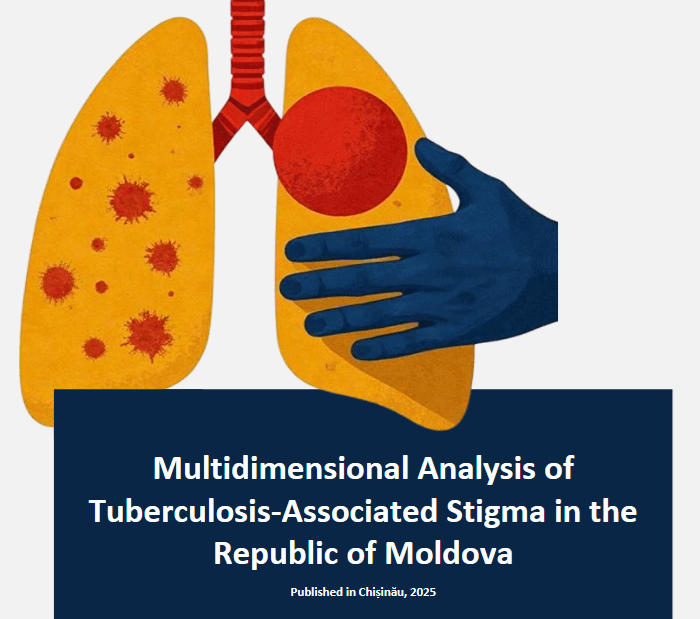
The Moldova National Association of TB Patients “SMIT” published a report with the results of the study “Multidimensional Analysis of Tuberculosis-Related Stigma in the Republic of Moldova”. The study was conducted at the request of the National TB Response Program, with the support of the Center for Health Policies and Studies and the TB Europe Coalition, and funded by the Global Fund to Fight AIDS, Tuberculosis and Malaria and the Stop TB Partnership.
The assessment was conducted in 2025 and provides a structured analysis of the barriers to accessing human rights-based, gender-sensitive, and population-specific TB care.
The study explores how stigma affects the lives of people diagnosed with TB, as well as their families, communities, and healthcare workers. Conducted nationwide, it offers a comprehensive picture of the social and psychological barriers surrounding the disease.
The findings revealed that stigma is present at all levels – from self-perception and family relationships to communities and healthcare institutions. The assessment also identified systemic discrimination and weak grievance mechanisms. As a result, the new national strategic plan includes anti-stigma measures such as healthcare worker training and the integration of human rights at all levels of service delivery.
The report also contains recommendations for reducing stigma through education, awareness campaigns, psychosocial support, and strengthening the legislative framework.
Access the report here.For more TB updates, check out the TB CAB Weekly Newsletter (Issue #29, 29 September 2025).
The newsletter is brought to you by the Global TB Community Advisory Board (TB CAB) with the support of Treatment Action Group (TAG) and EATG. Subscribe to the newsletter here.
Source : TB Europe Coalition