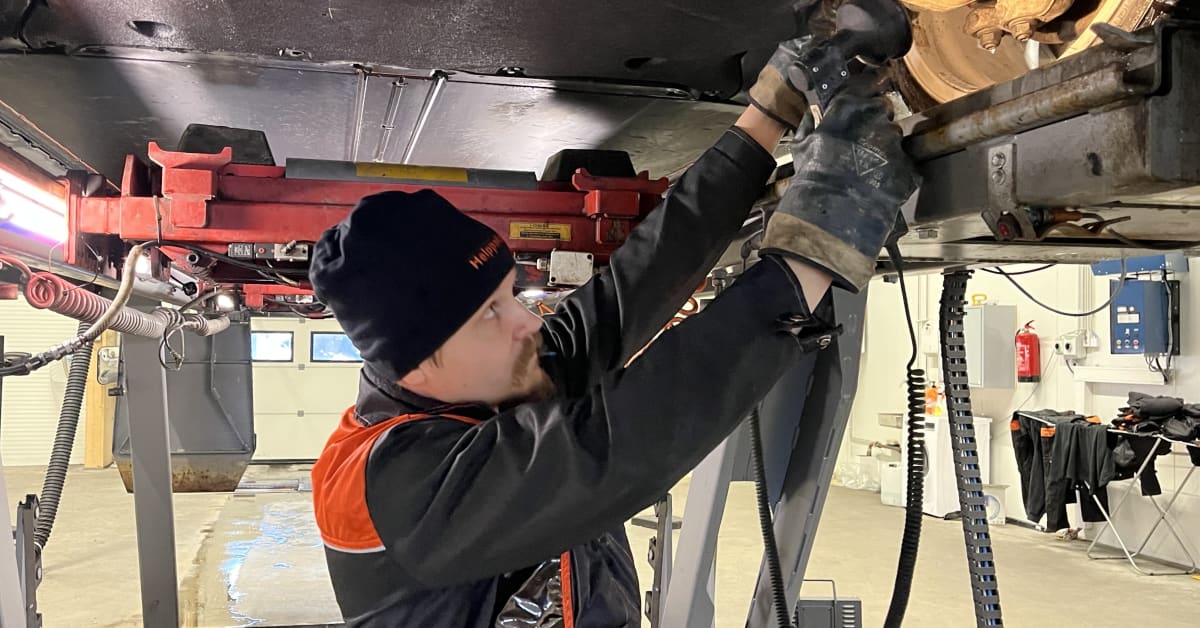
EVs are gaining popularity in Finland – but perform significantly worse in inspections than petrol, diesel or hybrid cars of the same age. Teslas have by far the highest test failure rate.
Open image viewer
Inspecting an electric car in Lempäälä, near Tampere (file photo). Image: Juha Kokkala / Yle
Electric vehicles (EVs) are poised to surpass those with internal combustion engines in new-vehicle purchases in Finland next year. However, the Finnish transport agency Traficom says that EVs are more likely to fail mandatory inspections than gasoline and diesel passenger cars of the same age, as well as hybrids.
Cars from one company – Tesla – are largely responsible for the relatively high overall EV test-failure rate. For example, 49 percent of Tesla Model 3s failed their first inspections last year, along with 16 percent of Tesla Model S vehicles and 14 percent of Tesla Model Xs. The other cars in the list of top 5 flunkers were Renault Zoe (19%) and Porsche Taycan (12%).
EVs that fared best in inspections were the Kia Niro, Volvo XC40, Volkswagen Golf and Hyundai Ioniq, which all had failure rates of just four percent.
Overall, says Traficom, 16 percent of four-year-old all-electric cars that came in for their first inspection were rejected last year. That compares to five percent for petrol cars and 11 percent for diesels. Hybrids also generally pass inspection better than EVs.
Car inspectors tell Yle that the root cause of the problem is that EVs are often built on platforms that do not sufficiently support the weight of the car, including the battery, and the wear and tear of the structures over time. Teslas particularly have suspension problems, they say. Few problems have been detected with EVs’ electrical technology.
The average rejection rate for petrol cars last year was five, but there was a large variation between models, from 24 percent for the Dacia Duster to zero for the Audi Q2.
Rejection rates for plug-in petrol hybrids ranged from 13 percent for the Skoda Superb to one percent for the BMW 2 Series.
Tesla popularity nosedives
The share of electric cars in new registrations has risen rapidly and is set to overtake petrol as the most popular power source next year. There is only a five-point gap this year.
Tesla has led EV growth in Finland through the 2020s, but this year its popularity has plunged. In first-time registrations from January to August, fell to fourth place, after being either number one or number two in the four previous years. Between January and August, registrations of new Teslas dropped by 58 percent compared to the same period of 2024. Meanwhile Volkswagen, Skoda and Volvo have surged ahead this year.
Industry analysts attribute the brand’s rapid collapse to owner Elon Musk’s rise to political prominence in the United States – as well as growing concerns about technological and quality issues.
Fully electric cars already account for about half of new company cars and used imports, while nearly 56 percent of new cars are plug-ins.