Loyalists linked to Ian Paisley carried out ‘false flag’ bomb attacks, British army intelligence records reveal
Files show British army believed loyalists linked to former DUP leader, who died in 2014, were behind attacks blamed on emerging Provisional IRA
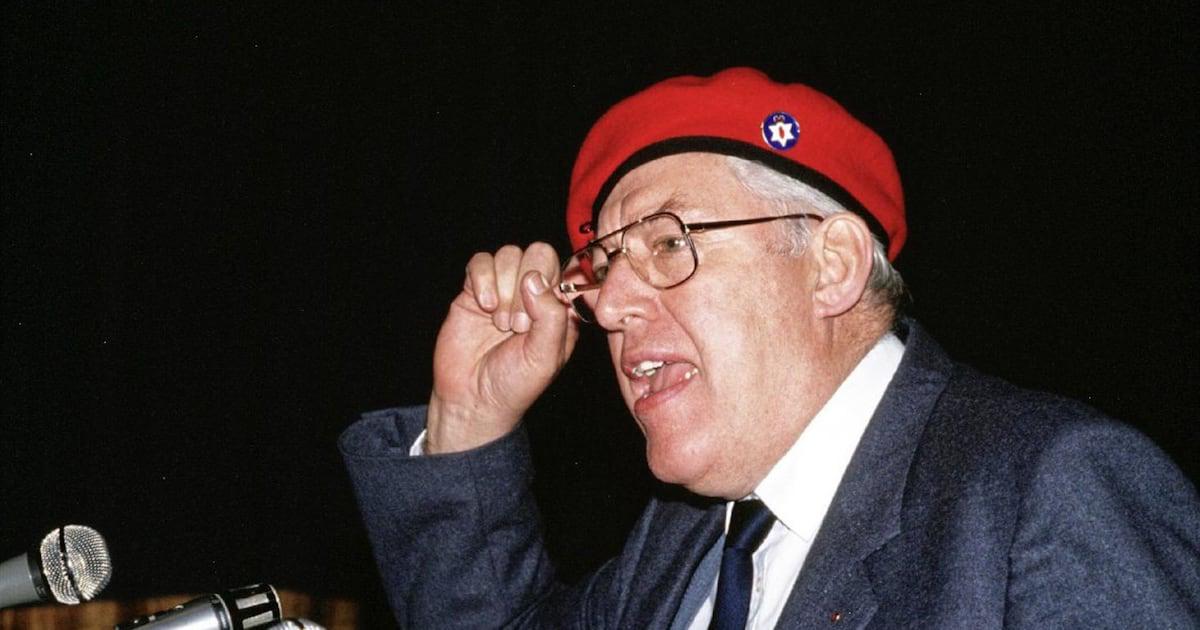
Loyalists with suspected links to former DUP leader the Reverend Ian Paisley were responsible for a series of ‘false flag’ bomb attacks in the early 1970s, British army intelligence documents reveal.
While the spate of attacks across the north were initially blamed on the newly formed Provisional IRA, it has now emerged that at the time the British army believed loyalists were in fact to blame.
Details of loyalist involvement in ‘false flag’ operations were confirmed more than 50 years ago when UVF member Thomas McDowell was electrocuted while trying to plant a bomb at a power station at Ballyshannon, Co Donegal, in October 1969.
McDowell, from Kilkeel, Co Down, was also a member of the Ulster Protestant Volunteers (UPV) and Ian Paisley’s Free Presbyterian Church.
The UPV was established by Mr Paisley and others in 1966 and in its early years shared a close relationship with the UVF.
The UPV was closely linked to the Ulster Constitution Defence Committee (UCDC), which was also established by Mr Paisley in 1966.
Mr Paisley, who died in 2014, was linked to several loyalist paramilitary groups before and during the Troubles.
He helped form a vigilante group, Ulster Protestant Action, in 1956 and was a key figure in The Third Force, a loyalist militia that emerged in 1981.
Mr Paisley was also associated with Ulster Resistance, which was formed in 1986 in opposition to the Anglo-Irish Agreement.
In the late 1980s the loyalist group was involved in smuggling dozens of weapons into the north along with British intelligence that were later used to kill dozens of innocent Catholics.
In 2019 it was reported that Mr Paisley, who eventually distanced himself from Ulster Resistance, supplied cash to the UVF to carry out several bomb attacks in 1969.
The ex-DUP leader’s family has denied the allegations.
The Ballyshannon bomb attack was part of a series carried out in the late 1960s in a bid to undermine then-Stormont Prime Minister Terence O’Neill.
The unionist leader, who resigned in April 1969, later said the attacks “quite literally blew me out of the water”.
Unredacted military intelligence files for the first half of 1970 now confirm the British army believed various unclaimed bomb attacks targeting unionist politicians, businesses and elderly Protestants were carried out by the UVF/UPV, but despite this were blamed on the emerging Provisional IRA.
The files, unearthed by research charity Paper Trail, reveal that in late March and early April 1970, 12 attacks were carried out.
Details of each are listed in a military intelligence summary (INTSUM) from the time and labelled A-L.
One of the attacks was carried out on a business owned by William James Morgan, an ex-Stormont minister, who at the time was a South Antrim by-election candidate.
The election, which was held on April 16 1970, was also contested and won by William Beattie, a member of Ian Paisley’s Protestant Unionist Party.
On the same day Mr Paisley made a similar political breakthrough by claiming a seat in the Bannside constituency, previously held by Mr O’Neill.
Military Intelligence documents from the time indicate who the British army believed were responsible for some of the bomb attacks in the weeks before the election.
“In view of the probable tie-in between Paisley’s UCDC and the UPV/UVF, it is quite possible that the last two blasts were a, to intimidate Morgan, possibly by an apparent IRA blow, and b, to gain support for Paisley candidates who could only benefit by a swing to the right in reaction against the so-called terror campaign,” a document states.
“This UPV responsibility could also explain blasts b, c, g, i, j.”
One of these attacks singled out the home of a 78-year-old woman in north Belfast, while other attacks centred on commercial property across the city.
A bomb, left in a dustbin on April 4, targeted an estate agent on Donegall Street in Belfast, resulting in five casualties.
Despite suspecting loyalist involvement in some attacks, the British army took a decision to blame the emerging Provisional IRA.
“The locations of the others (bombs), and especially the viciousness of (attack) e, make more sense if the IRA Brady group are provisionally blamed,” intelligence files say.
A statement reported to be from the ‘Provisional Army Council’, which is believed to have been bogus, claimed responsibility for one of the 12 bomb attacks at a Tailors shop on Royal Avenue in Belfast city centre.
This was dismissed by the Dublin-based “Provisional Army Council”, which said it “disclaims all responsibility for this action and the issuing of such false statement is highly irresponsible in the present circumstances”.
Nationalist political leaders were also not convinced by claims the Provisionals were responsible.
On April 7, West Belfast MP Gerry Fitt referred to claims that the IRA was responsible for the recent explosions.
"But that is not so and there is no one here or anywhere else who can point the finger of accusation at the IRA," he said.
“But what we do know is that the explosions early in 1969, in March and April, were the work of the illegal Ulster Volunteer Force, an extreme right wing unionist organisation with which, to my mind—although he has publicly said that he had nothing to do with it—the Rev. Ian Paisley has a close connection."
According to Hansard, Mr Fitt added the explosions were caused “with the intention of bringing about the downfall of the Northern Ireland Government and particularly of Captain O’Neill”.
British military intelligence agreed with Mr Fitt, who was a staunch opponent of the Provisionals.
“The latest wave of explosions and the failure by the security forces to apprehend those responsible, continue to give cause for concern,” an intelligence summary states.
“The facts would suggest that they are primarily the work of an extreme Protestant organisation intent on inflaming the sectarian issue and on causing the downfall of the present N. Ireland Government…”
The South Antrim by-election was called when unionist Richard Ferguson resigned his seat after being expelled by his local association.
His home was also targeted in a bomb attack in April 1970 while another unionist was singled out in the Carrickfergus area of Co Antrim a month later.
A British army file from the time makes a link between the attacks.
“This attack smacks of the bombing of the former Lisburn-based MP Richard Ferguson, on 28 April, who spoke out against PUP electoral gains, (Rev Beattie),” the document states.
“Both attacks are attributed to the UPV/UVF”
Another intelligence document covering the period April 14-21, 1970, refers to a reduction in attacks after Mr Paisley’s election victory.
“If anyone had gone to a bookmaker and backed the Paisley and Beattie combined ticket a month prior to the election his chances of a win would have been poor…” the file states.
“The halt in the bombing wave is a welcome relief.
“This is probably due to the PUP (Paisley’s Protestant Unionist Party) election successes, although recent intensified efforts by the security forces to catch those responsible may have deterred the culprits temporarily.”
Intelligence documents also raise concerns about RUC Special Branch, with one senior British army officer remarking: “The lack of progress on the bomb explosions and a complete absence of worthwhile Special Branch information generally emphasises either their weaknesses, or their reluctance to impart information to the Security Forces, or both.”
Concerns were also raised about the Ulster Special Constabulary (USC) and the theft of weapons.
“An uncanny number of USC arms go missing regularly,” a document states.
“The ‘loser’ is quite likely to be not quite ignorant of the ‘lost’ weapon’s whereabouts.”
The apparent ‘false flag’ attacks fit with a pattern in the early 1970s that includes the McGurk’s Bar atrocity.
The attack resulted in the deaths of 15 innocent Catholics after a bomb was detonated at the north Belfast bar in 1971.
At the time security forces blamed the IRA, a claim later shown to be untrue.
Researcher Ciarán MacAirt, whose grandmother Kitty Irvine was killed in the McGurk’s Bar explosion, said the “the short-term success of their false-flag bomb attacks cannot be understated”.
“They blew O’Neill out of office in 1969 and blew Paisley into office in 1970,” he said.
“At the time, the IRA had limited capacity, so we could argue that the greatest paramilitary threat to the stability of the Unionist government from 1966 to 1970 was actually the UVF.
“Paisley and his ilk benefitted from this immensely, of course.
“The false flag bomb attacks by British extremists also began a pattern of wilful collusion and cover-up of loyalist paramilitary violence by the British armed forces and a capitulation by Ulster unionist politicians to loyalist threats.
“This led directly to the highly discriminatory internment of Irish Catholics in 1971 and, for my family, collusion and cover-up of the McGurk’s Bar Massacre by the British armed forces.”
by vague_intentionally_
15 comments
This is “No shit sherlock” news but still important.
Why are loyalist actions always so swept under the rug?
Lord Bannside was the architect of the troubles.
It probably wouldn’t have even happened if he didn’t get the English to fall for it.
[removed]
This has been well-known for a long time, but is actively ignored or suppressed (or denied) by unionists and loyalists alike.
Quelle surprise!
haha colour me shocked
All worth considering Airey Neaves “Clockwork Orange” while reading this.
https://en.m.wikipedia.org/wiki/Clockwork_Orange_(plot)
This thinking didn’t stop in the 50s and 60s.
Learned about this studying the Troubles during my time studying History, it’d be wild to me how successful loyalists were at suppressing the truth if whitewashing Colonialism wasn’t the norm for neoliberal institutions
It took a long while.
I wonder how many times they got away with something like this?
Loyalists of that vintage used to refer to Paisley as the “Grand Old Duke of York”; he marched them to the brink of war and marched them back again. No love lost afaik
Loyalism has literally no redeeming features. They don’t even have the high ground as some moral defenders of the union. They were the original insurgence
I find this particularly amusing, simply because we were taught this in secondary school during history class…15 years ago!!
Who doesn’t know this?
Comments are closed.