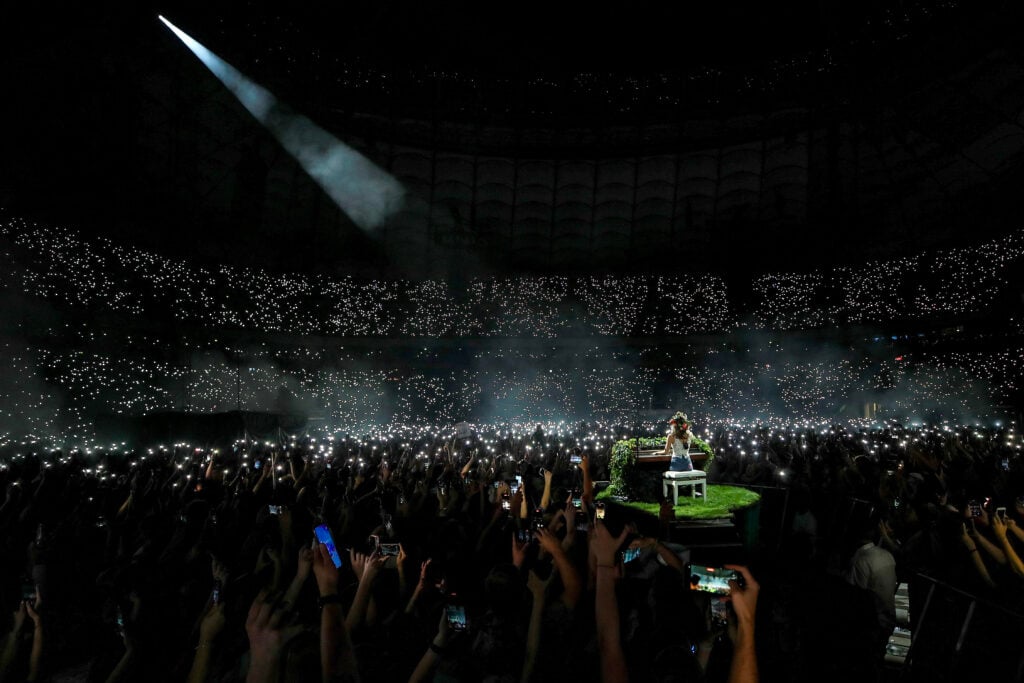
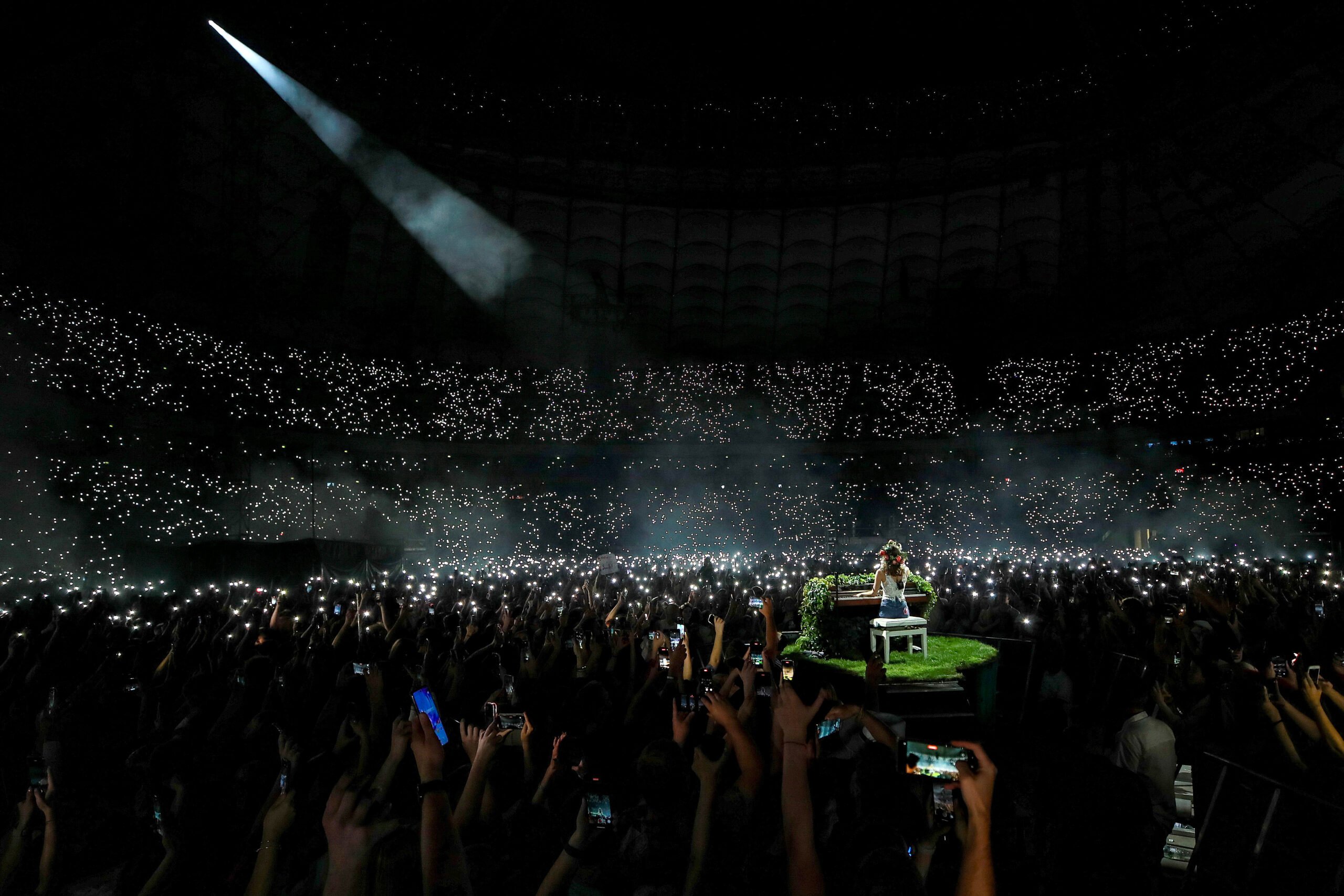
 POLISH SINGER SONGWRITER and multi-instrumentalist Sanah performing at Warsaw’s National Stadium, Aug. 24, 2024. Photo by Artur Kraszewsk
Business in Eastern Europe in 2025 is strong and steady. That’s the consensus when speaking to a cross-section of promoters and venue operators in the region. A healthy mix of national and international talent is contributing to that development.
The Balkan region in particular, which includes Albania, Bosnia, Bulgaria, Greece, Kosovo, Croatia, Montenegro, Macedonia, and Serbia, has come of age. As Stefan Elenkov, founder and CEO of Fest Team tells Pollstar, “Bulgaria and the Balkans aren’t secondary markets anymore. We consistently deliver high-impact events, overcome logistical challenges, and offer passionate, engaged audiences. From festival mainstays to sold-out stadium shows, we’re evidence that this region is ripe with opportunity, and Fest Team is ready to help artists make their mark here.”
Guns N’ Roses, Enrique Iglesias, Robbie Williams are among the stadium shows promoted by Fest Team in 2025, setting the company on a stronger trajectory than 2024, according to Elenkov, who says, “Yes, Ed Sheeran’s concert last year sold 60,000 tickets in record time, but this year we’ve increased the number of stadium shows and the interest remains very high. I’d call the market stable and steady. Concerts continue to sell swiftly, driven by star power, while festivals perform with a different rhythm, marking cultural impact.”
Fest Team produces the two established Bulgarian events Hills of Rock and Spice Music Festival, which “continue to grow in scale and profile, setting new standards for production and audience experience,” according to Elenkov, who adds, “2025 also marks the launch of our newest brand, AURA, a festival dedicated to electronic dance music, which opens an entirely new chapter for us, and for the Bulgarian market.”
Nick Hobbs, founder and CEO of Charmenko (since 2024 part of Fest Team), a 2024 Impact International Honoree, and a pioneer in Eastern European concert touring, says “working across Eastern Europe, the picture varies quite a lot from country to country; Turkey and Serbia are way down for political and economic reasons; Croatia is also down; Poland and Czechia are doing pretty well; the Baltic States is very mixed for us this year – some notable successes and some notable failures. Greece and Bulgaria are quite buoyant, Romania and Slovakia are similar to last year, I think.”
Greece is buoyant, indeed, but there are also signs of saturation, according to Giannis Paltoglou, owner of Detox Events, and promoter of Greece’s main festival, Ejekt, who says, “2025 looks very promising, but we notice that there are too many international shows. This summer, there are days when we have three international shows in Athens performing the same genre. Aside from that, business is growing, and audiences are very enthusiastic about live performances, but we must be cautious, especially for 2026.”
Paltoglou continues, “More artists are now eager to perform in Eastern Europe, seeing it as an untapped market they didn’t explore before, and now it’s a significant opportunity. Highlights for our company this year include Ejekt Festival, featuring Green Day’s first-ever concert in Greece and Louis Tomlinson headlining the second day, as well as Turnstile’s debut in Greece, The Stranglers, Palaye Royale, among others. I’m also excited about two major stadium concerts later this year: Ludovico Einaudi with 25,000 attendees and Robbie Williams with 40,000.”
“For many performers,” Paltoglou adds, “this region has become an essential touring destination to connect with both new and existing fans. A key obstacle is that many artists, during their initial album promotion tour, opt to limit their stops to Central Europe. Routing a tour through Eastern Europe can be difficult, which is why it is uncommon to see artists performing in countries like Greece during the first leg of their tour.”
Markets open up as venues open up. In the Bulgarian city of Plovdiv, the rowing canal is being used as a concert location, as is the city’s Ancient Theatre of Philippopolis (dating back to A.D. 1), where Fest Team hosted two sold-out dates with Dream Theater and Nick Cave this year. “Burgas (on the Black Sea),” says Elenkov, “especially the port area, is turning into a festival magnet, perfect for seaside shows like Spice Music Festival. These cities bring unique, atmospheric experiences that stand out on any tour.”
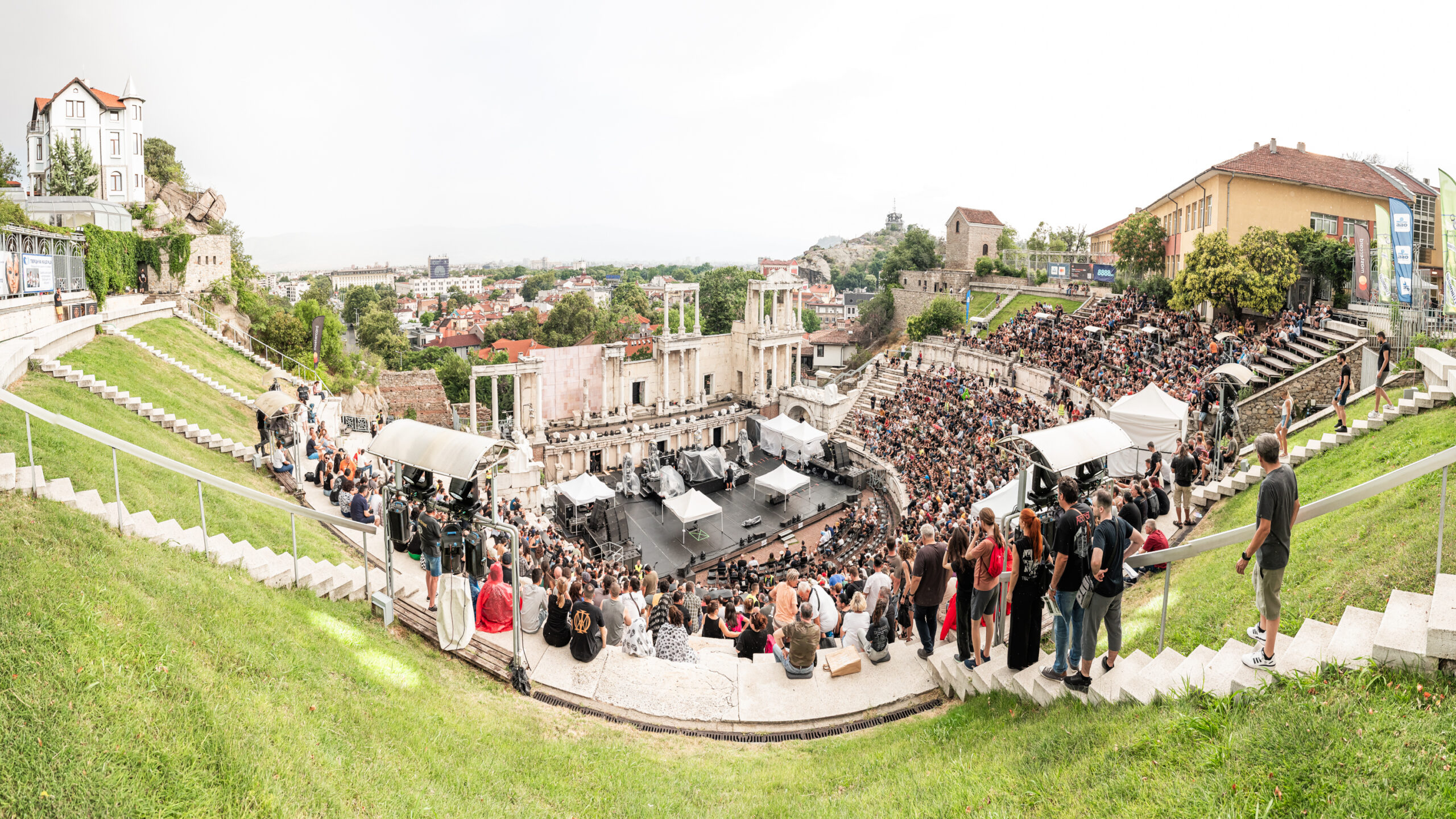 DREAM VENUE: The crowd gathering for Dream Theater’s “40th Anniversary Tour” performance at the Ancient Theatre of Plovdid (dating back to A.D. 1), in Bulgaria, July 20, 2025. Courtesy Fest Team
To make the most of this momentum, updates to the region’s infrastructure are important. “Sofia still lacks a purpose-built concert arena. We can host stadium events like Guns N’ Roses and Robbie Williams, but we’re missing a venue that bridges between arenas and stadiums. This remains our top priority,” says Elenkov.
Other markets that could use another concert venue include Romania, Turkey, and Greece, according to Richard Hörmann, owner of NuCoast Touring, founded in 2006, with offices in Ljubljana and Sofia, as well as managing partner of DM Entertainment alongside Darek Maciborek in Krakow. He says, “Bucharest and Istanbul would extend our touring circuit, if they get arenas. Athens, too, needs a new competitive arena.”
And even Poland, which is already a fully-established touring market in Eastern Europe thanks to its concert infrastructure, could do with another arena in Hörmann’s estimation. Its capital, Warsaw, “has by far the biggest potential; a venue is desperately needed there.”
One Polish arena showing how it’s done is Atlas Arena in Lodz, the country’s third-biggest city. This year alone, the 13,800-capacity building hosted international concerts by Limp Bizkit, Lionel Richie, Andrea Bocelli, Twenty One Pilots, Tate McRae, Carlos Santana, Thirty Seconds To Mars, Judas Priest and Ghost, as well as international sports events like the CEV Champions League Volley and the FIM SuperEnduro World Championship.
The building’s CEO, Maciej Łaski, says, “The Polish market is one of the fastest-growing in Europe, presenting numerous opportunities for Atlas Arena. We plan to develop a variety of our own projects, including family entertainment, which will allow us to diversify revenue streams, reach new audiences, and broaden our offerings.”
 ATLAS ARENA in Lodz, Poland, viewed from above. Courtesy Atlas Arena
Atlas Arena offers flexible configurations, making it possible to host mid-sized events without losing the atmosphere or prestige of a large-scale venue. In today’s fast-paced world, where tastes and artists’ appeal seemingly change overnight, adaptability is key. Says Łaski, “We’re committed to working closely with promoters and booking agencies to meet the diverse needs of today’s live entertainment market.” That commitment includes investment in keeping the arena up to date. At the time of writing, the team was in the process of replacing the arena’s mobile seating with a modern tribune system and installing a central rigging system to support more 360-degree productions. According to Łaski, “Further upgrades are planned.”
A trend across Europe is the strength of domestic talent. Łaski’s team has seen “a clear increase in the number of Polish artists capable of selling out Atlas Arena in recent years, and it’s a very encouraging sign for us. Domestic acts are taking the stage more frequently and with great success, representing a wide range of genres and generations. This year alone, we’ve hosted legendary rock band Coma as well as the much newer folk-pop group Kwiat Jabłoni — both drawing strong audiences. Polish rapper O.S.T.R. once again sold out the venue for his 120 Rap Fest event. The growing strength and diversity of the national music scene opens up exciting opportunities for us moving forward.”
Polish singer, songwriter and multi-instrumentalist Sanah, who sold out Atlas Arena last year, is another superstar most Americans have never heard of. She became the first Polish female artist to sell out PGE Narodowy, Gdańsk Stadium, and Stadion Śląski in Chorzów in a row as part of the “Uczta nad Ucztami” tour. This year, she sold out two shows at PGE Narodowy, Sept. 19-20, as part of the “Sanah na Stadionach” tour 2025/2026, and will sell another six to eight stadiums in 2026, according to promoter Richard Hörmann.
The strength of domestic repertoire is one of the reasons Hörmann’s “business was up about 50 % from 2024,” but the appeal of international acts is unbroken. A recent highlight is Bryan Adams’ ‘Bare Bones Tour,’ with sold-out shows in Bucharest, Sofia, and Tirana, plus the full band production sold out in Pula and Krakow recently. The main challenge faced by the industry, according to Atlas Arena’s Łaski, “is the noticeable increase in event production costs, including electricity and logistics. Higher energy and transportation expenses impact event budgets, so we are focused on optimizing processes to maintain high-quality events while ensuring profitability.”
Charmenko’s Hobbs says, “We’re squeezed. We lost 20-25% of our business when Russia invaded Ukraine, and that was just coming out of COVID, which we survived but only by getting into debt (which we’ve paid off). The vast majority of the top end is controlled by Live Nation, while everything else is highly competitive and very difficult to make a fair return on. We always have a tension between risk, staffing, longer-term investment, cashflow and profitability – it’s a balancing act. When the goddamned war in Ukraine ends, we’ll return to where we were around 2019, but your bet on that is as good as mine.”
One opportunity Hobbs identifies right now lies in “trying to do more in Turkey outside Istanbul, ditto for the former Soviet Asian and Caucasus countries, ditto for MENA; All easier said than done. Many Eastern European countries have low incomes, and rising booking and ticket prices make it hard for some to see their favourite artists. This impacts marketing plans, where small
mistakes can cause issues.”
In an established market like Poland, audiences don’t seem to mind the ticket price increases, according to Łaski, “this is largely due to increasing wages and a higher minimum wage, which allow audiences to continue attending events actively. As a result, organizers benefit from higher revenues, positively impacting the quality and diversity of offerings at Atlas Arena.”
Hörmann confirms, “costs have gone up, but so did the ticket prices, and as we see on sales, the economies in these countries are still very good. We sold over 6,000 tickets for Eros Ramazzotti in Zagreb one year before the show, and see similar demand for many other artists as well.”
Elenkov’s solution to the rising cost problem: “diversify income via sponsorships, digital activations, and long-term public–private partnerships. We work a lot with the local municipalities. Stadium shows with major artists help underwrite costs while keeping tickets affordable for fans.”
Other challenges stem from bureaucracy between some of the Eastern European countries, as Hörmann explains. “Thank God Romania and Bulgaria are now in the Schengen treaty, that helps with travelling and logistics. But the borders with Serbia and Turkey are still a big problem for our production companies, as well as all the other bureaucracy between the individual countries.
We, as a European Union, need to work on that and take down restrictions we’re facing business-wise. It has to be possible to easily promote throughout all of Europe, not only across core countries like Germany, Austria, Benelux, and Scandinavia.”
In Łaski’s opinion, “the most important challenge for the industry is to recognise the needs of the audience and respond to the changing preferences of concert and event attendees. We’re seeing a growing demand for immersive, 360-degree productions that cater to a generation looking for more than just a concert — they want a full-scale experience. At the same time, there’s increasing pressure to streamline event logistics through the lens of ESG. Both artists and audiences are more environmentally conscious than ever. In our view, these two forces — immersive experiences and sustainability — will be critical in shaping the future of the live events industry.”