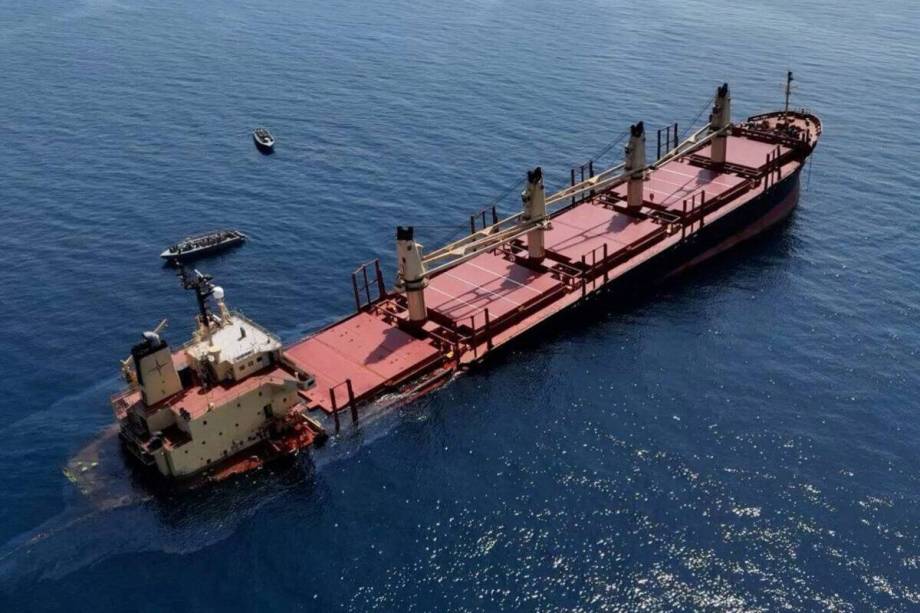
As Cyprus prepares to assume the rotating EU presidency in January 2026, it does so at a time when Europe faces one of its most pressing maritime challenges in decades. The Houthi attacks in the Red Sea have disrupted global shipping, rerouted energy supplies, and exposed the vulnerabilities of European trade routes that pass through the Bab el-Mandeb and Suez. In parallel to US-UK interventions, the EU has stepped in with a defensive naval mission, yet a number of challenges remain. Cyprus’ geography and connectivity in the Eastern Mediterranean gives the next EU presidency a unique vantage point — and an opportunity to shape Europe’s response at a moment of mounting geopolitical strain, but only if managed properly.
As highlighted in our earlier assessment, the rise of the Houthis is deeply rooted in Yemen’s political trajectory, marked by chronic state fragility and weak governance. Having said that, their expanding capabilities and regional ascendance are also inextricably linked to Iranian regime patronage within the “axis of resistance.” In light of the Israeli genocidal war in Gaza, the Houthis have joined the line with other “resistance factions” and launched hundreds of ballistic missiles and drones toward Israel, concentrating mainly on Tel Aviv and Eilat. Rounds of retaliations from both sides reached their peak last year with major attacks in critical sites such as Ben Gurion Airport in Israel but also the Al-Hudaydah Port in Yemen, which serves as an entry point for 80 per cent of humanitarian aid, and is believed to be a channel for Iranian smuggled weapons.
But even before the Gaza war, the Houthis in Yemen had already begun to disrupt the regional order. Their growing menace, though underreported in much of the international media, was steadily reshaping the dynamics of the Red Sea and beyond. In fact, they did briefly capture global attention stage when they launched strikes on Saudi ARAMCO oil facilities in Eastern Province in 2019 and Jeddah in 2022, causing concerns over oil supply and price hikes. What changed with the Gaza war, however, was that the Houthis escalated their actions dramatically, striking with far greater intensity and frequency than before, with profound implications, not only for regional stability but also for global trade. In that regard, shipping companies have been forced to reroute their vessels around the Cape of Good Hope instead of the Suez Canal, lengthening the journey by ten days and adding an extra million dollars to the cost of each trip in fuel, not to mention the hike in insurance expenses. Hence, the Suez Canal has witnessed more than 61 per cent drop in revenues in 2024 compared to the previous year.
Despite the formation of a US-led multinational military coalition, named Operation Prosperity Guardian, as well as the subsequent air strikes on Houthi sites by Washington in the Spring, these interventions have not obstructed the Houthis. A recent analysis of Houthis’ maritime campaign, show unprecedented scale and boldness. Indeed, in terms of capability, the Houthis were able to flex their muscle in August when they launched a ballistic missile toward Israel that was described as the first cluster bomb that was launched by the rebels since 2023. In retaliation, an Israeli airstrike hit the capital Sana’a, and the prime minister Ahmed Al-Rahawi along with a number of ministers were killed during that attack.
In parallel to US-UK operations and partly because of their limited success, the EU also stepped in by launching Operation Aspides, a naval mission tasked with protecting commercial vessels from Houthi attacks. While the US took a more offensive approach, conducting strikes against Houthi targets, the EU framed its mission as defensive and narrowly focused on “restoring and safeguarding freedom of navigation” — a distinction that reflects not only limited naval capacity but also political caution.
Launched in February 2024 in line with the UN Security Council Resolution 2722, Operation Aspides employs a defensive strategy, organising merchant vessels into structured convoys, providing missile-armed escorts equipped with advanced air-defense systems, deploying helicopters for surveillance and rapid response, and scheduling transits during predictable windows to ensure concentrated defensive coverage. In the first 12 months since launch, the operation successfully conducted over 600 protection missions for commercial vessels in the Red Sea, Gulf of Aden, and surrounding waters. The operation’s mandate was extended in February for another 12 months and with expanded competencies, including the collection of information on arms trafficking and on sanction evasion by “shadow fleets”.
While it is highly likely that Operation Aspides will be prolonged in the first half of 2026 following a strategic review, the mission nonetheless faces significant challenges ahead. The most pressing is the evolving threat posed by the Houthis, who have shifted onto a so-called “Phase Four” campaign, from targeting specific shipping routes to attacking vessels based on their corporate affiliations, significantly expanding the range of at-risk ships. Additionally, sustaining a continuous and possibly a more robust naval presence in the Red Sea will require significant financial commitment, coordination, but also political will from EU member states. The dynamic political environment, including regional tensions and the interests of external powers such as the US — keen to see Europeans “having to pay up”— further complicates strategic decision-making.
READ: Rubio: No prisoner exchange in Gaza while bombs going off, fighting going on
In this context, the next EU presidency has an important opportunity to shape the Union’s response to the Red Sea crisis in ways that reflect both Cyprus’ geography and its potential for sound strategic judgement. First, by framing maritime security as a European concern, the presidency needs to act as a broker between divided member states, promoting a balanced approach that defends the EU’s commercial and strategic interests without escalating involvement in Yemen. The presidency can also leverage Cyprus’ strategic regional position and its ties with Egypt, Gulf states, and African partners to foster broader diplomatic engagement, regional dialogue and a stronger EU influence in this contested maritime space.
Despite these opportunities, the next EU presidency also faces a number of challenges, rooted in the country’s unresolved division. The ongoing Cyprus dispute constrains Nicosia’s ability to present itself as a fully sovereign actor, as its regional entanglement with Turkey continues to shape how other states engage with it. In practice, efforts to engage Egypt or the Gulf states on maritime security could be complicated by Ankara’s objections or by regional partners’ concerns about becoming entangled in the Cyprus issue. Renewed tensions over maritime zones in the Eastern Mediterranean would certainly complicate these dynamics further. On the island too, political fragility stemming from Nicosia’s increasingly strained relationship with Turkish Cypriots could also complicate the agenda of the upcoming EU presidency and undermine the Union’s broader priorities.
Cyprus’s upcoming EU presidency thus comes with a loaded agenda, encompassing a range of pressing issues, including the Houthi threat in the Red Sea, and at the same time presents a strategic window for the country to assert itself and leave a tangible mark on Europe’s maritime security architecture. Seizing this opportunity will require careful navigation of domestic and regional challenges. The elections in northern Cyprus on 19 October may provide fresh momentum for the resumption of negotiations and progress on a final outcome. Yet in the absence of meaningful dialogue, the array of domestic constraints and unresolved issues highlighted above could derail the presidency’s ambitions, limiting in turn the Union’s capacity to respond effectively to pressing security challenges in the Red Sea, where the ongoing Houthi threat underscores the need for the EU to adopt a comprehensive strategy combining robust maritime security operations, strengthened regional partnerships, and enhanced crisis response mechanisms to safeguard vital shipping lanes and regional stability. Whether Nicosia, but also the EU can leverage this moment remains to be seen, but the stakes for Europe’s security posture could not be higher.
OPINION: Islamophobia is the new global currency of power
The views expressed in this article belong to the author and do not necessarily reflect the editorial policy of Middle East Monitor.