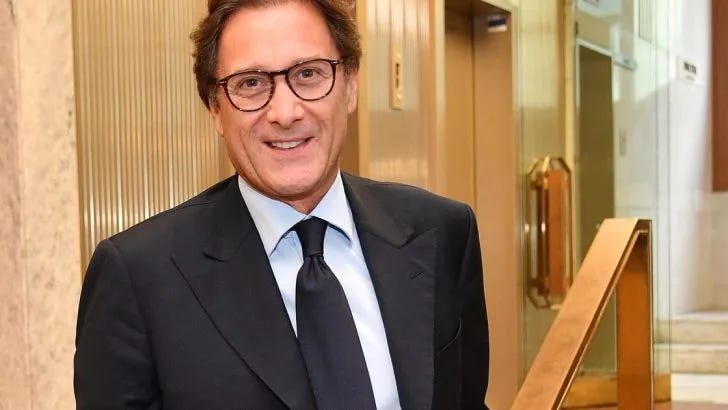
Raffaele Mincione and his companies have launched a new legal claim in the UK against the Vatican.
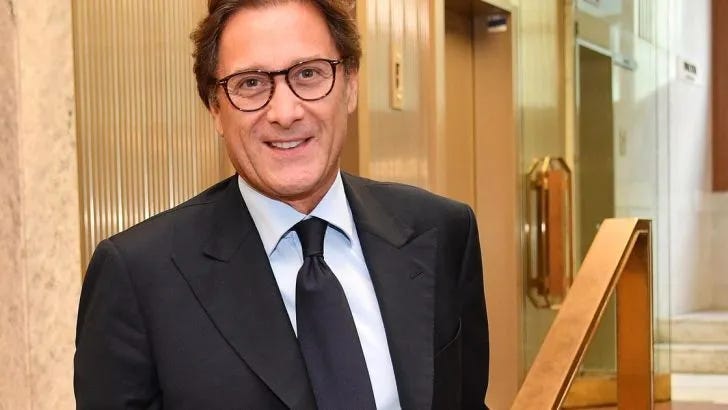
The businessman, who previously acted as investment manager for the Vatican in what became the London property scandal, filed a case Sept. 30 at London’s Commercial Court, the judicial forum which hears high-value business disputes, often between international actors.
Mincione and his companies WRM Capital Asset Management and Athena Capital filed the action for “commercial fraud,” naming the Holy See Secretariat of State as a defendant, together with the Swiss banks UBS and Credit Suisse, which was absorbed by UBS in a 2023 deal ordered and brokered by government banking authorities.
The lawsuit is the latest in a series of international legal claims brought by Mincione against the Vatican and various financial institutions in the fallout of the 2018 London property deal which saw Mincione sell the Vatican a London building as part of its early separation from Mincione’s investment fund.
The circumstances of the Vatican’s initial investment and the acrimonious and complicated process by which it acquired the building at 60 Sloane Ave. saw the Secretariat of State realize hundreds of millions of euros in losses and triggered a sprawling financial crimes trial in Vatican City.
At the end of an initial Vatican City trial in 2023, nine people were convicted of various financial crimes, including Mincione, who was found guilty of embezzlement for participating in the illegal misappropriation of Vatican funds in a deal which placed some 200 million euros under the investment manager’s control on the Secretariat of State’s behalf.
Mincione has strenuously denied any criminal action or intent, arguing that he had no way of knowing funds being invested by the Holy See’s governing secretariat had been illegally appropriated.
While details of the commercial fraud action filed Sept. 30 have not been publicly released, the claim is likely to be linked to arguments advanced by Mincione in several other legal fora. Mincione maintains that the Secretariat of State and Credit Suisse — the bank which introduced Mincione to the Vatican — misled him about the source of the Vatican’s money, failing to disclose it was drawn from funds reserved for charitable purposes.
In a lawsuit filed in Luxembourg in 2022, lawyers for Mincione’s company WRM argued that Credit Suisse “failed to divulge crucial information about the origin of the money which they used to subscribe to the WRM Group sub-fund, in order to cover up the exact origin of the funds in the framework of the relationship between Credit Suisse… and the Vatican.”
The filing in Commercial Court follows the conclusion earlier this year of a separate claim at the High Court of England and Wales initially brought by Mincione in 2020 in which he sought declaratory relief after official Vatican media accused him of investing Vatican money in “speculative and self-interested” projects.
At the time of the verdict, both the Vatican and Mincione claimed the result as a victory, however, a secondary judgement ordered the Secretariat of State to pay millions towards Mincione’s legal costs.
In a lengthy interview with The Pillar, Mincione previously said that he had abided by the contract he signed with the secretariat, and that investments he made — branded “speculative” and “self interested” by the Vatican — were well within the discretion granted to him by the contracts.
Mincione managed hundreds of millions of euros in Vatican funds from 2013 until 2018, when the Secretariat of State parted ways with Mincione’s investment fund, forfeiting the balance of its investment with the businessman, while paying millions in penalties for early withdrawal of their investment, receiving in exchange for ownership of a London property development.
In testimony given during the previous UK lawsuit, various questionable business and accounting practices at the Vatican’s principal governing department were also laid bare.
Mincione is currently appealing his conviction in Vatican City, which included a five year prison sentence and his being made party to a combined liability set by the Vatican City court at the hundreds of millions of euros against the nine convicted defendants.
Hearings in the Vatican criminal appeal process opened Sept. 22, and were recessed Oct. 6, with judges setting a date in February next year for all parties to the case to submit preliminary observations and procedural motions.
In addition to protesting Mincione’s conviction in the trial at first instance, the petition to the Special Rapporteur on independence of judges and lawyers said that “Mr Mincione’s lawyers were the victims of interference, if not intimidation, and it may be that this was at the instigation of the Office of the Promoter of Justice or another organ of the Holy See.”