Sign up for The Brief, The Texas Tribune’s daily newsletter that keeps readers up to speed on the most essential Texas news.
HOOD COUNTY — Danny Lakey and his wife have spent countless evenings sitting on rocking chairs on their front porch, watching the sun slowly dip behind the cows grazing on their neighbor’s ranch.
It was the calm country life they dreamed of in 2021 when they bought their log home, tucked into the woodlands of rural Hood County, southwest of Fort Worth. Danny Lakey proudly calls their home their “personal Cracker Barrel,” where they have more cows and horses as neighbors than people.
But ever since a noisy cryptocurrency facility moved in about half a mile away in 2023, he said their rocking chairs have mostly sat empty. Other nearby residents also say they don’t spend much time outside anymore because of what many call “that roar.”
Some compare it to a plane that never lands, or a lawnmower that never turns off. A county commissioner said it’s like “sleeping with a leafblower under your pillow.” No matter the comparison, there’s one common thread — it’s relentless.
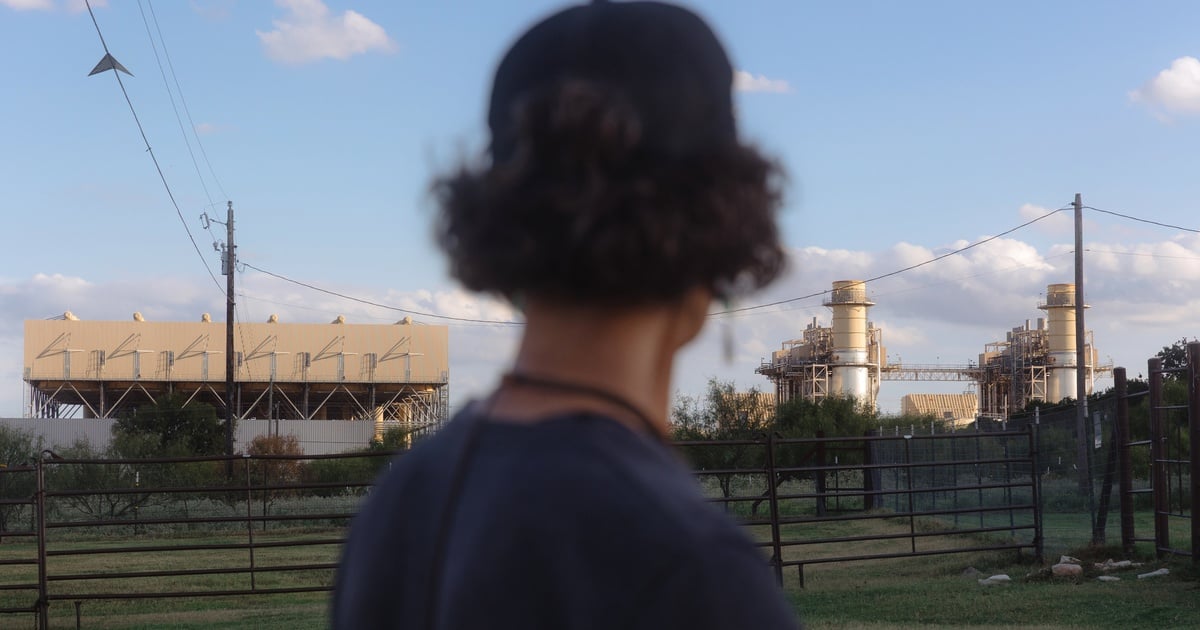
It’s the sound of thousands of fans blowing in unison, cooling down nearly 60,000 computers working at lightning speed day and night, racing to earn bitcoins, the most common type of cryptocurrency. The facility, built in 2022, is a sprawling compound of computers stored in containers roughly the size of the mobile homes less than 100 yards away, where dozens of families live.
Residents say they repeatedly asked the facility, owned by MARA Holdings, also known as Marathon, to do something about the noise. The Florida-based company responded by extending a 2,000-foot long, 24-foot tall soundproofing wall last year and replacing some cooling fans with an immersion cooling system.
But residents say it’s done little to muffle the noise, which nearby residents have measured with decibel readers at just below the statewide ordinance of 85 decibels — the volume of a food blender or garbage disposal.
Now, community members have turned to an ambitious strategy to lower the volume: create a city. Lakey and others led a drive to collect enough signatures supporting incorporation, and in November, residents will vote on whether to create the city of Mitchell Bend, named after Mitchell Bend Highway, the two-lane road that binds the neighborhood.
If the roughly 250 registered voters approve the measure, Mitchell Bend would cover two square miles and have around 600 residents and one stop sign.
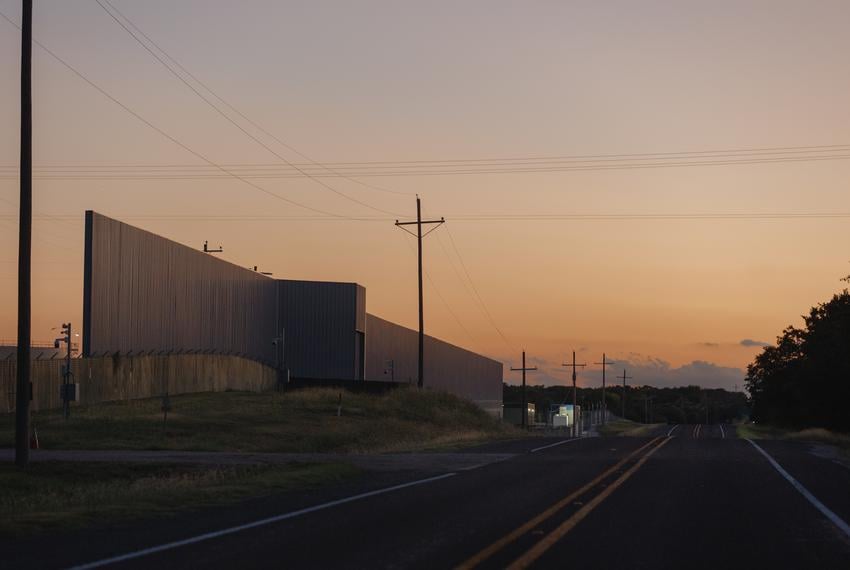
Mitchell Bend Highway runs next to a 24-foot tall soundproofing wall that separates the Marathon cryptocurrency facility’s computers from neighboring resident’s homes and land in Hood County on Sept. 24, 2025.
Credit:
Shelby Tauber for The Texas Tribune
Incorporating into a city would give the community the power to create a noise ordinance they hope will force the $5 billion Bitcoin company to quiet down. Residents initially asked their county commissioners to set a noise limit, but in Texas, counties don’t have that power — only the state and municipalities do.
It’s a clash that’s playing out across Texas as more crypto facilities and data centers move to rural parts of the state, recruited by state leaders and drawn by abundant land, fewer regulations and attractive tax deals. Unlike some states, Texas doesn’t tax crypto companies’ profits. Texas also has cheaper electricity.
Marathon, which has at least three other crypto facilities in Texas, has been firmly defending its place in Hood County. The company sent a letter to the county judge in August asking him to invalidate the ballot measure, alleging that it had found that some people who signed the petition live outside the proposed city’s boundaries.
Marathon told The Texas Tribune in a written statement that the company is “aware that a few residents are trying to create a new town in what appears to be an attempt to negatively impact its Granbury facility” referring to the nearby county seat.
The company pointed to economic benefits it brings to the community: “MARA has a track record of adding jobs and tax revenues to the communities in which we operate and has invested more than $1.2 billion in our Texas sites, contributing millions in local tax revenues and supporting local schools and nonprofits. We are committed to maintaining our health and safety standards at the Granbury data center and being good neighbors.”

Left: Cheryl Shadden has signs placed around her property protesting the noise generated from Marathon’s cryptocurrency facility in Hood County. Right: Residents say the 24-foot-tall soundproofing wall has done little to reduce “the roar,” the hum generated by fans cooling the cryptomining computers.
Credit:
Shelby Tauber for The Texas Tribune
The fight with Marathon has also created an internal conflict among residents weighing whether to form a city: Many moved to the countryside to escape not only noisy cities, but city regulations.
“We are still conservative, we love our freedom,” Lakey said of his GOP-leaning community. “The biggest pushback that we’re getting on incorporation is from people who fear that a new city is going to try to set a lot of regulations. They’re very Texan, which means: don’t tell me what to do with my property.”
He and others say they’ve come to this point not only because the noise is a nuisance, but because residents say it’s robbing them of sleep and causing various health problems: hearing loss, vertigo, migraines and high blood pressure.
“We’re tired of billion dollar companies coming in and ruining our lives,” Lakey told County Judge Ron Massingil during an August commissioners court meeting. “And we’re getting really good at fighting Goliath.”
How Texas became the world’s crypto magnet
Texas’ rural sprawls have become a magnet for crypto companies.
In 2021, after China banned cryptomining, many flocked to the U.S. and Gov. Greg Abbott laid out a welcome mat for companies seeking a new home. On X he posted: “Texas is open for Crypto business.”
Texas is now home to at least 27 bitcoin facilities, according to the Texas Blockchain Council, making it the top crypto mining spot on the planet. Facilities in Rockdale and in Corsicana are the two largest in the world.
In 2023, according to the state’s comptroller’s office, crypto mines across Texas used around 2,717 megawatts of power, enough to power roughly 680,000 homes and far surpassing anywhere else in North America; Georgia is a distant second, at 525 megawatts.
State leaders have warmly welcomed crypto companies because they represent tax dollars and jobs: The industry pumped $4 billion into the state economy and employed 12,000 Texans last year, Carol Haines, senior vice president at digital infrastructure company Core Scientific, said during a Texas Tribune panel. Texas now has around 40% of the nation’s crypto investment, she said.
Many Hood County residents say they support businesses coming to Texas — but they want regulations in place to protect communities’ peace.
“You can be here, I don’t mind,” Lakey said. “Just be quiet, be a good neighbor. Act like a good neighbor, and you’re welcome to stay.”
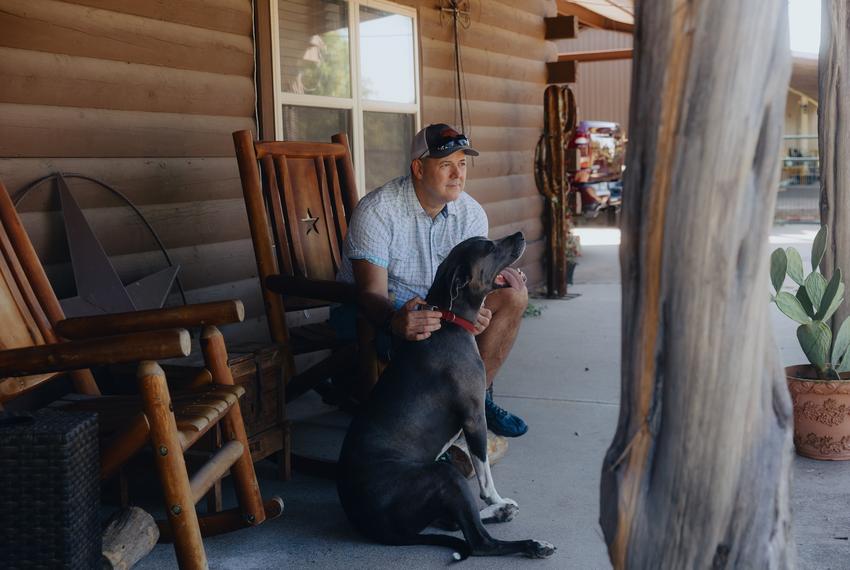
Danny Lakey and his dog Jax on his porch at his home in Hood County on Sept. 25, 2025.
Credit:
Shelby Tauber for The Texas Tribune
Lakey and others who pushed for incorporation say they have butted heads with Massingill, the county judge, who rejected the petition for the ballot measure three months after the county had approved it — and a week after Marathon challenged some of the petition signatures.
In a heated moment during an August commissioners meeting, Massingill addressed a number of residents who expressed frustration about his decision to invalidate the petition. Massingill said he initially thought the petition had been reviewed by the county attorney, but it wasn’t. He said the county’s elections coordinator later informed him that the petition didn’t have enough valid signatures.
“I just don’t want anybody to say I’m not doing my job,” he told the audience.
When residents started over and got more than enough signatures to put incorporating Mitchell Bend on the ballot, Massingill approved it.
Other rural communities have incorporated to fight industry
Using incorporation as a tool to regulate companies has become a common strategy for rural residents, said Alan Bojorquez, an Austin lawyer who says he’s helped a dozen communities try to become cities.
He’s worked with residents in Webberville in Travis County, which incorporated in 2003 to regulate gravel-making companies in the area that created large amounts of dust. He also worked with a community west of San Antonio called Quihi, where residents hoped to set regulations for multiple mines causing noise and dust, but their ballot measure failed in 2004.
“Normally you see people creating a city because they’re trying to protect something that’s being threatened,” Bojorquez said. “It’s this big balance of wanting the countryside life but also needing the regulations to protect it while you’re there.”
County Commissioner Nannette Samuelson, whose district includes the facility, said there are days when she can hear the crypto facility’s fans at her home, six miles away. She said she and the other commissioners urged the Texas Legislature last year to set stricter noise regulations for the state, but their plea fell on deaf ears.
State lawmakers have debated proposals in past legislative sessions to give counties the power to set noise ordinances like cities can, but have failed to agree on a bill. Cheryl Shadden, Lakey’s neighbor who’s lived in Hood County for around 40 years, said it’s a gap in the state’s policies that rural Texans are falling through.
“So if it’s in a big city, then ‘Hey, we’ll put some more protection in because there’s more of you people, but since you’re just a small, two square-mile town, you don’t deserve any protection?’” she asked. “How does that equate?”
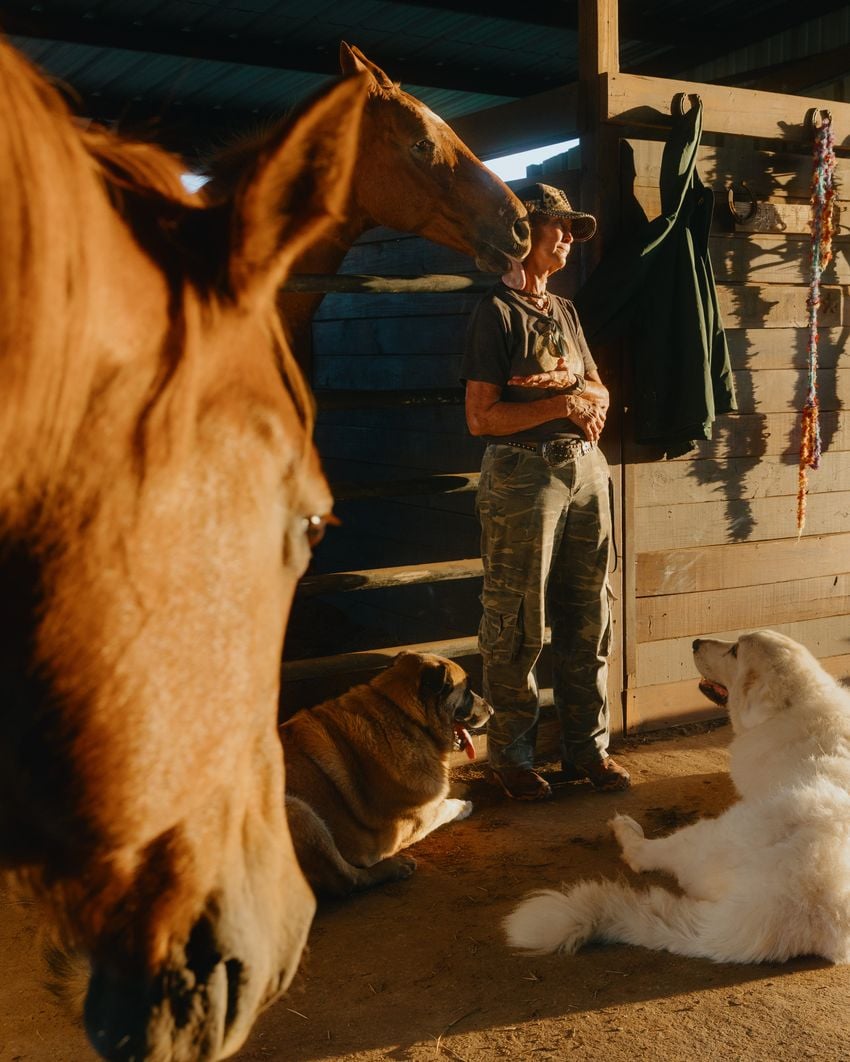
Cheryl Shadden offers treats to her horses on her land in Hood County. Shadden has lived in Hood County for around 40 years and now has the Marathon cryptocurrency facility as a neighbor.
Credit:
Shelby Tauber for The Texas Tribune
The noise “goes through your body”
As the November vote approaches, some residents said they feel trapped because they worry their property values have plummeted due to the constant noise.
Donna Adair, 65, has a brick home with a cozy backyard shed that she’s converted into her rockhounding lab. Bright red crepe myrtles line her driveway, and she’s adorned her yard with colorful birdhouses. She says she misses reading on her porch bench in peace.
Selling her home isn’t an option. “I couldn’t morally do it,” Adair said. “It’s wrong if you have a problem and you don’t tell people what it is. It may not be a sin of commission, but it’s a sin of omission.”
A mile away, Geraldine Lathers, 74, lives in a mobile home down the road from the crypto facility and says she began taking Vitamin D pills instead of going outside since the constant hums of the fans began two years ago. She added the supplements to medications she takes for vertigo spells, intense headaches and hypertension, ailments she says began last year.
“It’s just that awful,” Lathers said from her living room. “That noise is so loud, oh my God it makes you sick … it goes through your body.”
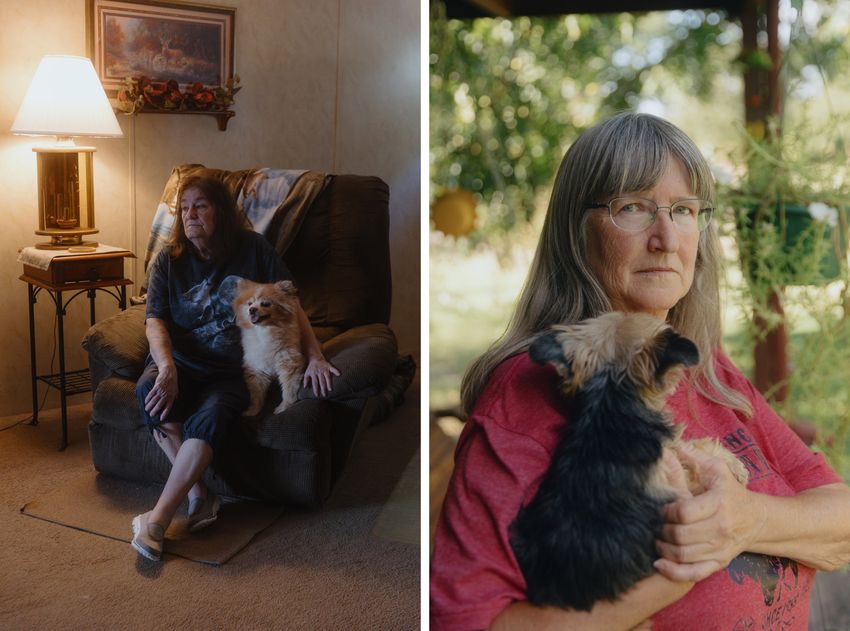
Left: Geraldine Lathers at her home with her dog, Gizzmo. Due to the noise from the neighboring Marathon cryptocurrency facility, Lathers said she takes Vitamin D pills instead of going outside, and her great grandkids don’t come to visit as much. Right: Donna Adair sits on her porch swing with her dog, Lily. Adair says she misses being able to read on her porch in peace without the noise from the neighboring Marathon cryptocurrency facility.
Credit:
Shelby Tauber for The Texas Tribune
But what makes her heart ache is that her family visits less often because of the noise.
She said her grandkids grew up spending Sunday afternoons in her backyard when her big family — she now has 23 grandchildren and 20 great-grandchildren — often got together for barbecues. Now, she said, they don’t visit as much as before. The parents don’t want their kids near the noise, she said.
The two bounce houses they used to blow up for the kids are in the shed, Lathers said. “They don’t go out no more.”
That’s why Lathers said she’s planning on voting in favor of creating Mitchell Bend in November, even though she’s not enthusiastic about the idea.
“I’m for it, if it’ll make the noise go away,” she said while petting her dog, Gizzmo. “I don’t want to really be a city, but what choices have you got?”
Disclosure: Texas Blockchain Council has been a financial supporter of The Texas Tribune, a nonprofit, nonpartisan news organization that is funded in part by donations from members, foundations and corporate sponsors. Financial supporters play no role in the Tribune’s journalism. Find a complete list of them here.
The wait is over! The full TribFest program is here. Join us Nov. 13–15 in downtown Austin and hear from 300+ thinkers, leaders and change-makers shaping Texas’ future. TribFest gives you a front-row seat to what’s next, with 100+ sessions covering education, the economy, policy, culture and more. Explore the program.
TribFest 2025 is presented by JPMorganChase.