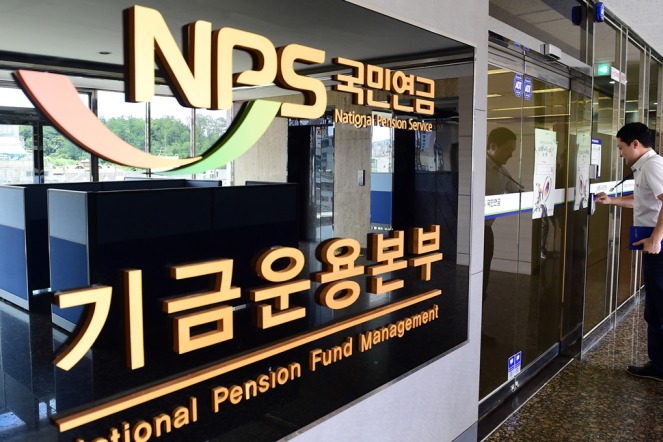
The National Pension Service (NPS), South Korea’s state-run pension fund and the country’s largest institutional investor, is poised to report its first loss on alternative investments in five years this year, after global property and infrastructure assets slumped and unfavorable currency movements eroded returns.
According to data submitted by the NPS to a parliamentary committee and reviewed by ruling Democratic Party lawmaker Seo Young-seok, the fund’s overseas alternative investments logged a combined loss of 6.36 trillion won ($4.5 billion) in the six months through June.
It posted a loss of 2.38 trillion won in private equity, 1.68 trillion won in real estate and 1.94 trillion won in infrastructure.
If the loss continues, the NPS would post the first annual loss on overseas alternative investments in five years.
The fund last recorded a loss in this category in 2020, when it suffered a 307.5 billion won setback, before rebounding with gains of 18.41 trillion won in 2021 and 10.72 trillion won in 2022. In 2023, it earned 6.71 trillion won, and last year it achieved a record 27.21 trillion won profit, the highest in a decade.
An NPS official said the latest losses were largely driven by “foreign exchange translation effects and unrealized fair-value adjustments.”
Alternative assets, such as property, infrastructure and private equity, have become a key pillar of the NPS’s long-term portfolio diversification strategy, intended to generate steady returns amid volatility in equity and bond markets.
NPS asset allocation plans for 2025 (left) and over the mid term from 2025 to 2029 (Screenshot captured from NPS website)
The share of overseas alternatives in its portfolio rose from 6.3% in 2015 to 15% in 2024, before slipping slightly to 14.4% in the first half of 2025. Domestic alternative assets still accounted for 2-3%.
HEDGING MISSTEPS
Industry observers say the losses in alternative assets stem from maturing funds tied to investments in office and infrastructure assets across the US and Europe, where property valuations have declined by about 25% since the COVID-19 pandemic.
Weaker rental income and a sustained shift toward remote work have further weighed on returns, while higher interest rates and a stronger US dollar exacerbated hedging losses.
The Korean won has depreciated materially over the past four years, adding to currency pressure.
In September 2021, the won traded at an average of 1,184 won per US dollar, but by September 2025, it had weakened to 1,402.90 won per dollar, intensifying exchange-rate drag on overseas holdings.
MANAGEMENT STRAINS AND CALLS FOR OVERSIGHT
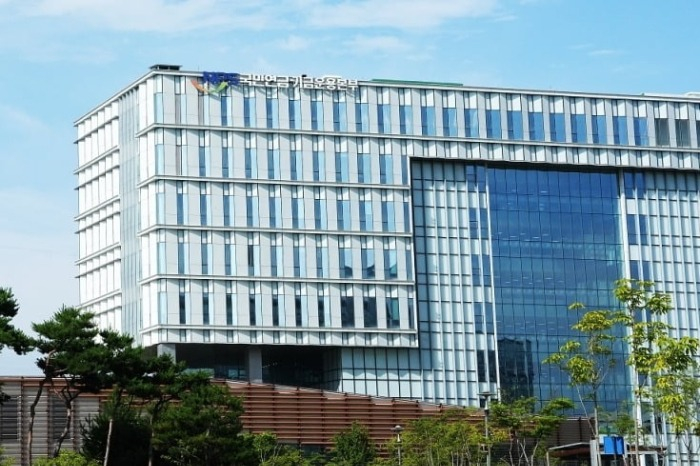
National Pension Service’s fund management headquarters
Concerns are also mounting over talent outflows from the NPS’s alternative investment division, a unit critical to selecting and managing complex assets.
South Korean President Lee Jae Myung last month called for improving compensation for investment professionals to prevent further attrition and support stable portfolio management.
Lawmaker Seo also said that while exchange-rate fluctuations can temporarily affect returns, the pension fund “must transparently assess whether FX risk management and hedging strategies were adequate as it expanded its alternative investment exposure.”
The NPS — the world’s third-largest pension fund with 1,304.5 trillion won in assets under management — is nonetheless poised to deliver a third straight strong year.
The fund’s total return through September has reportedly topped 11% amid a domestic stock rally. In 2024, the fund recorded an all-time high 15% return, buoyed by US stock gains and strong performance in alternative assets.
The NPS will publish its official third-quarter figures in November.
Write to Sookyung Seo at skseo@hankyung.com
Joel Levin edited this article.