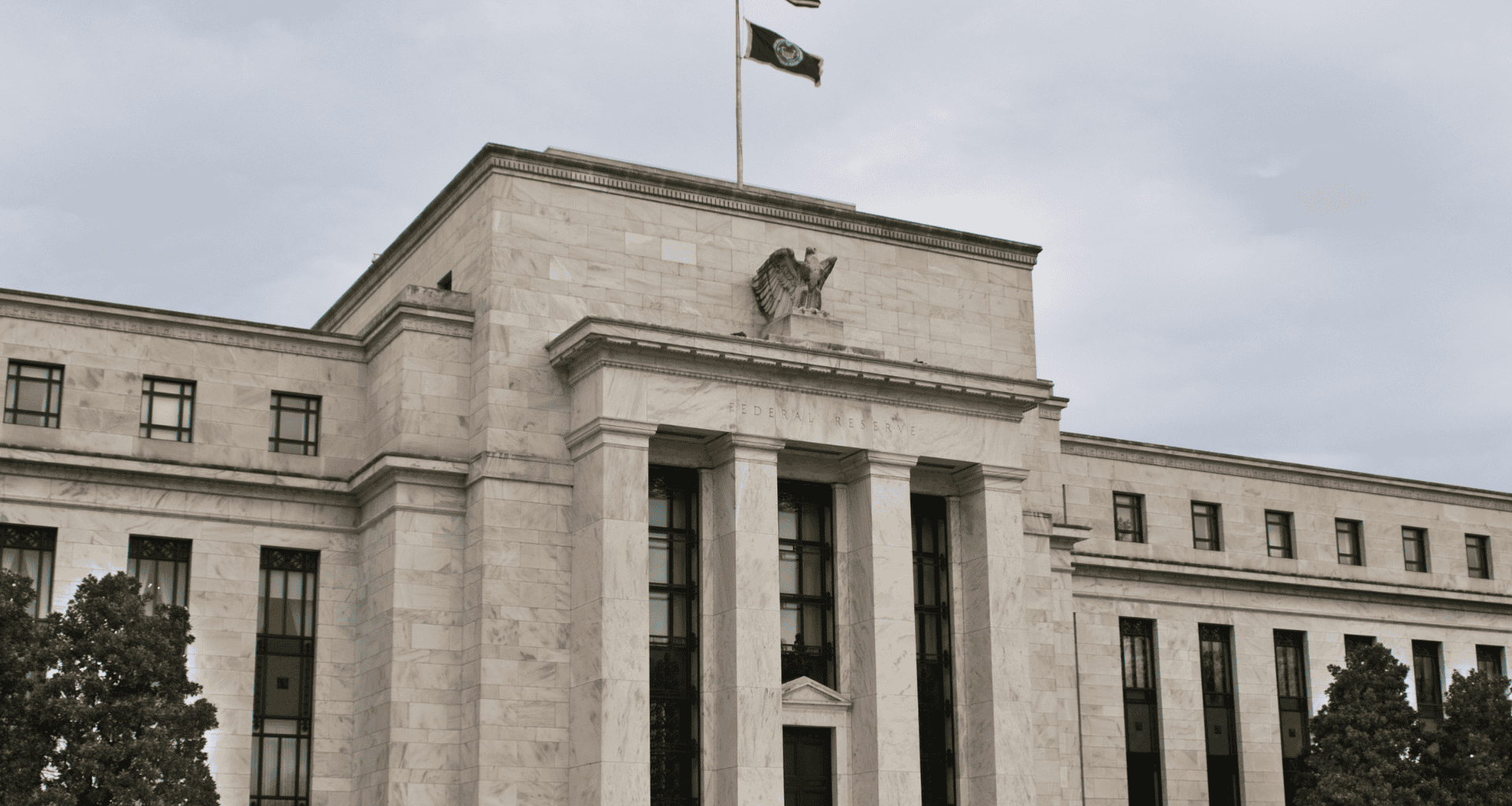
In just a few short months, Federal Reserve chairman Jerome Powell has changed lanes, indicating that the inflation and labour market data suggest it’s time for the US to join the global easing party.
The US Federal Reserve has joined the global easing party – a boon for share markets, says portfolio manager Alex Holroyd-Jones and analyst Rebecca Phillips from the global active fund manager Ninety One.
“The Fed has flipped into risk-management mode, a subtle shift in language that carries major consequences for markets. What looks like a technical recalibration is, in practice, a tailwind for equities,” they say.
Just months earlier, Fed chair Jerome Powell was striking a different tone with stronger-than-expected labour market data, constrained supply from tight immigration policies and tariff-driven inflation concerns having him question whether policy was restrictive enough.
Holroyd-Jones and Phillips say that with unemployment barely budging, Powell assessed that the economy was not performing as though restrictive policy were holding it back “inappropriately”.
“In the Fed’s framework, these forces effectively pushed up the short-run neutral rate, making policy appear less restrictive. That reduced the urgency to ease despite political pressure and helped justify a ‘wait-and-see’ stance.”
Fast forward to now and Holroyd-Jones and Phillips argue that everything has changed.
“On inflation, the fear was that tariffs would stoke a persistent upward pressure on prices. Yet the impact has been more protracted than expected. Companies have absorbed more of the costs, tariff collection has proved uneven, and consumers haven’t faced the kind of sustained shock that would risk de-anchoring inflation expectations, giving the Fed comfort that the inflation outlook is stabilising and upside risks abating.
“On the labour market side, the July payrolls release, and subsequent revisions showed that conditions were not as tight as earlier estimates suggested. With wage growth moderating and vacancies per unemployed worker falling, the data points to a labour market losing some of its earlier heat. That, in turn, raises the risk of a deeper downturn and potentially a recession.”
Taken together, they argue that these shifts suggest that the factors that led the Fed to view policy as having tightened over the summer are moving into reverse.
Tariff effects look less acute, labour tightness has eased, and inflation expectations remain anchored. The Fed now sees current policy settings as exerting a much stronger drag on the economy than before.
“With these monetary headwinds and a fragile balance between supply and demand in the labour market, it is not surprising that we have seen the Fed’s focus shift towards defending against further weakness,” they say.
“To quote Powell, he has warned that ‘downside risks to employment are rising. And if those risks materialise, they can do so quickly in the form of sharply higher layoffs and rising unemployment’.”
Holroyd-Jones and Phillips argue that the Fed is saying that it stands ready to act if job conditions deteriorate.
Hard landing
“For global markets, that is effectively a backstop, with the world’s biggest central bank joining the global easing party. Investors can take confidence that sharp labour-market weakness won’t be tolerated, which in turn reduces the probability of a hard landing.
“The Fed isn’t waiting for economic conditions to collapse; it’s showing a willingness to lean against risks early.”
They say that for risk assets, this is a powerful signal. “A central bank that acknowledges policy is already restrictive and is prepared to cushion the downside creates a supportive environment for risk-taking.
“For now, that adds up to a constructive backdrop for equities, particularly in growth-heavy sectors such as technology, where earnings continue to grow in double digits, supported by the AI transition, potentially supporting the previous beneficiaries of US exceptionalism, at least in the short term.”
They add that the negative tail risk for the US dollar may be diminishing as growth is supported and rate cuts reduce the interest burden, improving debt sustainability concerns, again, at least in the near term.
“The brakes may be pressing harder on the economy than Powell once believed, but paradoxically, that is precisely why the Fed is keen to ease, and why the current Fed stance is a tailwind for markets.”