
Among European countries Germany is set to play an important role for the recovery of Ukraine. In June 2025, the Konrad-Adenauer-Stiftung (KAS) appeared as a partner at the Black Sea security Forum in Odesa. On that occasion, we met Thomas Birringer, Head of the Representation Office in Ukraine for KAS, who accepted a few months after that event to answer some questions about the German political foundation’s activities in Ukraine.
Let’s speak about KAS and its sponsorship policy. How has the war in Ukraine influenced the sponsorship and partnership policy of your Foundation?
Follow our coverage of the war on the @Kyivpost_official.
KAS is a political foundation from Germany. Our mandate is to support democracy, rule of law, social market economy all over the world. Actually, we are not a sponsor, we are a partner, because the main principle of our work is twofold. One principle is: we do our work from field offices in the countries where we work. So, we don’t direct our projects from our head office in Berlin. And the second principle is partnership. We choose likeminded organizations or people to work with. And this is why we can continue our cooperation with them.
During the war, of course, the focus of the project changed a lot. We deal a lot more with security policy issues. As you have mentioned, the Black Sea Security Forum in Odesa is the best example for that. And since many of our partners changed their focus of work, we did the same. And we continued working with most of our partners since the full-scale invasion.

Other Topics of Interest
Russian Strikes Kill Civilians and Wreck Homes Across Ukraine
Overnight attacks left at least six dead and dozens wounded, hitting homes, power lines, and public facilities across multiple regions.
Has the foundation redirected resources away from Russia-focused projects toward Ukraine and Eastern Europe?
Yes, very much so. We stopped all our work in Russia before this full-scale invasion, because it became very clear to us it didn’t make sense to work anymore in Russia, since Russia is behaving as an enemy not only towards Ukraine, but also towards Western Europe. Consequently, we don’t have partners anymore in Russia.
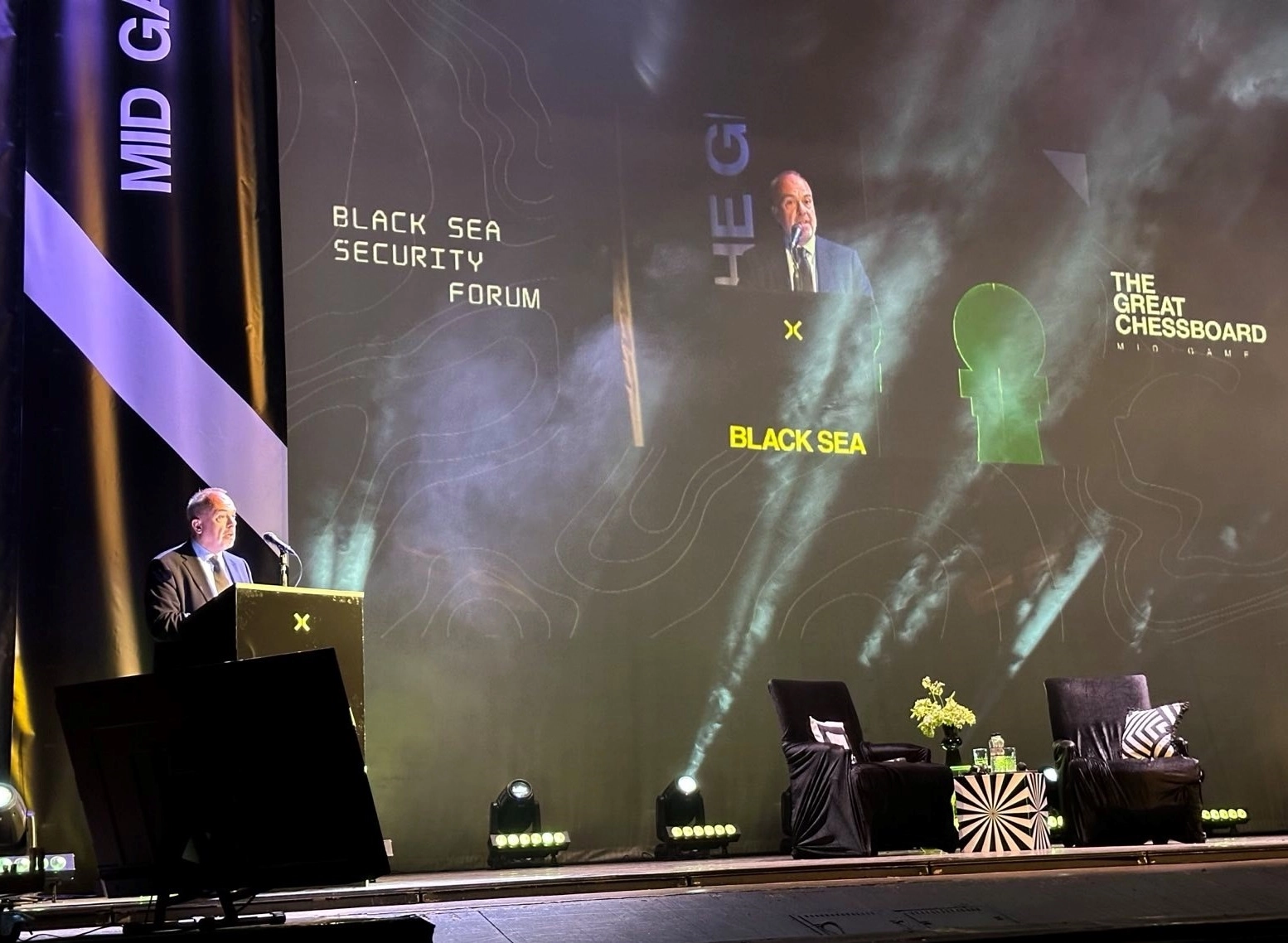 Thomas Birringer at Black Sea Security Forum Odesa – Credits Thomas Birringer KAS
Germany’s political approach obviously affects the way German foundations like KAS operate abroad. From your point of view how has Germany changed its political attitude to Russia over past three years?
I think the German political decision makers have always been clearer about Russia than parts of the German public opinion. In Germany you have a majority of people who understood that Russia is an unfriendly country. But there are in the far right and far left still people who think that we should cooperate with Russia. And you can see the same positions when it comes to the political parties represented in the parliament. But when it comes to the center and to the majority of the voters in Germany, it becomes very clear, since the beginning of the full-scale invasion, that Russia cannot be a partner of Germany anymore. It is clear that Russia, for the time being, is our enemy.
And I think this has changed German politics very clearly. And if you look at the recent decisions, for example, to lift the debt break in our budget to allow more defense spending and support to Ukraine. This is a very clear evidence. Political foundations like us are independent when it comes to focusing where to concentrate our work. But since KAS is affiliated with the political party of Chancellor Merz, the CDU, which has a very clear position about Russia, our position reflects this. As I said, we no longer have partners in Russia. And now we concentrate on support for Ukraine.
How important was the concept of “Zeitenwende” (turning point) for Germany’s foreign policy direction?
I think it’s a huge change. It’s a very important concept. The only problem with it was that, when the previous chancellor, Olaf Scholz, announced this Zeitenwende, there were very little practical consequences. For too long this concept has only been a password. And real political changes were not coming as fast as they were needed. It only accelerated the change in government.
After Friedrich Merz became Chancellor, he made Zeitenwende a reality. Of course, it was important that this was announced, but we should have acted much earlier on defense spending, on war support for Ukraine, than we actually did. Now we do.
Looking ahead, what roles does the Adenauer Stiftung see for itself in supporting Ukraine’s recovery during and after the war?
I think Ukraine will face difficult times not only for the time the war continues, but also for the time after, because even if the war ends, I’m afraid Russia will not give up on Ukraine. Russia will try to influence Ukraine from inside by supporting certain political groups in order to create chaos inside Ukraine. And they want to do it especially during elections.
Therefore, I see as our main task for the future – two things. One is to try to help the democratic pro-European actors inside Ukraine to get stable and to prevent the chaos Russia wants to create, especially when it comes to elections, to prepare for that moment.
How is it possible to obtain this political stabilization in Ukraine?
All this can happen in an orderly, legal, stable way. However, it’s not only about elections as such. It’s about stabilizing all the different actors that have to do with this situation.
Political parties, institutions like the parliament, free media, civil society. All these institutions need to be strong and need to continue being strong after the end of the war, so that the country can proceed on its way to the EU. And this is the second priority – EU accession.
We have to do a lot of civic education inside Ukraine about EU, because also the accession as such, is a subject of Russian influence. They want to discredit Europe and to spread fake news about the EU. Consequently, we have to do a lot of civic education trainings on all levels for the broad public as much as for political decision makers to make clear what EU accession is about, what it will bring for the country, and how EU institutions function. So, these are our priorities – stabilizing for the post war period and supporting EU accession.
In few words, you are dealing not just with material recovery of Ukraine, but also a democratic and institutional recovery. Is it correct?
We have a very limited budget; we are very small when it comes to material support. That is not our mandate. We are a political organization. However, material support for the recovery of the country is very important. For example, Germany is operating with the Government Development Cooperation Agency (GIZ) and they focus very much on these material issues. There are many other German funded projects in the economic field and, of course, many German companies for business projects. Our mandate is to support the political development of Ukraine towards rule of law, democracy and European integration.
KAS included Odesa in its operations, supporting the Black Sea Security Forum, notwithstanding most of international activities and events are based in Kyiv. How was your experience? Are you going to be partner of the event again? Why Odesa?
We are going to support it again. But not only to support it, since we are co-organizer. We decided to do so, because we think Odesa and the Black Sea region is extremely important. It will be economically very important for an independent Ukraine, because it’s the trade hub either for Europe, or for Ukraine. I think many people don’t go to Odesa currently for security reasons, but we have to be there.
Also, for European defense, for naval security, the Black Sea region is strategically important. What Ukraine achieved in the Black Sea is not only decisive from the point of view of the war. It’s also something that we Europeans should learn from. That is what we would like to enhance by helping to organize this forum.
What differences did you notice when you visited Odesa compared to Kyiv, where your office is based?
Kyiv is a good city, but it’s not Ukraine. Ukraine is a very diverse country with many different mentalities and this cultural diversity needs to be maintained. Therefore, for anybody who wants to support Ukraine, who wants to work and live here, it’s necessary to also take care of this part of the country, which is indispensable for the future recovery and for the economic and political independence of Ukraine.