This story has been updated.
By Gary Gately
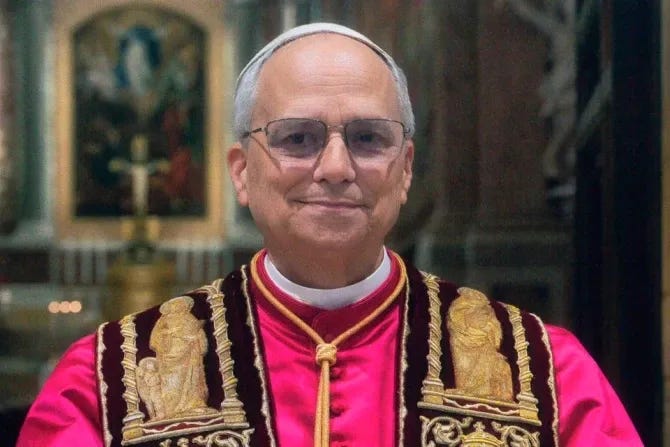
Pope Leo XIV’s first major papal document — in which he decried growing economic inequality and indifference to the sufferings of the poor — has drawn widespread praise from Catholics across the world.
“God has a special place in his heart for those who are discriminated against and oppressed, and he asks us, his Church, to make a decisive and radical choice in favor of the weakest,” Pope Leo writes in the 104-page apostolic exhortation Dilexi Te (”I Have Loved You”). “In a world where the poor are increasingly numerous, we paradoxically see the growth of a wealthy elite, living in a bubble of comfort and luxury, almost in another world compared to ordinary people. We must not let our guard down when it comes to poverty.”
The Vatican on Thursday released the document, which Pope Francis had started writing before his death in April at age 88 after 12 years as the leader of the 1.4 billion-member Catholic Church.
Leo, the first U.S.-born pontiff, writes in the document: “I am happy to make this document my own — adding some reflections — and to issue it at the beginning of my own pontificate, since I share the desire of my beloved predecessor that all Christians come to appreciate the close connection between Christ’s love and his summons to care for the poor.”
The new exhortation often quotes Francis, as well as Popes Benedict XVI and St. John Paul II’s teachings on migrants, prisoners and human trafficking victims; cites the examples of more than 30 saints, including St. Francis of Assisi, St. Augustine, St. Teresa of Calcutta, and St. Oscar Romero; and traces Catholic teachings on care for the poor to the Old and New Testaments and to the works of the Church Fathers.
Leo, a member of the 781-year-old Order of St. Augustine who served as a missionary and bishop in Peru for two decades, writes: “On the wounded faces of the poor, we see the suffering of the innocent and, therefore, the suffering of Christ himself.”
Echoing Francis’s criticism of President Donald J. Trump in 2016 for his promise to deport immigrants and build a border wall, the 70-year-old Leo says: “The Church, like a mother, accompanies those who are walking. Where the world sees threats, she sees children; where walls are built, she builds bridges. She knows that her proclamation of the Gospel is credible only when it is translated into gestures of closeness and welcome. And she knows that in every rejected migrant, it is Christ himself who knocks at the door of the community.”
Leo points to the migration of Abraham, who set out without knowing where he was going, Moses leading the pilgrim people through the desert, and Mary and Joseph fleeing with the baby Jesus to Egypt.
“The Church has always recognized in migrants a living presence of the Lord who, on the day of judgment, will say to those on his right: ‘I was a stranger and you welcomed me,’” Leo writes, referring to the “Judgment of the Nations” (Matthew: 25-24), in which Jesus clearly says we will be judged by whether we care for the poor, the sick, the imprisoned and the foreigner.
Dilexi Te also takes aim at some Christians who point to “pseudo-scientific data” to support their argument that a “free market economy will automatically solve the problem of poverty or who “find it easier to turn a blind eye to the poor” by claiming: “Our task is to pray and teach sound doctrine.”
Leo laments that “some Christian movements or groups have arisen which show little or no interest in the common good of society and, in particular, the protection and advancement of its most vulnerable and disadvantaged members.”
Francis’s frequent criticism of capitalism had drawn the wrath of some conservative Catholics, particularly in the U.S., who labeled him a “Marxist.”
In a recent interview, Pope Leo told Elise Ann Allen, the Vatican correspondent for Catholic site Crux: “The fact that I am American means, among other things, people can’t say, like they did about Francis, ‘he doesn’t understand the United States, he just doesn’t see what’s going on’. I think that’s significant in this case.”
Leo also said in the interview that “some things going on in the [United] States that are of concern” and suggested that “sometimes decisions are made more based on economics than on human dignity and human support.”
In his new exhortation, which some conservative Catholics criticized, Leo points to Pope Francis’s encyclical Dilexit Nos, in which the Argentina-born Jesuit pontiff “reminded us that social sin consolidates a ‘structure of sin’ within society, and is frequently ‘part of a dominant mindset that considers normal or reasonable what is merely selfishness and indifference.’”
“It then becomes normal to ignore the poor and live as if they do not exist,” Leo writes. “It then likewise seems reasonable to organize the economy in such a way that sacrifices are demanded of the masses in order to serve the needs of the powerful…. The dignity of every human person must be respected today, not tomorrow, and the extreme poverty of all those to whom this dignity is denied should constantly weigh upon our consciences.”
He poses a critical choice for Catholic leaders and lay members of the Church alike: “Either we regain our moral and spiritual dignity, or we fall into a cesspool.”
Leo credits women’s orders, including the Daughters of Charity of Saint Vincent de Paul, the Hospital Sisters and the Little Sisters of Divine Providence, with caring for the sick, the poor, the victims of war, the drug-addicted, the migrants, the marginalized in Catholic hospitals and other healthcare facilities across the world.
“When the Church kneels beside a leper, a malnourished child or an anonymous dying person, she fulfills her deepest vocation: to love the Lord where he is most disfigured,” the pope writes.
The faithful, he says, have a “duty to make their voices heard” to denounce structural causes of poverty so they can be “eradicated by the force of good, by changing mindsets but also, with the help of science and technology, by developing effective policies for societal change….”
“Love for the Lord, then, is one with love for the poor…. Jesus’s teaching on the primacy of love for God is clearly complemented by his insistence that one cannot love God without extending one’s love to the poor.”
Not coincidentally, Pope Leo signed Dilexi Te on October 4, the feast day of St. Francis of Assisi, the 13th-century friar who renounced his wealth to care for the poor and live in poverty among them. Francis, who took his papal name from the saint, signed his encyclical “Fratelli Tutti” (“All Brothers”), calling for “love that transcends the barriers of geography and distance,” on the October 4 feast day in 2020.
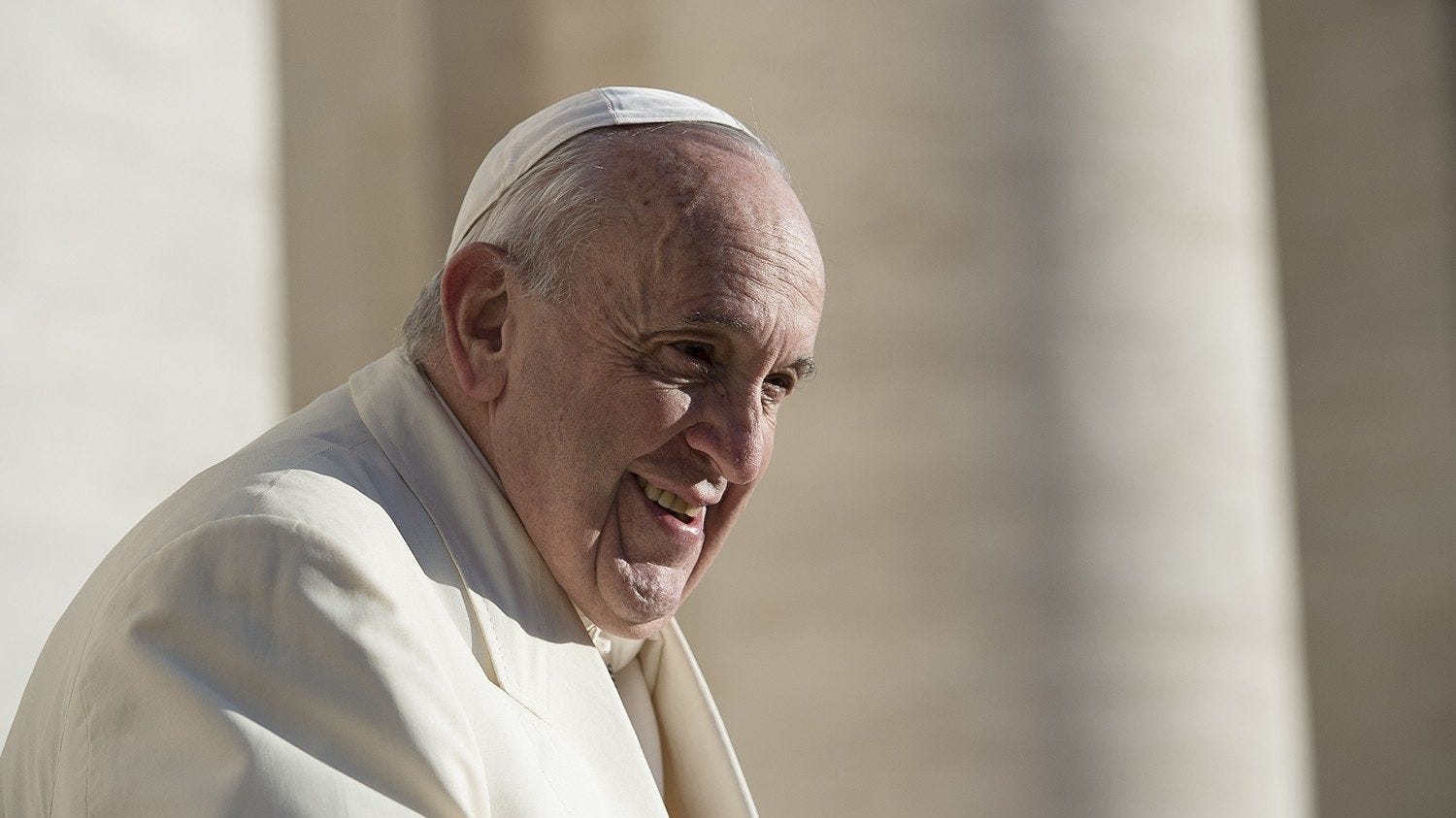
In Dilexi Te, Leo also praises almsgiving while acknowledging that today “it is not looked upon favorably even among believers” and is “rarely practiced” and “even at times disparaged.”
He says “the most important way to help the disadvantaged is to assist them in finding a good job,” but adds, “We cannot risk abandoning others to the fate of lacking the necessities for a dignified life…. Almsgiving at least offers us a chance to halt before the poor, to look into their eyes, to touch them and to share something of ourselves with them,” a way of bringing “a touch of ‘pietas’ into a society otherwise marked by the frenetic pursuit of personal gain.”
Cardinal Robert W. McElroy, the archbishop of Washington, D.C., praised Dilexi Te, writing in a statement: “Pope Leo has given the Church a beautiful reflection on the relationship that every disciple must have with the poor of our world…. Pope Leo illuminates the ties that call us to a deep affection for the poor and a profound sense of solidarity and action in the world to alleviate poverty and the structures that perpetuate it in the age in which we live.”
Archbishop Timothy P. Broglio, president of the U.S. Conference of Catholic Bishops, also welcomed Leo’s apostolic exhortation.
“The Holy Father calls upon each of us to respond to a world that is marked by indifference, division, and apathy especially when directed towards the poor and vulnerable,” Broglio wrote. “On the challenges we face with contemporary migration, he encourages us to respond with four actions: welcome, protect, promote and integrate. This is a sharp contrast to the culture of fear being imposed upon our sisters and brothers in Christ.”
Austen Ivereigh, a British journalist, commentator and author known for his bestselling biographies of Pope Francis, posted on X: “It is very moving that, of all the documents and subjects he could have chosen for his first papal teaching, Leo chose one that Francis began, on the centrality of the poor in the Gospel. That’s not just a choice, it’s a program.”
Ivereigh added: “This isn’t just about the poor. It’s about God speaking through the poor to call us to change the way we live now.”
Father Jame Martin, the Jesuit priest, author and journalist, posted a video on X in which he said: “In ‘Dilexi te,’ Pope Leo spoke about Jesus’s poverty in Nazareth…. Please listen to what Pope Leo is telling us about Jesus’s command and Church teachings, which is to love and care for those in poverty. That’s just part of what it means to be Christian.”
Bishop Richard Moth, chair of the Department for Social Justice of the Catholic Bishops’ Conference of England and Wales, said in a statement: “I echo Pope Leo when he writes ‘Charity has the power to change reality; it is a genuine force for change in history.’ …. This exhortation is a timely reminder to renew our efforts to stand in solidarity, in word and deed, with the poor and marginalized. We must not be indifferent to the suffering of others; we must work for the common good and to rebuild solidarity between people.”
Christopher Kerr, executive director of the Ohio-based Ignatian Solidarity Network, said: “Pope Leo’s message invites us to put faith into action — to discern how love of God must take shape in concrete solidarity with the poor. In a world marked by inequality, displacement, and ecological crisis, Dilexi Te challenges us to see the face of Christ in those most forgotten and to respond with courage, compassion, and hope.”
The network of schools, parishes, and social ministries, rooted in the Gospels and the spirituality of St. Ignatius of Loyola, seeks to dismantle systemic injustice, bridge divides and overcome exclusion of the marginalized and promote the inherent dignity of all God’s people and the planet.
Michael Landau, president of Caritas Europa, part of the global Catholic Caritas Internationalis charity network, called Dilexi Te “a powerful and encouraging document, particularly for Caritas.”
And Hernan Quezada, a physician and Jesuit priest who serves as a delegate for Formation, Youth and Vocations at the Jesuit Conference of Latin America and the Caribbean, based in Lima, Peru, posted on X: “‘I have loved you,’ the first phrase with which Pope Leo opens his #DilexiTe. A reminder of Jesus’ message to a poor community, exposed to violence, weak and despised. Although some may not like it, it reveals where the Pope’s heart lies.”
But others criticized Dilexi Te.
Sign of the Cross Media, founded by conservative Catholic John-Henry Westen, posted on X: “Pope Leo’s first major document is out — and it’s basically Francis 2.0.”
Westen is the co-founder and editor in chief of LifeSiteNews, a Canadian Catholic conservative website that has been outspoken in its opposition to Francis and support of Trump and other conservative U.S. politicians. The site weighed in on its view of Chicago-born Cardinal Robert F. Prevost within hours of his election as pope in May. “The conclave has chosen an anti-Trump, pro-Synod American — Robert Prevost, now known as Leo XIV — to succeed Francis,” the site said.
It condemned Prevost for his role as head of the Congregation for Bishops in the 2023 removal of Texas Bishop Joseph Strickland, who in recent years had questioned the safety of coronavirus vaccines, called synodality “garbage” and endorsed a video that attacked Francis as a “diabolically disoriented clown.”
Conservative critics have intensified their attacks on Pope Leo since September 30, when he responded to a reporter’s question about the decision by the archbishop of Chicago, Cardinal Blase J. Cupich, to bestow upon Senator Dick Durbin a “Lifetime Achievement Award” for his work on behalf of immigrants despite the Illinois Democrat’s longstanding support for abortion rights.
“I think it is very important to look at the overall work that a senator has done during, if I am not mistaken, 40 years of service in the United States Senate,” Leo said.
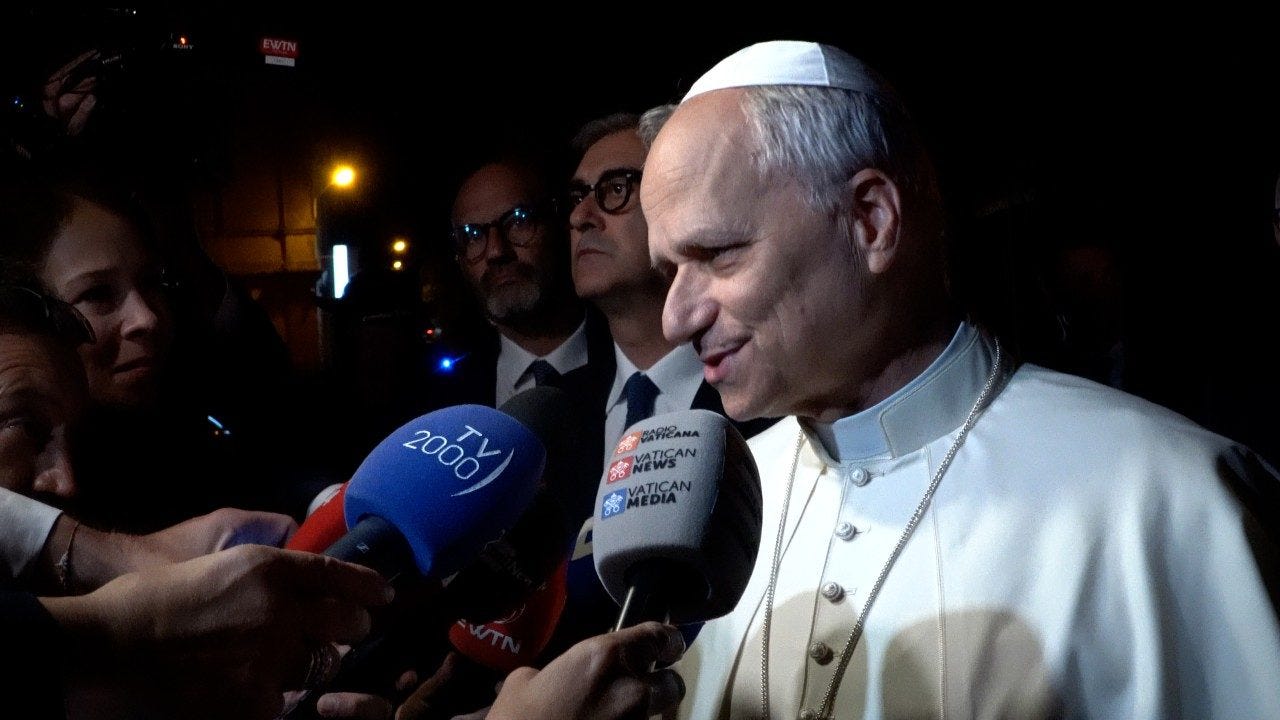
Speaking at the papal summer retreat in Castel Gandolfo, south of Rome, Leo said: “I understand the difficulty and the tensions, but I think, as I myself have spoken in the past, it’s important to look at the many issues related to the teaching of the Church. Someone who says, ‘I’m against abortion but is in favor of the death penalty is not really pro-life. Someone who says, ‘I’m against abortion, but I’m in agreement with the inhuman treatment of immigrants in the United States, I don’t know if that’s pro-life. So they’re very complex issues.
“I do not know if anyone has all the truth on them,” he said, while calling for “greater respect for one another and that we search together, both as human beings and, in that case, as American citizens, as citizens of the state of Illinois, as well as as Catholics to say that we really need to look closely at all of these ethical issues issues to find a way forward. Leo added that Church “teaching on those issues is very clear.”
Westen, speaking on a podcast, denounced Leo’s remarks. saying: “He weighs into the abortion question through remarks that are absolutely scandalous.”
And Matt Walsh, a Catholic commentator for the conservative publication The Daily Wire, posted on X: “Really terrible answer from Pope Leo. God Himself prescribes the death penalty in the Bible. Is the Pope saying that God is ‘not pro-life?’ …. Also, how can he say that ‘nobody has all the truth’ on any of these issues? We know the truth on abortion. It isn’t complicated.”
Cupich announced hours after Leo’s comments that Durbin had decided to decline the award amid mounting criticism from U.S. bishops.
“As I look back on my 50 years as a priest and 27 years as a bishop, I have seen the divisions within the Catholic community dangerously deepen,” Cupich wrote. He said he hoped the award would “promote the dignity of the unborn, the elderly, and the sick to extend the circle of protection to immigrants facing in this present moment an existential threat to their lives and the lives of their families.”
Over the past few weeks, Leo has repeatedly indicated that he shares his predecessor’s views on immigration as well as climate change.
On Wednesday, he met privately with El Paso Bishop Mark J. Seitz, a vocal critic of the Trump administration’s immigration crackdown, and immigration advocates, who presented the pope with letters and testimonies from those living in fear of detention and deportation from the U.S.
Dylan Corbett, executive director of the Texas-based Hope Border Institute, a Catholic organization that advocates for immigrants at the U.S.-Mexico border, posted on X after the meeting: “Today, with @BishopSeitz and members of the immigrant community, @HopeBorder met Pope Leo and gave him messages and a video from those fearing Trump’s mass deportations. ‘The church cannot stay silent before injustice. You stand with me. And I stand with you’, the pope said.”
Leo also continued Francis’s criticism of climate change deniers when he spoke to about 500 delegates active in climate justice at an October 1 summit on the 10th anniversary of “Laudato Si’ (“Praise be to you”), the late pope’s landmark environmental encyclical.
A week after Trump told United Nations General Assembly amounted to a “con job,” Leo said at the summit, near Castel Gandolfo: “Some have chosen to deride the increasingly evident signs of climate change, to ridicule those who speak of global warming and even to blame the poor for the very thing that affects them the most.”
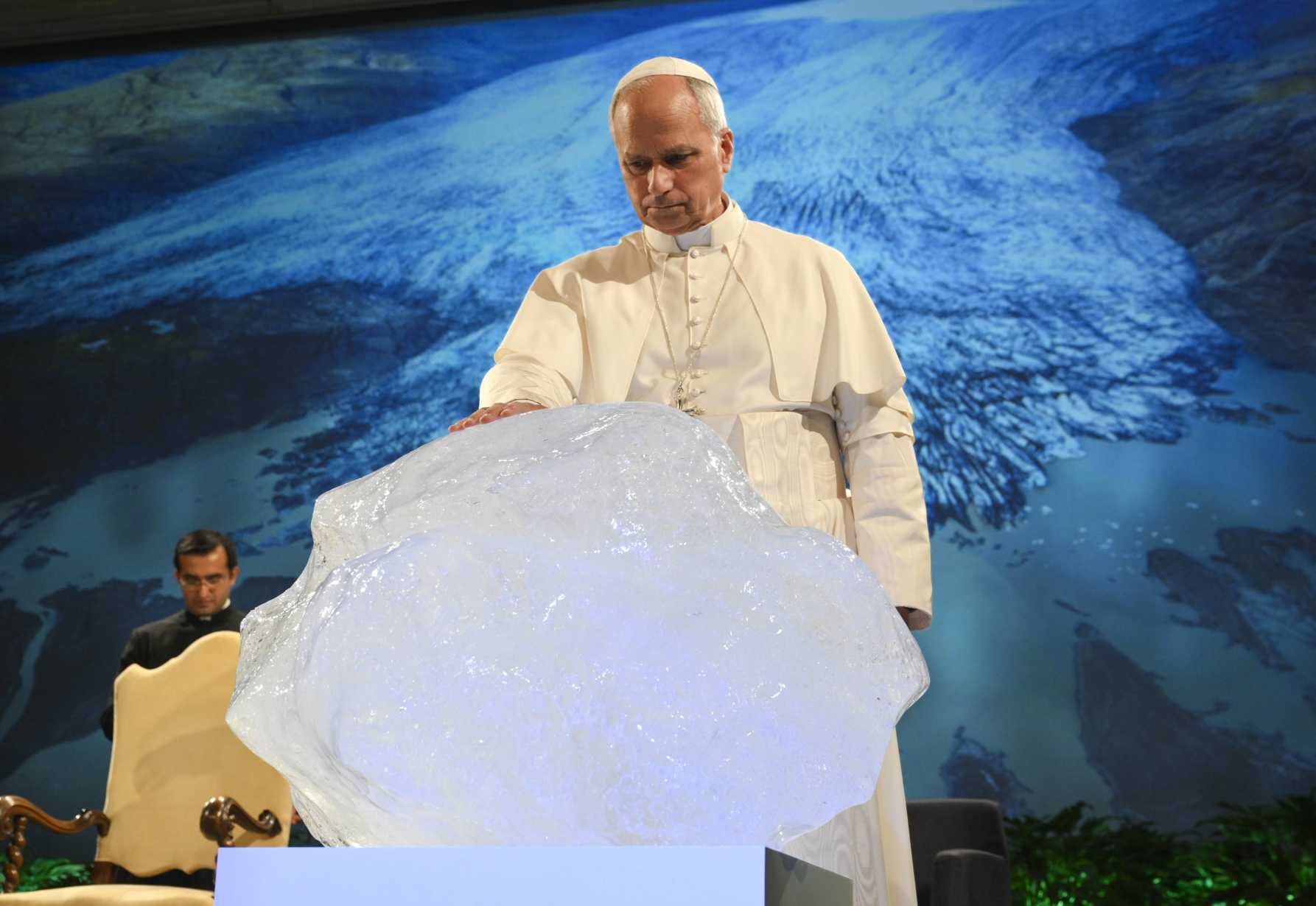
Leo, who blessed a slowly melting chunk of ice from a glacier in Greenland, said: “God will ask us if we have cultivated and cared for the world that he created, for the benefit of all and for future generations, and if we have taken care of our brothers and sisters.”
Predictably, Leo drew fire from conservative critics, who had often clashed with Francis over climate change.
Carlo Maria Viganò, a former archbishop excommunicated last year for challenging Francis’s authority — including dubbing him “a servant of Satan” — posted on X a photo of Leo blessing the ice with the words: “If the Vatican believes it is exempt from the same tragic fate of perdition, when it continues on the same path as other heretics, it will soon discover that God is not to be trifled with.”
But a Pew Research Center survey released in mid-September found that 84% of U.S. Catholics said they have a favorable view of Leo, including 37% with a “very favorable” view, and just 4% have an unfavorable view of him, while 11% say they have never heard of him.
Trump won the Catholic vote in November by the largest margin of any presidential candidate in more than a half-century, according to exit polls, despite his major differences with Church teachings on immigration as well as other issues, including the environment and the death penalty.