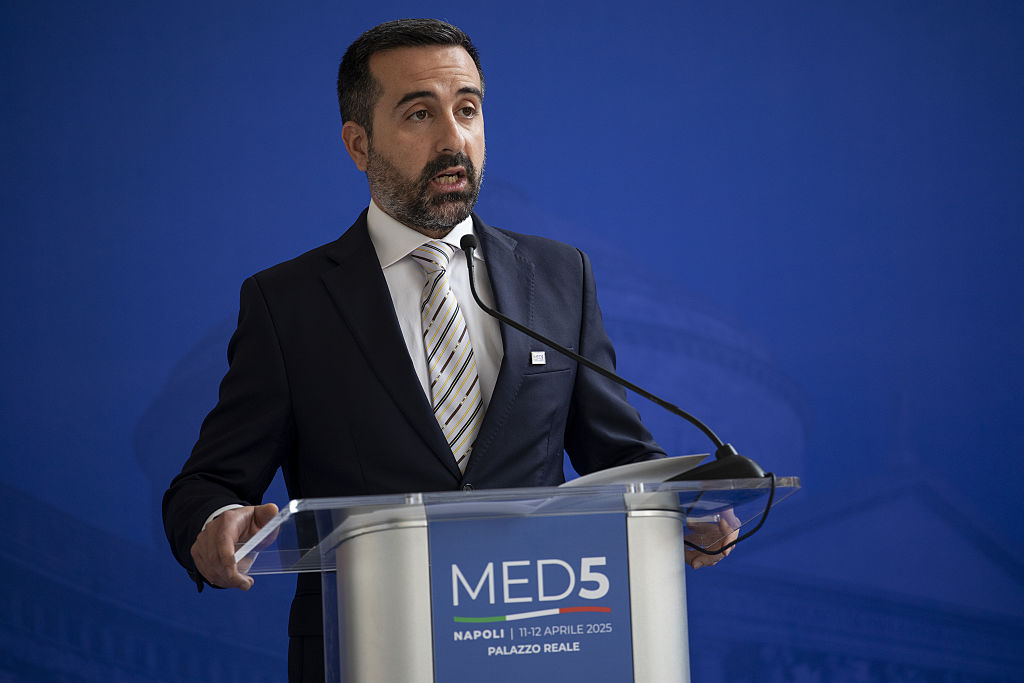
Cyprus’ Deputy Migration Minister, Nicholas Ioannides, has called on the EU to coordinate efforts with non-EU countries to return people who have no legal right to stay in the bloc, while noting that EU countries can still pursue their own bilateral deals.
Speaking to Euractiv on the sidelines of Tuesday’s gathering of interior ministers in Luxembourg, Ioannides said Nicosia is “optimistic” about bridging divisions among EU capitals over solidarity, and relocation under the new EU’s flagship migration plan.
He also confirmed growing convergence among EU countries on voluntary, and potentially forced, returns to Syria for specific categories such as convicted criminals.
What follows is an edited transcript.
On the new EU’s burden-sharing mechanism, the solidarity pool, there seem to be growing cracks, as not all EU countries appear willing to commit to actual relocation. How do you see it?
NI: Of course, we understand there are concerns on the part of several EU countries. One of our priorities for our upcoming Council presidency in January, and even before then. I already held bilateral meetings with colleagues to listen to their concerns, and identify ways to bridge gaps or reduce fears. It’s crucial to fully implement [the EU’s migration pact] by June 2026.
There are disagreements on solidarity and the implementation of the Dublin Regulation – which requires asylum seekers to be returned to the first EU country they entered –, but there’s goodwill from many capitals to find solutions. We’re quite optimistic we can bridge these gaps.
So you’re confident that EU capitals will find a solution. But what if they don’t?
NI: The majority of member states and the Commission are on the same page when it comes to the gist of the EU’s flagship migration pact and a common migration policy. Partial disagreements are legitimate. There’s time to work on these disagreements with our partners and the Commission. We just need to tie up some loose ends to ensure full implementation.
You mentioned Cyprus is facilitating voluntary returns and already has a flight scheme in place. In Tuesday’s meeting, you also discussed whether forced returns to Syria could become possible. Do you believe Syria is safe enough for that?
NI: The situation in Syria is not fully stable, but it has changed significantly. Nearly a million Syrian nationals have returned in recent months, which shows there’s room for voluntary returns.
As for forced returns, there’s ground to discuss this for specific categories – criminals and individuals who pose threats to national security or public order. Even countries traditionally more reluctant now recognise that we need to find solutions in such cases, always in line with EU and international law and in cooperation with international organisations.
The German interior minister, Alexander Dobrindt, said there seemed to be broad support for returns to Syria among EU countries. Do you agree?
NI: Yes, there’s a common understanding that we need to facilitate voluntary returns, and discuss the possibility of forced returns for convicted criminals. Austria has already returned some, and other countries are considering similar steps. I expect further developments in the coming months.
Would you say your approach differs from Austria’s or Germany’s?
NI: Not much. We’re trying to establish communication with the Syrian government through our foreign ministry. The goal is to improve conditions on the ground to enable more voluntary and forced returns. There’s a shared view that we must contribute to improving the situation in Syria. More and better-structured aid, and a stronger involvement of Frontex in reintegration programmes, working together with international organisations.
On the returns regulation, there are concerns about the mutual recognition of return decisions, which would require one EU country to enforce another’s deportation order.
NI: I don’t think there are major disagreements beyond that issue. Most of the regulation is acceptable to EU countries. The current Danish Council presidency is optimistic that negotiations can be completed before we take over. It’s difficult, but achievable.
Are there already third countries interested in cooperating with the EU on return hubs, which were, too, briefly mentioned?
NI: I don’t have specific countries in mind, but several might be interested, given their existing relationships with the EU. Our view is that agreements should be concluded at EU level, not bilaterally, to ensure a coordinated approach.
Finally, what will be your top priorities during the upcoming Cypriot Council presidency?
NI: Our top priority is contributing to the full implementation of the EU’s migration pact. We’ve already started listening to partners’ concerns to act as mediators and help bridge disagreements. The return regulation will be another key focus.
(mm)