
An initiative that had a meaningful impact
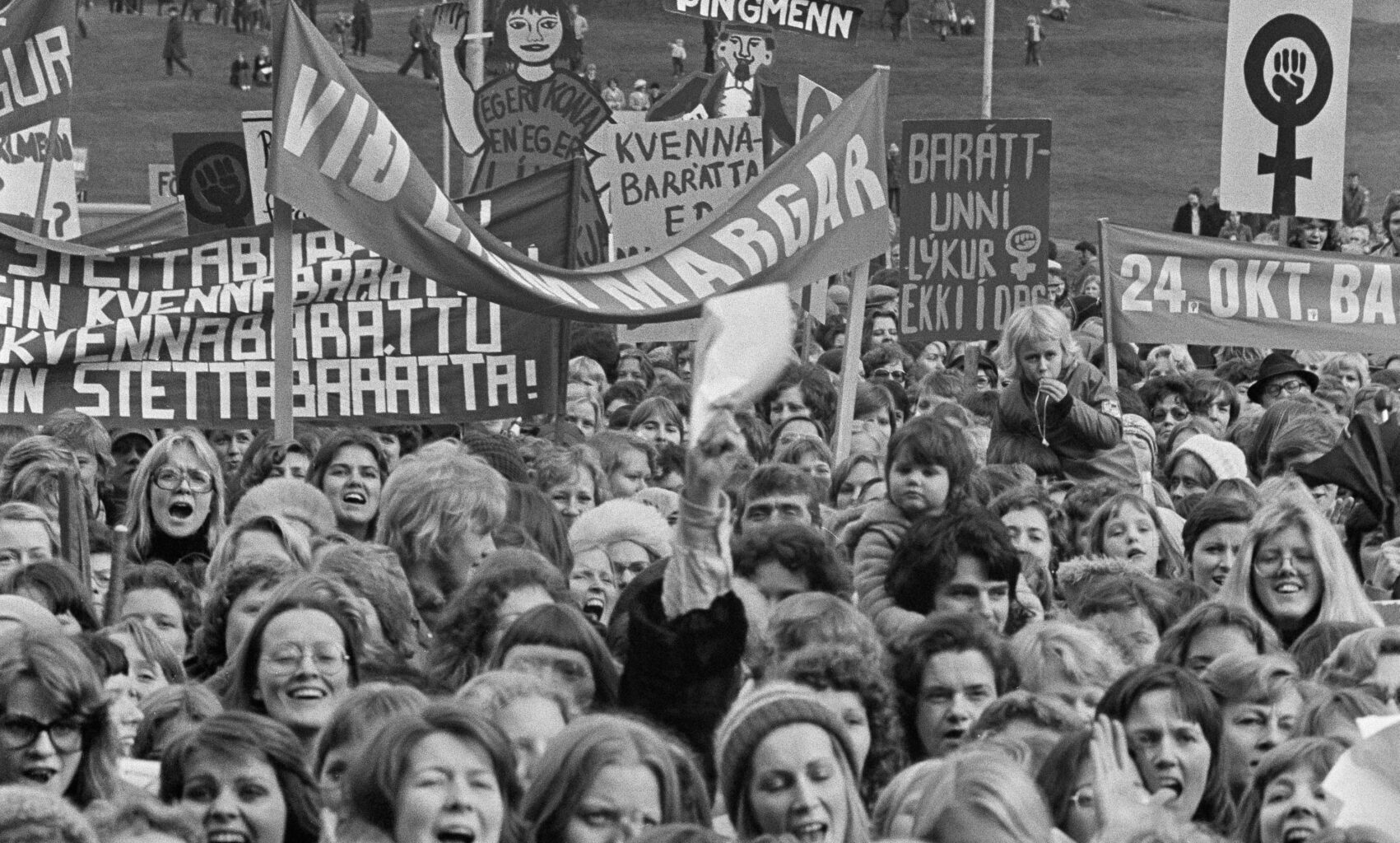
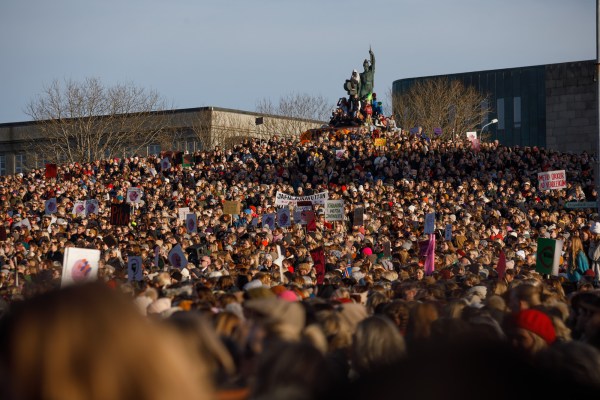
On October 24, 1975, 50 years ago this month, 90 percent of all women in Iceland went on strike. Their purpose: to show the importance of women in the workplace. Their demands: Equal pay and equal rights. It is estimated that over 25,000 women came together in solidarity in downtown Reykjavík on that day, (pictured above) as they did again in 1985, 2005, 2010, 2016, 2018 and 2023, (pictured below) when 100,000 people made their way to downtown Reykjavík.
The fact that foreigners often find most striking about Iceland is its population, currently at around 389,000 people. In 1975, it was around 216,000. “Wow, that’s like a small city from where I’m from, you must know everybody,” is a common phrase uttered in astonishment by foreigners. There are downsides to this. Imagine how expensive it is, per capita, to maintain the infrastructure on this rather large island. Or anything else for communal use made possible by tax revenues.
However, there is an upside to this too. Individual or small group initiatives can have meaningful impacts. The women’s strike is a case in point. In 1975, Iceland had three women MPs. Five percent of the 63 members of Alþingi, and only nine women total had entered parliament since women got the vote in 1915. In 2025, that number is 46 percent. Today the president of Iceland is a woman. So is the prime minister, foreign minister and the bishop of Iceland. And few locals even ponder the novelty of this in the international context. Like the population numbers, it may be striking to visitors, but it is normal to Icelanders.
We pride ourselves on having sat at the top of the international gender gap indexes for years now. However, we have not reached perfect gender equality even though stunning progress has been made in a mere two generations. As noted in our feature, it’s not a revolution, it is evolution. What benefits women is not detrimental to men. This is not a zero-sum game. A rising tide lifts all boats. When gender equality is approached, poverty rates tend to go down, innovation tends to go up, GDP tends to rise. It is an evolving win-win situation.
The initiative of a few women back in 1975 got us to where we are now. We’re not there yet, but we’re ever so much closer. Imagine what impact initiatives today can have in 50 years. One hundred percent equal rights may be a phantom that never materialises, but the small population dynamics of Iceland might be helpful in making this place the first in the world where gender stops dictating opportunities.