Published on Oct. 15, 2025, 7:51 PM
Look up for a chance to spot the Northern Lights!
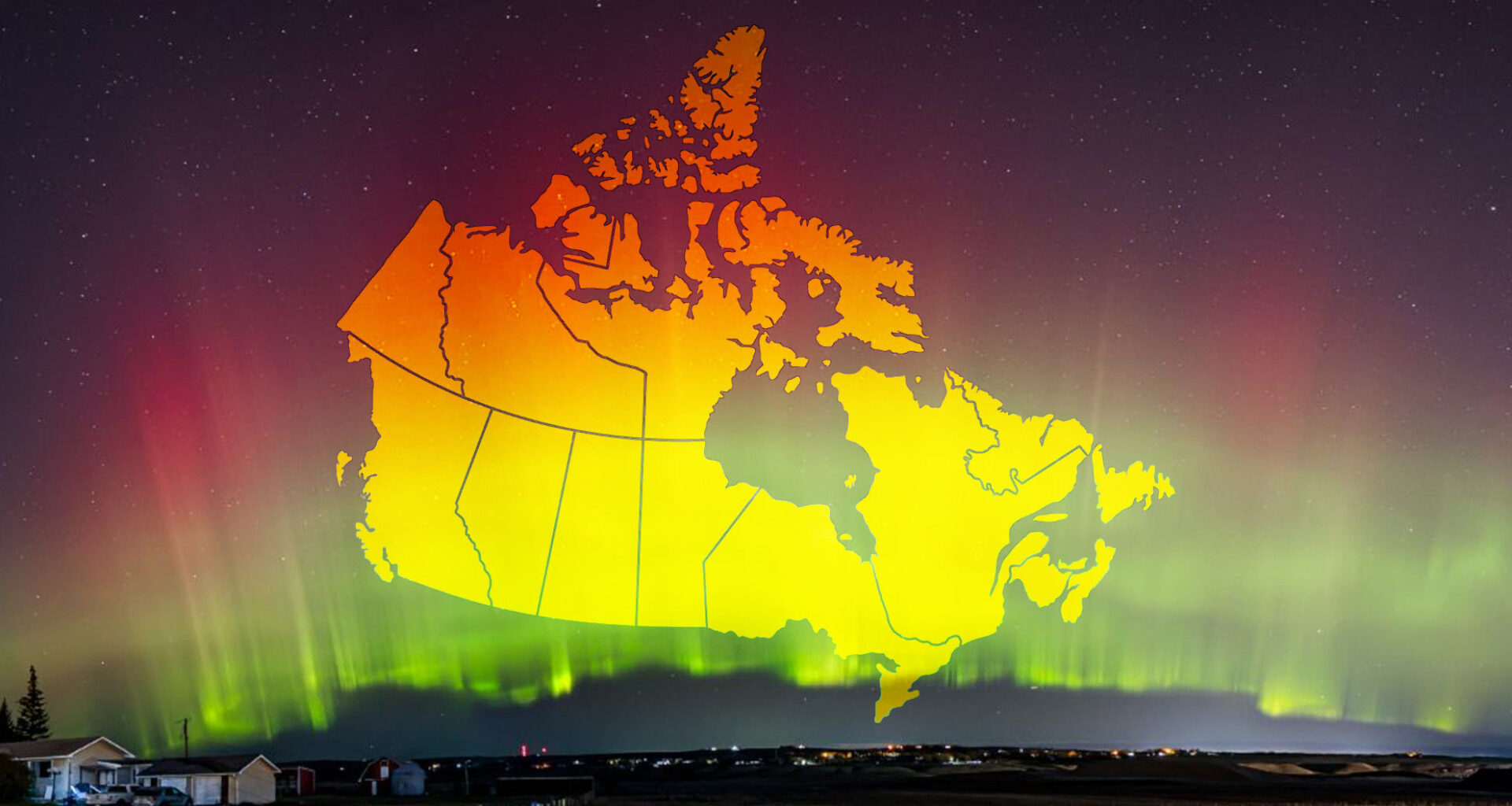
A trio of slow-moving solar storms erupted from the Sun over the weekend, and as they pass Earth over the next few days, they could spark auroras across Canada and the northern United States.
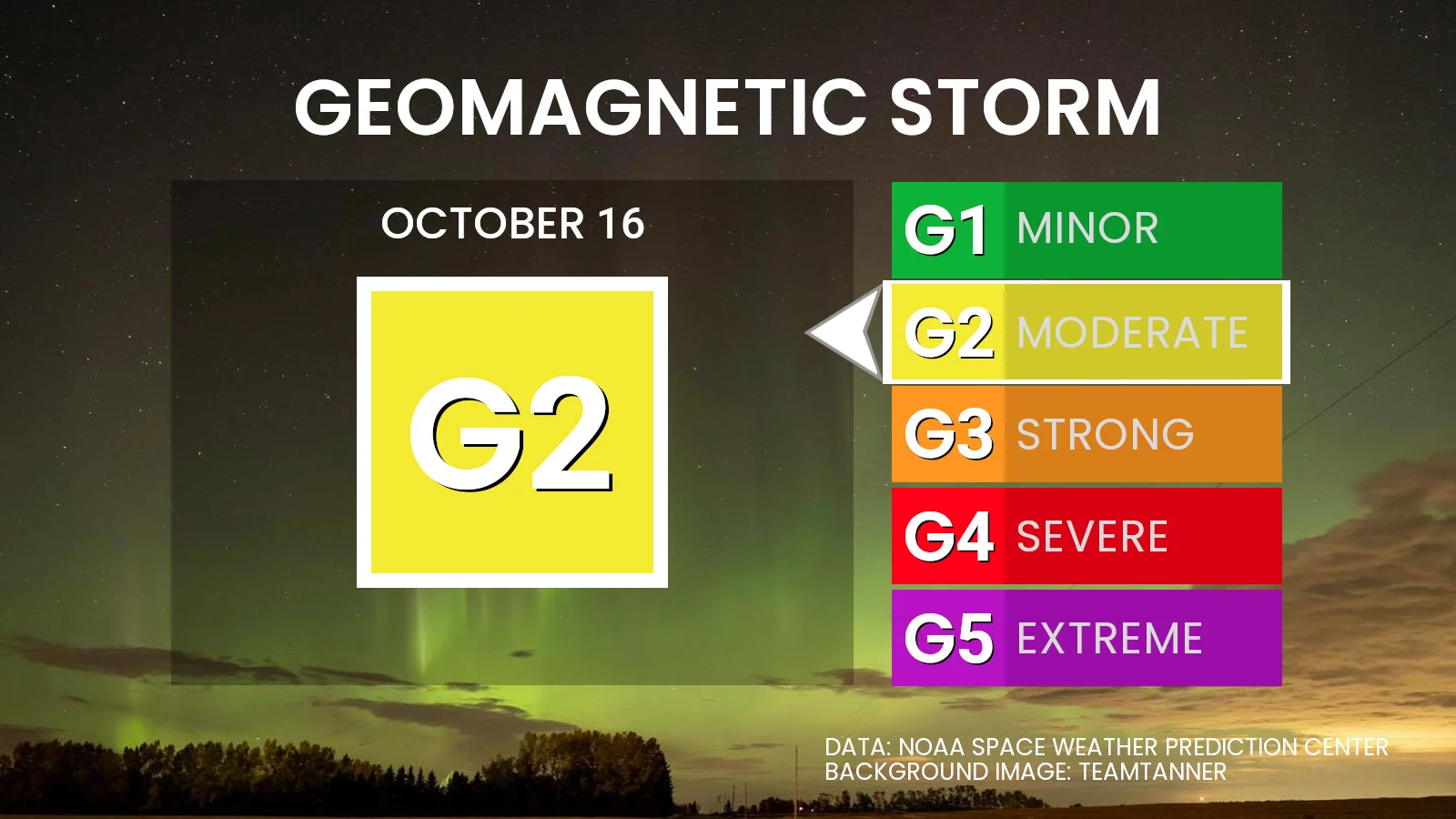
Forecasters with NOAA’s Space Weather Prediction Center have issued a G2 geomagnetic storm watch for Thursday, October 16, due to the potential impacts of three coronal mass ejections that left the Sun over the Thanksgiving long weekend.
All three of these CMEs originate from the same cluster of sunspots — Active Region 4246 — which has been crackling with dozens of solar flares, including a few moderate M-class, over the past several days.
Although AR 4246 is approaching the Sun’s western limb, as long as it remains within sight of our satellites and telescopes, flares and CMEs from it can still have an impact on us here.
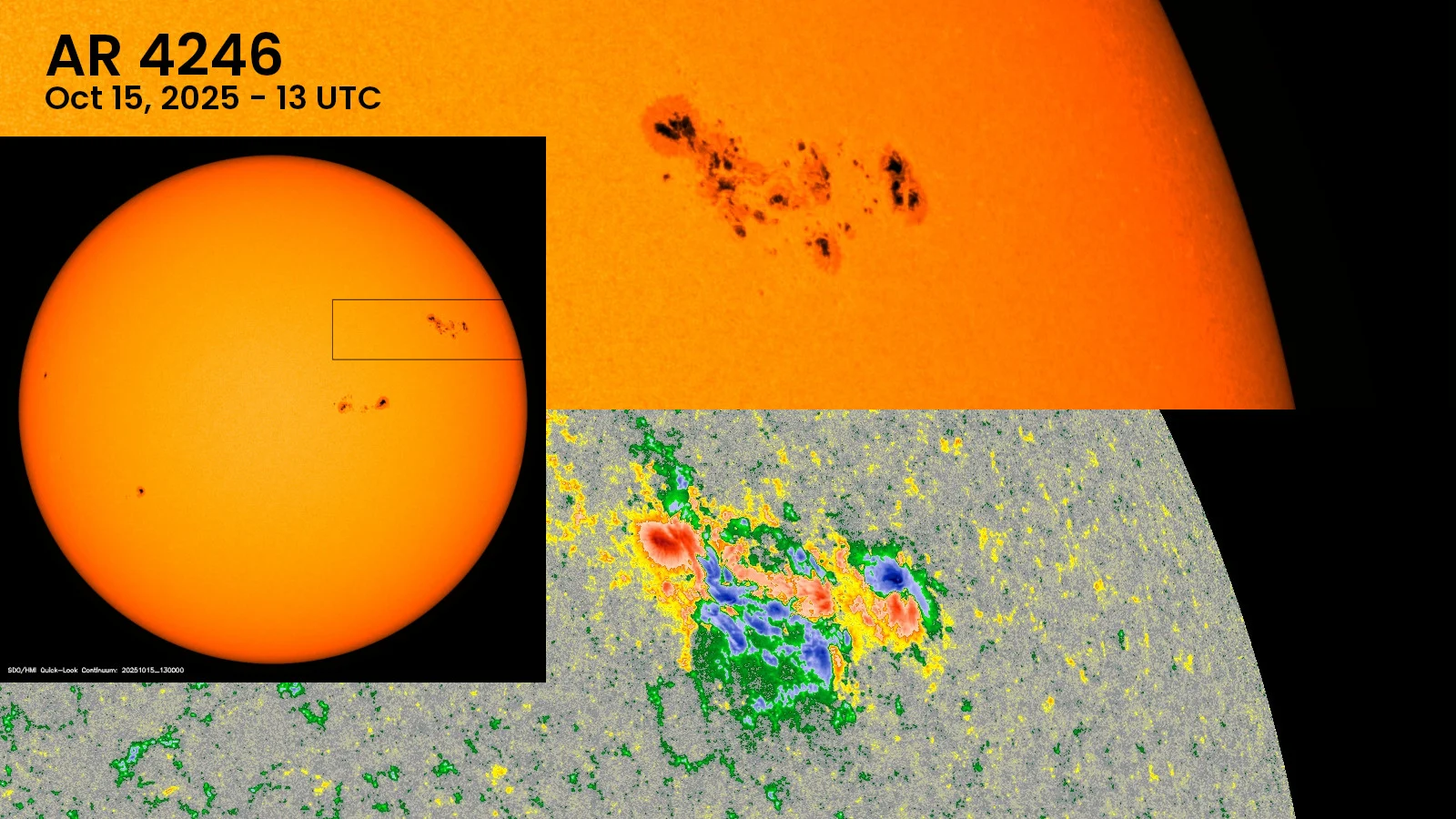
Active sunspot region 4246 is shown in close-up detail here, revealing nearly three dozen individual sunspots in the cluster (top frame). In the bottom frame, the region’s potentially volatile nature is demonstrated by the tangled arrangement of its positive magnetic polarity (blue) and negative magnetic polarity (red) areas. (NASA SDO/Scott Sutherland)
While the first of the three CMEs may have already arrived, early on Wednesday, Oct. 15, it appeared to be very diffuse, with little impact on Earth’s geomagnetic field.
When the second arrives, later on Thursday, it may have a stronger effect. The combined impact from this with any residual influence from the first CME may spark a G2 (moderate) geomagnetic storm in the evening on Thursday, followed by G1 (minor) storm levels overnight into Friday morning.