
None of the international human rights instruments to which Belarus is a party, including the International Covenant on Civil and Political Rights, explicitly prohibits the use of the death penalty – as stated by Belarus’ Permanent Representative to the International Organisations in Vienna, Andrei Dapkiunas, at the European and World Day against the Death Penalty meeting of the OSCE Permanent Council in Vienna
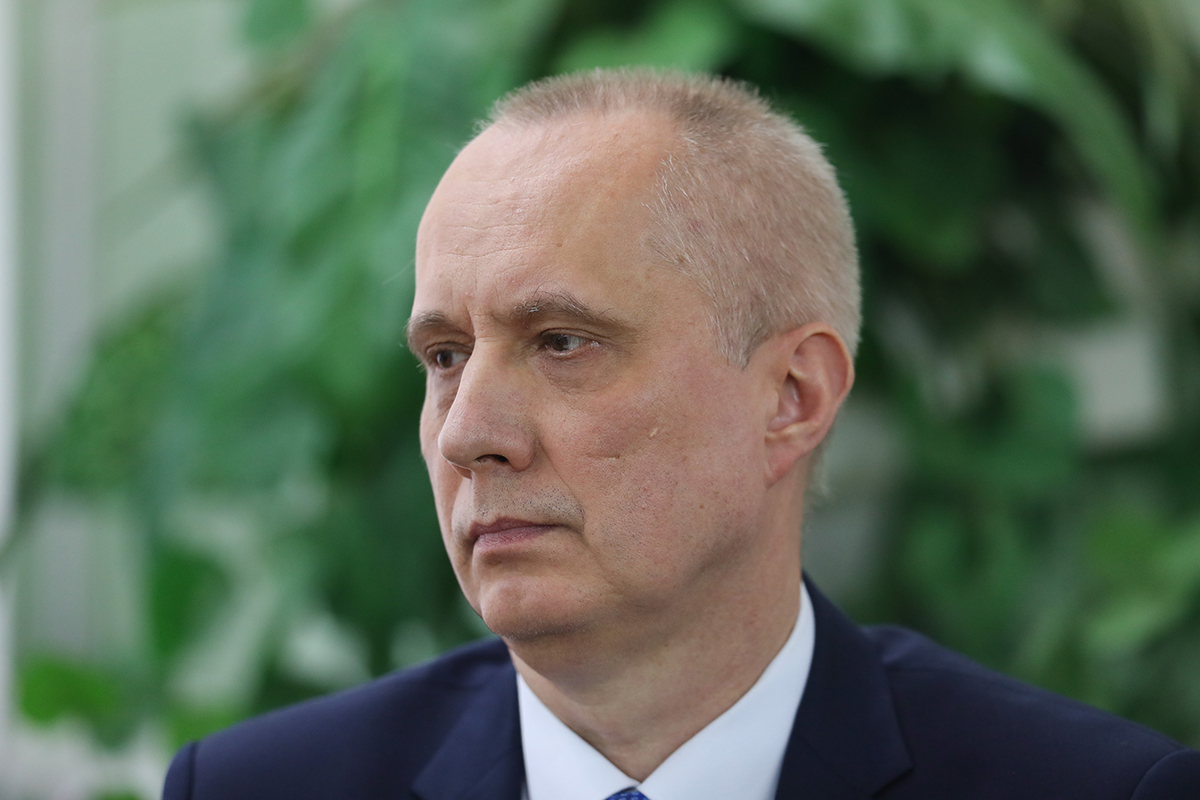 Photo: www.belta.by
The diplomat noted that the Belarusian delegation had taken note of the statements made by representatives of the European Union and other delegations on the new anniversaries of the European and world days against the death penalty, “Belarus’ position on the death penalty has been repeatedly presented in this hall. Once again, we would like to draw the attention of our colleagues to the fact that the criminal legislation of Belarus provides for the possibility of imposing the death penalty for crimes committed in 14 criminal cases, including terrorism, premeditated murder with aggravating circumstances, crimes against peace, human security, and war crimes. In practice, the death penalty is rarely imposed. In the Belarusian criminal legislation, it is defined as an ‘exceptional measure of punishment’. This sanction is applied in exceptional cases and cannot be imposed on women or men who have committed crimes under the age of 18 or who have reached the age of 65 by the day of the verdict.”
Mr. Dapkiunas stressed that none of the international human rights instruments to which Belarus is a party, including the International Covenant on Civil and Political Rights, explicitly prohibits the use of this measure of punishment. Nevertheless, in 1996, the question of the expediency of applying the death penalty in Belarus was put to a referendum, and more than 80 percent of the electorate voted to retain this measure of punishment. Since then, public opinion on the issue has not changed significantly.
The diplomat emphasised, “Persons sentenced to death have the right to apply to the President of Belarus for clemency. In the law enforcement practice of our country, there are precedents for the positive consideration of such requests and the replacement of the death penalty with long-term imprisonment, but such cases are rare, since in the case of a death sentence by a court, the degree of public danger of the acts committed is extremely high, and the cruelty committed by the perpetrator against the victims does not allow us to talk about mercy. In 2020-2021, as well as in 2023-2024, death sentences were not carried out in Belarus. In 2022, one sentence was carried out against a criminal who intentionally killed two elderly people.”
Mr. Dapkiunas recalled that, in 2024, the President of Belarus pardoned German citizen Rico Krieger, who was caught red-handed while carrying out a task for the special services of Ukraine to commit a terrorist act at the Belarusian Railway facility. The reason for the manifestation of humanism was the fact that the convict fully admitted his guilt, repented of what he had done and asked for clemency.
“Belarus is open to dialogue with international partners on this sensitive issue,” the diplomat added. “We continue to carefully study the experience of other states where the death penalty has been abolished, and we are ready to interact with those who are interested in a respectful and professional dialogue. However, we do not intend to blindly copy others’ approaches or perceive the European model as the only possible example of ‘civility’. Experience has shown that the very concept of humanity is interpreted in different ways. For you, dear Western colleagues, humanity is about saving the lives of those who have committed heinous crimes. You have a terrorist who killed 77 people, serving his sentence in a cozy three-room cell consisting of a gym, a bedroom and an office. We see this as a mockery of the relatives of his victims and the height of absurdity. You perceive humanity as protecting the lives of terrorists, serial killers and maniacs, but for us, justice lies in ensuring that the society and families of the victims observe the retribution, and that the punishment corresponds to the severity of a crime.”
The Belarusian diplomat stressed, “We are convinced that the issue of the death penalty should be resolved taking into account the opinion of the people who expressed their position in the referendum. Ignoring the public will in favour of external pressure cannot be considered as a manifestation of democracy. Belarus does not need ‘civility lessons’. We are going our own way based on national experience and traditions, public demand and principles of justice. Perhaps this approach deserves the attention of those who are used to lecturing others. We once again confirm Minsk’s readiness to discuss this sensitive issue, but exclusively in the format of a respectful, balanced and constructive dialogue — without pressure, demands and ultimatums, which have been again ritually voiced in this hall today.”