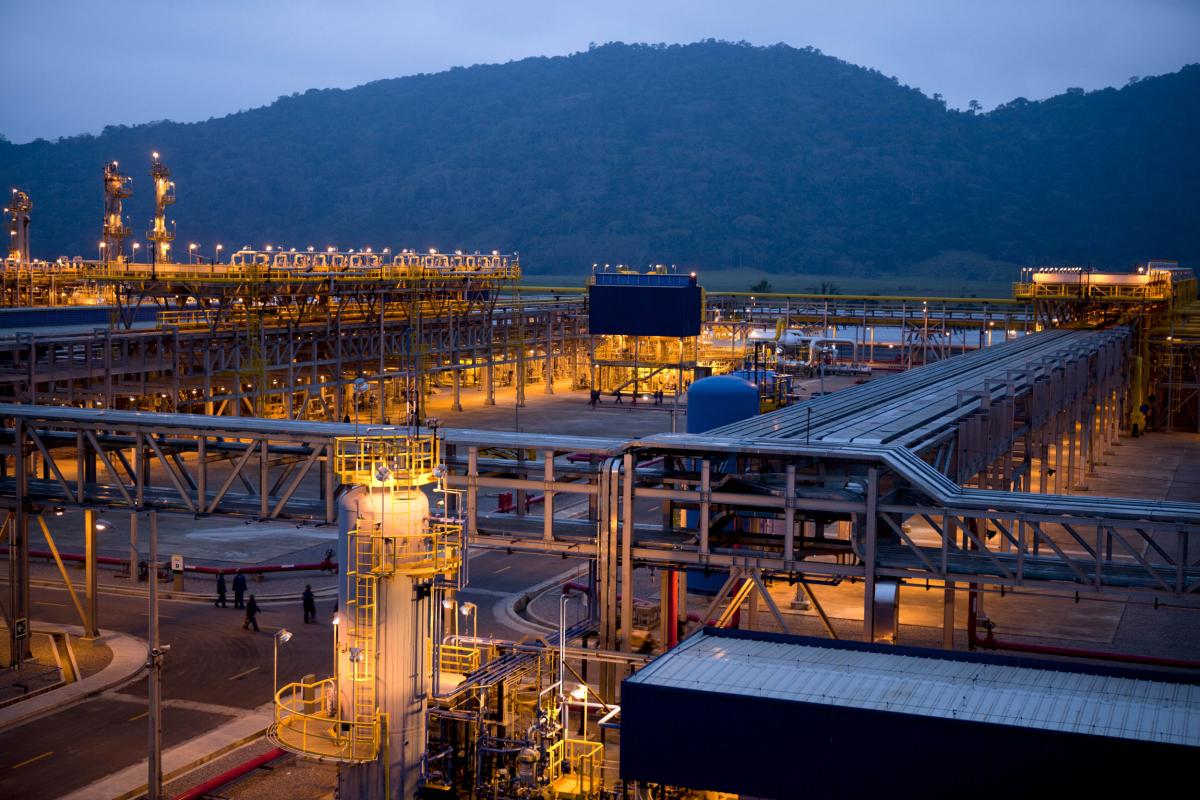
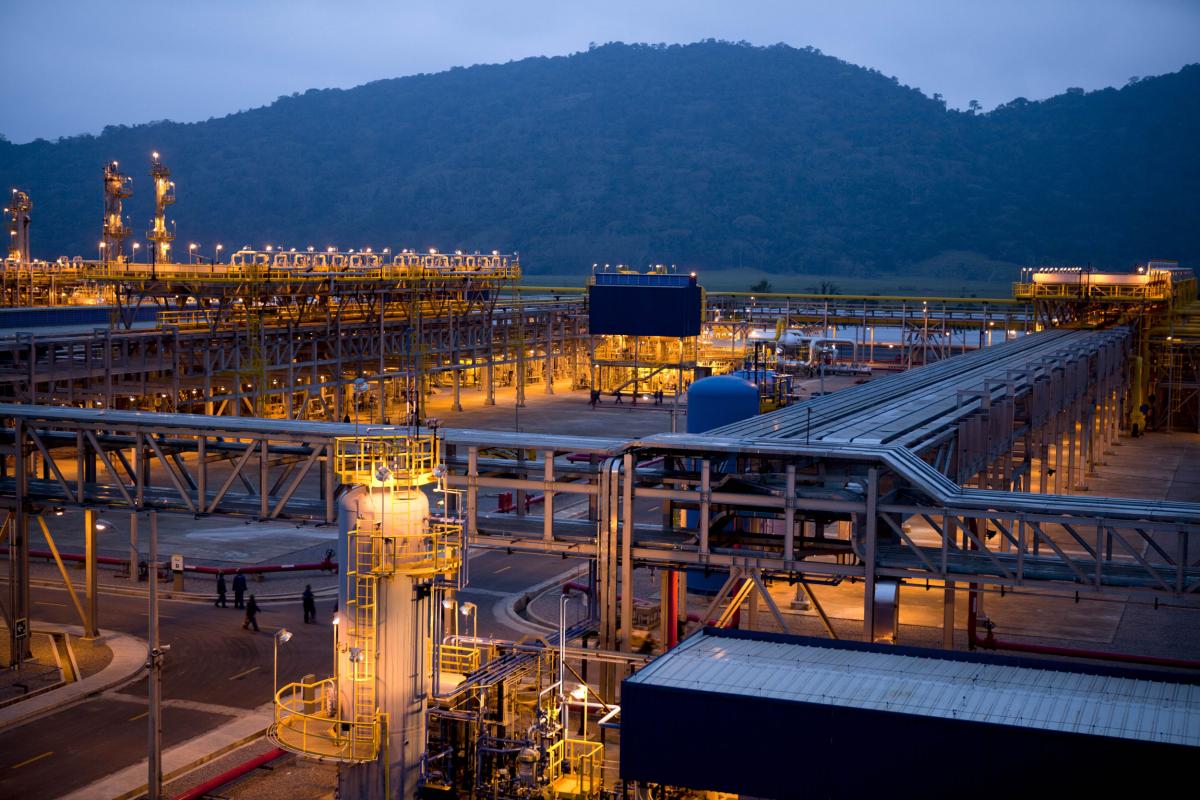
Brazil’s oil and gas watchdog ANP is evaluating options to ensure that the country’s demand for natural gas is met in the face of a possible reduction in the supply of Bolivian fuel and lower production from Petrobras ‘ gas treatment unit in Caraguatatuba (UTGCA), in the state of São Paulo.
One of the solutions under analysis – mainly considering the thermoelectric demand between 2026 and 2028 – is the reactivation of the Gás Sul Terminal (TGS), in Santa Catarina, with LNG regasification and injection into the Brazil-Bolivia Gas Pipeline (Gasbol).
As published by BNamericas , New Fortress Energy ( NFE ) suspended TGS operations due to uncertainty regarding the holding of the next capacity reserve auction.
Subsequently, the federal government defined that the competition – which will contract natural gas thermoelectric plants and hydroelectric expansion projects – will be held in 2026.
When contacted, NFE said it would not comment as it was in a silent period.
The ANP is also evaluating measures to enable the construction of the Japeri Compression Station (Ecomp) in Rio de Janeiro, with the participation of a transporter that already has idle turbochargers in Brazil.
The transport company currently authorized to build Ecomp is Nova Transportadora do Sudeste ( NTS ). The project is part of the “Pre-Salt Corridor” project – a series of pipeline expansions and compression investments designed to expand the pre-salt gas transport capacity from Rio de Janeiro to São Paulo, offsetting the decline in Bolivian imports.
NTS reported that it has completed the technical studies necessary for the expansion of its facilities with the construction of Ecomp Japeri and has obtained all the required licenses for the project.
“A new construction schedule has been submitted and is awaiting evaluation by the ANP, as well as the regulatory agency’s determination of the rate of return on investment, to begin construction on the compression unit – a strategic asset for national energy security,” the company told BNamericas.
Context
The potential reduction in Bolivia’s gas supply is attributed to a lack of exploratory investment and regulatory issues in the country. State-owned YPFB is betting on new discoveries to maintain supply to Brazil, in addition to acting as a midstream agent for gas from Argentina .
The drop in production in Caraguatatuba is mainly due to the expected decline in the Tupi and Mexilhão fields, in the Santos basin , connected to the UTGCA via the Rota 1 gas pipeline.
In the coming years, larger volumes of gas are expected to be delivered by Rota 3 , which began operations in 2024, transporting gas from newer pre-salt fields, such as Búzios and Mero , to the Boaventura Complex , in Itaboraí, Rio de Janeiro.
(The original version of this content was written in Portuguese)