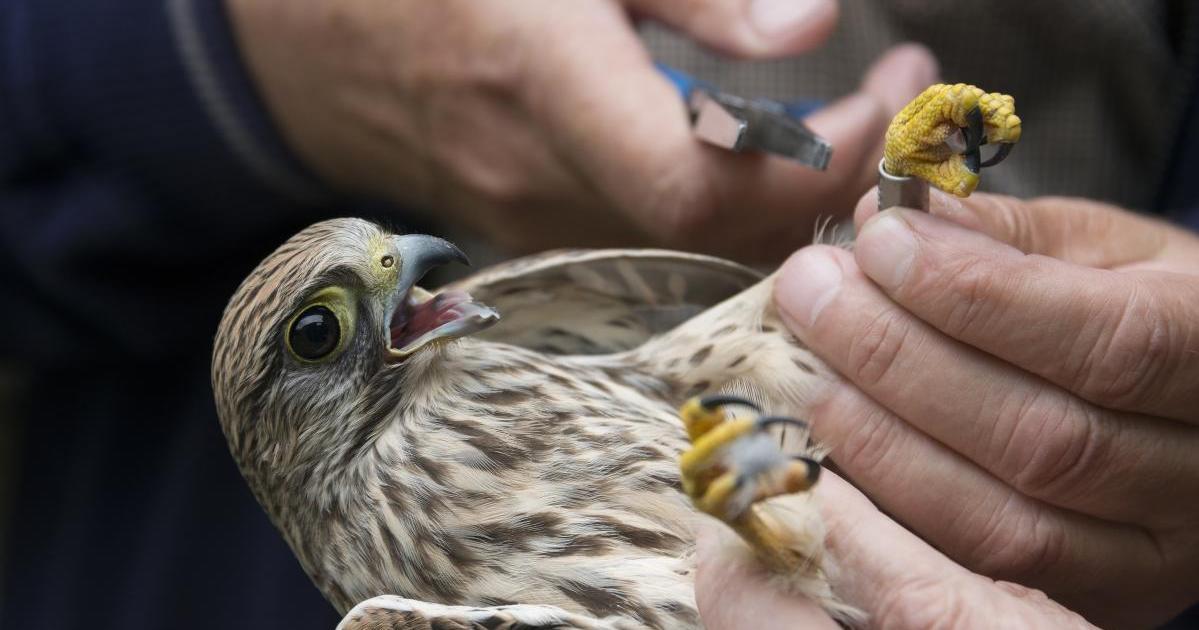
The government has made it easier for hunters and trappers to carry out bird ringing by changing the law to no longer require rings to be obtained from BirdLife Malta.
Legal notice 251 of 2025, published Friday, removes a requirement for rings to only be obtained from bird ringing schemes approved by the European association for the practice, EURING, which is represented locally by BirdLife Malta.
The legal changes published this week also allow trappers to use live decoys – captured birds used to lure wild birds to an area for hunting or trapping – a tactic that was previously prohibited.
The amendments also remove reference to EURING from certification requirements for those carrying out bird ringing, instead granting certificates to those who have received training from a “qualified trainer who is part of a bird ringing scheme”.
In November last year, Malta’s hunting lobby FKNK accused the NGO of refusing to provide its members with rings, a claim BirdLife rejected while accusing the lobby of using the controversy to greenwash illegal finch trapping under the guise of research.
The row followed the government continuing to allow the trapping of seven species of songbirds under what it said were ‘strictly monitored’ conditions, after the European Court of Justice ruled Malta’s trapping for “research purposes” was illegal.
In a statement on Friday, FKNK characterised the changes as “the end of BirdLife Malta’s bird ringing monopoly” and a “major step forward in scientific research and conservation in Malta”.
“With this step, bird ringing, which is an essential tool to better understand bird migration, will no longer be limited to one organisation, but a shared national effort, as happens all over Europe.”
The lobby said it had “been working on this reform for many years”, including presenting studies on the topic to the Malta Ornis Committee.
It expressed its “sincere appreciation” to the government, and in particular to Gozo Minister Clint Camilleri and Environment Minister Miriam Dalli, “for their commitment which led to the acceptance of FKNK’s request and the much-awaited reform”.
Reacting to the development, BirdLife Malta CEO Mark Sultana said the NGO was “disappointed that the law regulating scientific bird ringing has been amended to become less rigid”.
“The only reason this has been done is to try and disguise finch trapping as a scientific derogation, something which is bound to fail… primarily because, apart from EURING, there is no other recognised bird ringing network in Europe.”
“Ringing can only be successful when conducted within such a coordinated framework,” he said, adding concerns that the legal changes could be “further abused by those intending to capture protected birds under the smokescreen of a so-called bird ringing scheme.”