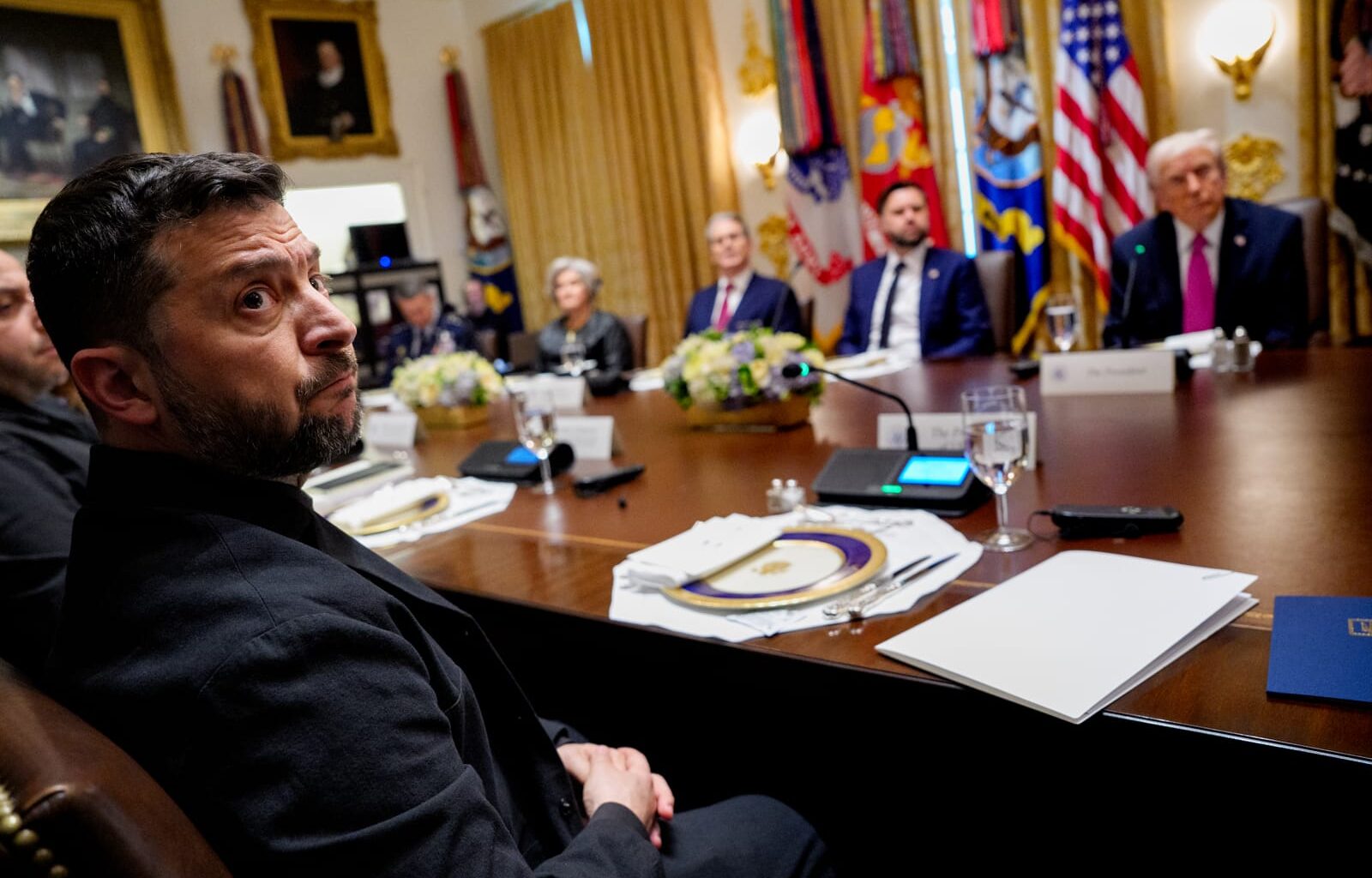
Until Donald Trump’s shock social media post last week about his latest conversation with Russia’s President Vladimir Putin, things had been looking up in the Ukraine-America relationship. Trump and Volodymyr Zelenskyy had completed several collegial in-person meetings in the preceding months. American administration officials were speaking positively about support to Ukraine. US intelligence was being used to support deeper strikes into Russia by Ukrainian weapons and there was talk of Tomahawk missiles being provided to Ukraine.
That all changed with Trump’s social media post, which began with words that probably sent a chill down the spine of Ukrainians and many American allies: “I have just concluded my conversation with President Putin, of Russia, and it was a very productive one.” All the diplomatic progress made by Ukraine in the previous months with the Trump administration was blown away instantly.
A ceasefire now, which would result in a frozen conflict, would be much to Putin’s advantage.
This was confirmed during the Friday meeting between Trump and Zelenskyy in Washington DC. The big decision about Tomahawks appears to have been shelved for now, if not all time, as a result of Putin’s lobbying of Trump. And Trump appears hellbent on some kind of ceasefire that freezes the conflict along current Ukrainian and Russian dispositions and that also reinforces Trump’s peace-making credentials in the wake of the Gaza agreement.
This is a disaster for Ukraine, and for America’s allies.
For some time, it has been clear that the only way that Putin can achieve even his minimalist goals for his war against Ukraine, which is the complete control over Ukraine’s Donbas region, was that these territories were handed to him by a Trump-sponsored peace deal. Russian forces, which have learned to learn faster and better in the last few years, continue to struggle however to make headway against determined and adaptive Ukrainian ground forces. While Russia now occupies 19% of Ukraine, only 7% has been taken since 2022. This is a very poor return on investment from more than one million casualties. At the same time, Ukraine’s deep strike campaign, the product of three years of development, has reached critical mass and momentum. It is hurting Russia’s energy export income. And potentially shifting the trajectory of the war.
Which is why the timing of Trump’s latest about-turn is so dangerous. A ceasefire now, which would result in a frozen conflict, would be much to Putin’s advantage.
First, it would probably see at least some of the current support to Ukraine from foreign supporters ebb away. So too would attention by the West given to the war. Second, it would result in greater political pressure on Zelenskyy at home. Aligning different views on how much to concede to Russia, while also abiding by the Ukrainian constitution, will undoubtedly result in some domestic discord. This is music to Putin’s ears.
Finally, a frozen conflict allows Russia time to reconstitute its forces and to continue the massive rearmament and military expansion program announced in its latest State Rearmament Program. Even before this program kicks into high gear, Russia (with significant Chinese assistance) has vastly expanded its defence industrial capacity. In one briefing I received from Ukrainian intelligence officials this week in Kyiv, Russia is now expending over 125 thousand first-person view drones per month and is easily able to replace them. It currently produces 35,000 Shahed drones on an annual basis, building to 40,000 by 2030. It is forming dozens of new divisions. The Russian military has a goal of being ready for war against NATO by 2030.
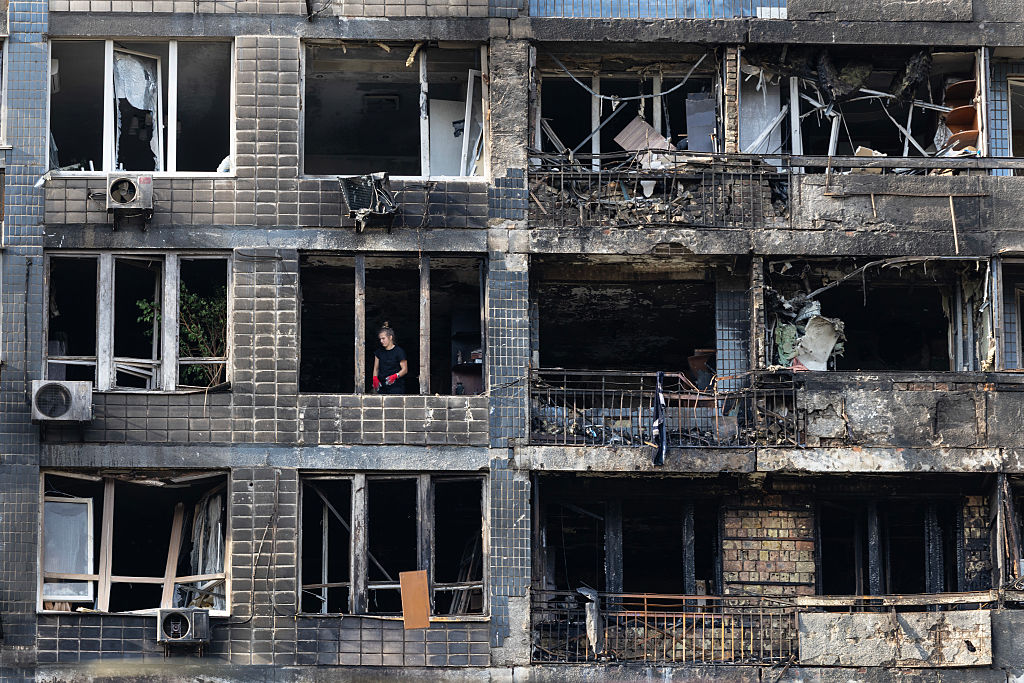
Workers clear debris following a drone attack on a residential building that injured at least nine people on 10 October 2025 in Kyiv, Ukraine (Paula Bronstein /Getty Images)
A frozen conflict will only help Putin, hurt Europe and be disastrous for Ukraine.
The events of last week were viewed with a certain fatalism by people here. One of my friends in Kyiv described Trump as a flag, which flutters whichever way Zelenskyy or Putin blow the wind. There is frustration that Trump appears to think the Russians are like Western nations who only desire peace. There is despondency that the true face of Russia’s aggressive culture, Putin’s perfidious ruthlessness, and a Russian populace who care more about being in a “winning, global power” than in one that provides all the social comforts of Western nations, has not been learned in Washington.
And while the Ukrainians have demonstrated a physical and moral resilience that will see them through the trials of dealing with the current US administration, there are lessons here for America’s allies like Australia as well.
While it remains a fundamental interest for Australia to retain a close security and economic relationship with the United States, nothing can be taken for granted. A commitment today from the President can be thoughtlessly eschewed tomorrow. This demands a more sovereign and self-reliant posture from Australia, and the increased national security funding that will give Australia the ability to hedge against Trumpian backflips in our security relationship. Fundamentally, it means that some of the assumptions that will underpin the coming 2026 National Defence Strategy will be quite different from those of the 2024 document.
Ukraine has been at the frontline of learning about modern war in the past three years. They have much to share with us in this regard. But more crucially, they have learned much in their dealings with the new era of America’s global security posture and how American presidents may deal with their friends and allies. Perhaps this is the most important lesson from Ukraine for Australia to learn.