Bünyamin Tekin
Turkish President Recep Tayyip Erdoğan’s restrained reaction to the landslide victory of a pro-European leader in the Turkish-controlled north of Cyprus reflects Ankara’s efforts to secure participation in a new European Union defense initiative, analysts say, even as Greek and Cypriot objections and nationalist rhetoric at home threaten to complicate this ambition.
The European Union’s Security Action for Europe (SAFE) program, launched in May 2025, is a multibillion-euro initiative to strengthen Europe’s collective defense production and arms procurement capacity. Turkey, which has one of NATO’s largest militaries but remains outside the EU, has applied to join the scheme in hopes of integrating its expanding defense industry with European supply chains.
However, Ankara’s path to joining SAFE is complicated by Greece and the Republic of Cyprus, two EU member states with long-standing disputes with Turkey over maritime boundaries, airspace rights and the political status of Cyprus. The SAFE regulation was adopted by a qualified majority in the EU Council, but the participation of non-EU countries requires political approval by member states. In practice, Athens and Nicosia have the ability to block Turkey’s participation through those political channels.
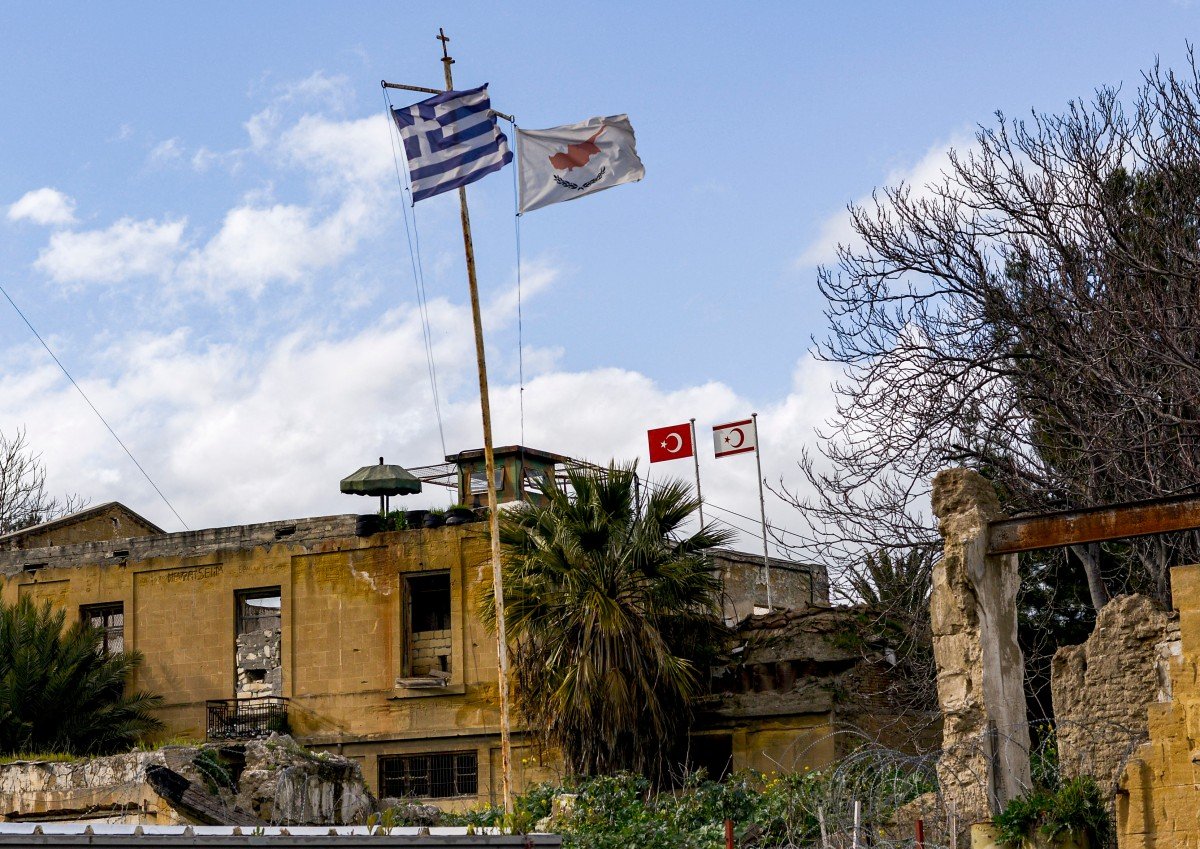
Cyprus has been divided since Turkey’s 1974 military intervention following a Greek-backed coup. The island’s northern third declared independence in 1983 as the Turkish Republic of Northern Cyprus (KKTC), recognized only by Ankara. The internationally recognized Republic of Cyprus joined the European Union in 2004.
The October 19 presidential election in northern Cyprus produced a decisive win for Tufan Erhürman, leader of the pro-federation Republican Turkish Party (CTP), over nationalist incumbent Ersin Tatar, who had championed Turkey’s preferred “two-state solution.” Erhürman won about 63 percent of the vote, with turnout near 65 percent, according to official results.
President Erdoğan issued a brief message congratulating Erhürman, signaling a willingness to work with him. In contrast, Erdoğan’s far-right coalition partner Devlet Bahçeli, leader of the Nationalist Movement Party (MHP), urged the Turkish Cypriot parliament to reject the election results, abandon federal talks and vote to join Turkey as its “82nd province.”
Bahçeli’s comments drew sharp criticism from opposition leader Özgür Özel of the Republican People’s Party (CHP), who accused him of disrespecting Turkish Cypriot voters’ will and undermining Turkey’s own calls for international recognition of the KKTC.
For Erdoğan, who has sought to reopen dialogue with Brussels on trade, migration and defense cooperation, Erhürman’s victory represents both a challenge and an opportunity. The win of a pro-EU, pro-federation candidate complicates Ankara’s two-state rhetoric but also provides a chance to signal constructive engagement with Europe.
“There are some EU countries that object to Turkey’s participation in the SAFE program, notably Greece and Cyprus,” former Turkish diplomat Mustafa Enes Esen, now a researcher at the Brussels-based InstituDE think tank, told Turkish Minute. “Both view any initiative that could strengthen Turkey’s military-industrial base as potentially dangerous.”
Esen noted that Greek leaders have publicly tied their opposition to unresolved sovereignty issues in the Aegean Sea. “The Greek prime minister, for instance, has cited ongoing disputes over the Aegean islands as a reason for refusing to support Turkey’s inclusion,” he said. “For Cyprus, Turkey’s expanding military capability is perceived as an existential threat. It is therefore unlikely that Ankara can overcome these objections through bilateral channels alone.”
“Nonetheless, the SAFE program requires approval by a qualified majority, not unanimity,” reminded Esen.
“German and NATO leaders have held meetings aimed at persuading Greek leaders to withdraw their reservations. If these efforts fail, the council could technically proceed under the qualified-majority rule. The current deadline for the SAFE program is November 30,” he added.
Esen suggested Ankara’s measured response to the northern Cyprus election may also reflect its diplomatic calculations. “In this context, one reason for the Turkish government’s measured response to the recent elections in northern Cyprus may have been its desire to avoid further antagonizing EU member states by undermining the pro-EU candidate who won the vote. Such a move could jeopardize support among certain EU countries for Turkey’s participation in the SAFE program,” he said.
“Another explanation for Ankara’s moderate stance lies in the decisive victory of Tufan Erhürman, the new leader of northern Cyprus. His landslide win means that Turkey will need to find ways to work with him,” he added, noting that “the same applies to Erhürman, who, despite his pro-EU agenda, will need to cooperate with Turkey on several key issues.”
Former Turkish ambassador Selim Kuneralp also linked Ankara’s restrained tone to its strategic interest in the SAFE initiative.
“The government aims to cozy up to the EU and, in particular, to join the SAFE armament program,” Kuneralp wrote on X.
According to the former ambassador, to achieve this Turkey needs to overcome the objections of Cyprus and Greece and “to abandon the thesis of two independent and sovereign states” on Cyprus.
“Therefore, the loss of the election by Ersin Tatar, who is identified with this [two-state] thesis, suits the government’s interests. In my opinion, the moderate tone of the incoming statements reflects this,” Kuneralp said.
While the SAFE regulation itself does not give unilateral veto powers, both Greece and the Republic of Cyprus can use political leverage to demand broader gestures as conditions for easing their objections.