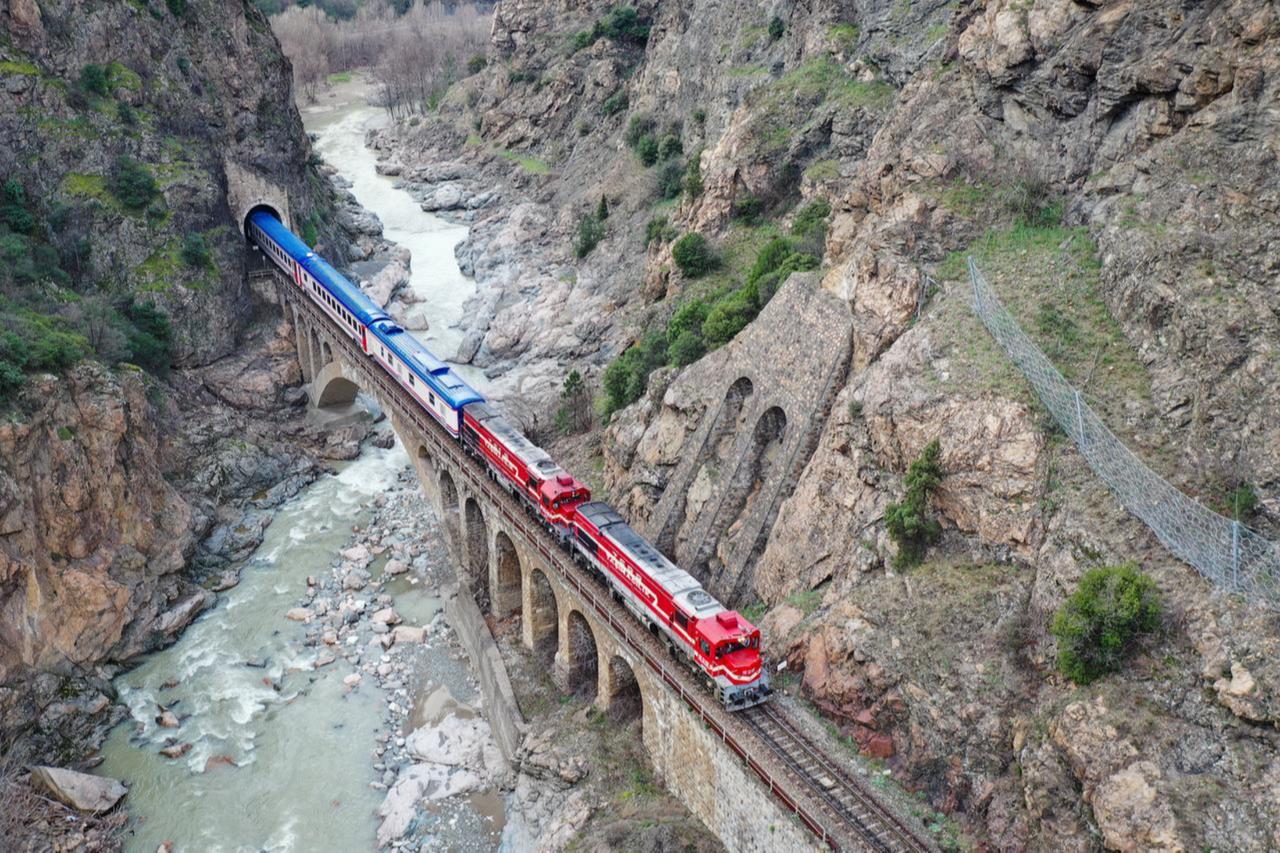
Türkiye aims to expand its total railway network to 14,437 kilometers (8,970.7 miles) and its high-speed rail lines to 2,769 kilometers by next year, Transport and Infrastructure Minister Abdulkadir Uraloglu said Tuesday.
Speaking to Turkish news agency Anadolu Agency (AA) about the ministry’s 2026 budget and upcoming projects, Uraloglu said efforts are underway to ensure safe, comfortable, and environmentally friendly rail transport across the country.
He noted that the government has prioritized the railway sector—long neglected after the early years of the Republic—as part of a national effort to make Türkiye not only a regional player but also a key hub in the global logistics network.
“Our goal is to position Türkiye at the heart of international trade and elevate it from regional leadership to a global crossroads of commerce,” Uraloglu said.
“This is not just a transportation project; it is an initiative that will strengthen Türkiye’s economic and strategic independence. By weaving a seamless rail network from east to west and north to south, we are transforming Türkiye into Eurasia’s undisputed logistics superpower.”
Uraloglu said the ministry is focusing on smart transportation systems and digital transformation, noting that the integration of ports with strategic rail corridors allows Turkish industry and exports to reach global markets faster and at lower costs.
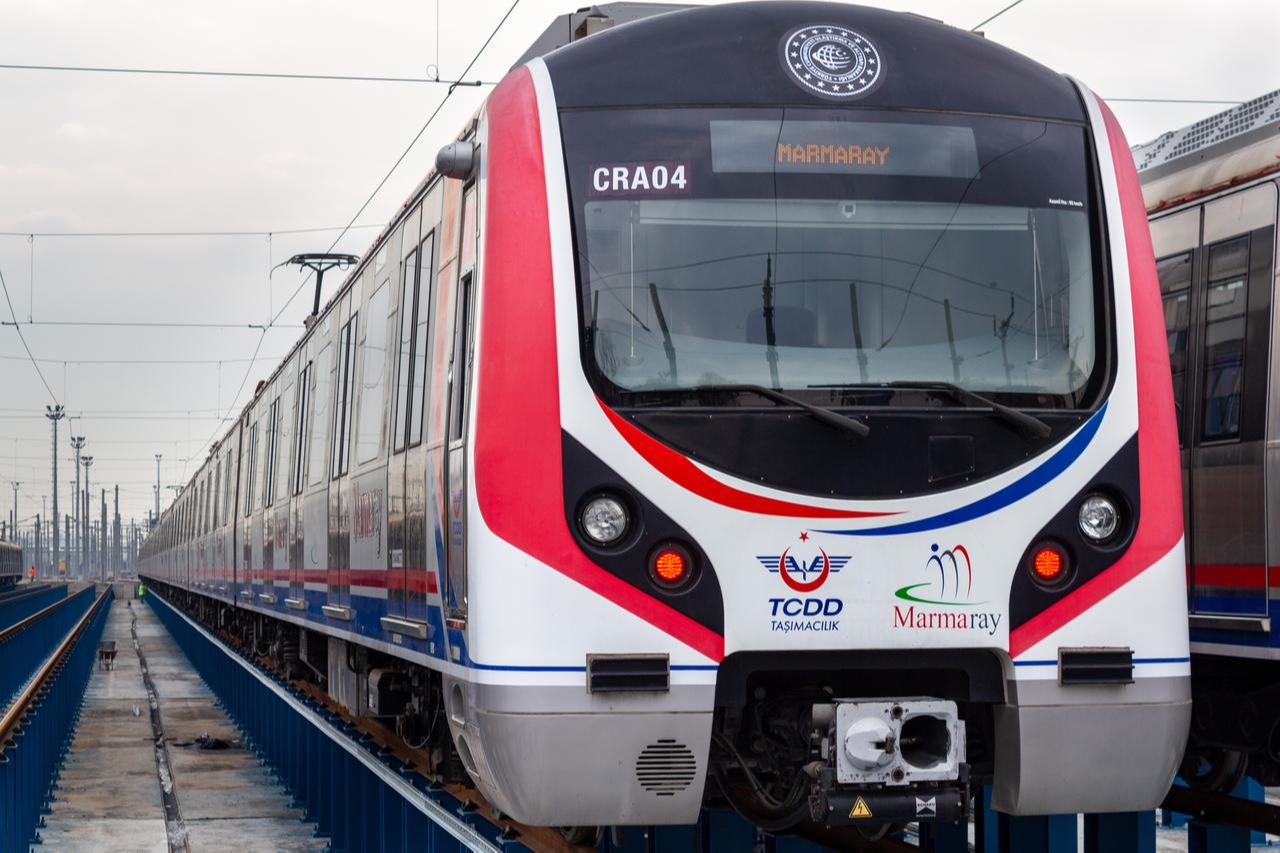

A Marmaray train is seen at Halkali Station in Istanbul, Türkiye, on March 2, 2019. (Adobe Stock Photo)
Expanding freight and passenger capacity
Emphasizing the use of domestic and national technologies to reduce foreign dependence, Uraloglu said Türkiye has become a regional technology leader in the railway sector.
“We are accelerating our efforts to increase the railway’s share in passenger and freight transport,” he said.
“Our investments will focus on enhancing freight corridors, upgrading existing lines, accelerating high-standard railway projects, connecting industrial zones, ports, and logistics centers to main lines, and expanding multimodal transport to reduce logistics costs.”
He added that, through an integrated development approach, regional industries will gain stronger access to global markets via improved port and rail connections.
According to Uraloglu, 377.2 billion liras have been allocated for railway construction, operations, and services in 2026.
Expenditures are projected to rise to 432.8 billion liras in 2027 and 474 billion liras in 2028.
The share of double-track railways in the main network is expected to increase from 19% in 2026 to 21% in 2027 and 26% in 2028.
Total railway length is projected to grow from 14,275 kilometers to 14,437 kilometers in 2026, 15,934 kilometers in 2027, and 17,728 kilometers in 2028.
Urban rail systems, high-speed expansion
Uraloglu outlined several key infrastructure projects planned for 2026, including the Ankara–Polatli–Afyonkarahisar–Usak–Manisa–Izmir, Mersin–Adana–Osmaniye–Gaziantep, and Adapazari–Gebze–Yavuz Sultan Selim Bridge–Istanbul Airport–Halkali high-standard railway lines.
Passenger rail investments will continue to raise the railway’s share in passenger transport to 5.93% in 2026, 6.99% in 2027 and 7.6% in 2028.
The length of high-speed train lines is expected to reach 2,769 kilometers in 2026, 4,121 kilometers in 2027, and 5,343 kilometers in 2028.
To improve safety and efficiency, Türkiye plans to expand the share of signalized railways to 65% in 2026, 71% in 2027, and 76% in 2028, the minister said.
He also noted progress in urban rail systems: “The number of stations, currently 238, will rise to 243 by the end of 2025, 260 in 2026, and 278 in 2027. The total length of urban rail systems will increase from 465.8 kilometers at the end of this year to 487.1 kilometers next year and to 522.1 kilometers in 2027.”

October 22, 2025 03:30 AM GMT+03:00