The most recent parliamentary elections in Moldova were held on September 28, 2025, and were won by the pro-European Party of Action and Solidarity (PAS). The party won 50.20% of the vote, securing 55 of the 101 seats in parliament. This result gives the party a single-party majority, allowing it to continue its pro-Western agenda with stability. Multiple international analyses and reports confirm an aggressive, multi-pronged campaign by Russia to disrupt the election. Tactics included disinformation campaigns, spreading fake news, funding pro-Russian parties, and attempting to mobilize opposition movements. The Moldovan government, with support from Western allies, took steps to counter this interference, including sanctioning pro-Russian politicians, banning certain parties from running, and mobilizing the pro-European diaspora electorate. Moldovan President Maia Sandu described the elections as a “test of democracy under attack” which Moldovan citizens successfully passed.
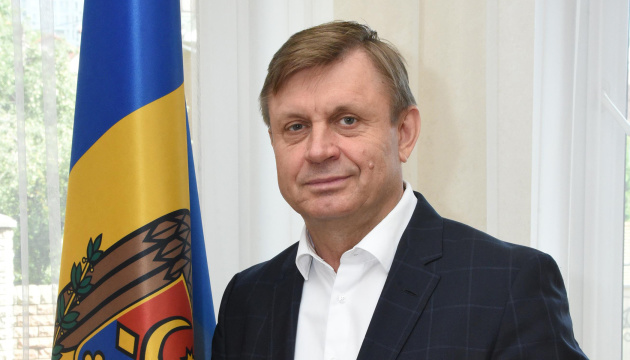
Ukrinform met in Kyiv with Valeriu Chiveri, the Ambassador of Moldova to Ukraine, who assumed his ambassadorial duties in June 2022. We spoke about Russia’s failed attempts to influence the outcome of the recent parliamentary elections in Moldova, the country’s new energy strategy in response to Russian blackmail, and whether Transnistria, where Russia has continued its efforts to destabilize Moldova using that region as a tool, is about to become a new military hot spot in Europe.
RUSSIA HAS SPENT AT LEAST 100 MILLION EUROS IN AN ATTEMPT TO INFLUENCE OUR ELECTIONS
– Congratulations on the recent elections held. The election was a high-stakes contest for Moldova’s geopolitical future, which solidified Moldova’s path toward European Union membership, despite widespread reports of Russian interference. Was there any noticeable pressure exerted by pro-Russian formations or any hybrid threats on the eve of the elections?
– In recent months, Moldova has been on everyone’s lips, as it has become a battleground between the past and the future – between democratic development and European integration on the one hand and a return to the old anti-democratic system on the other. President Maia Sandu described the parliamentary elections as a test of democracy under attack, which Moldovan citizens have successfully passed. The ruling Party of Action and Solidarity (PAS) secured 50.20% of the vote, while the so-called Patriotic Electoral Bloc (BEP), consisting of socialists, communists and other pro-Russian parties, got only half of that vote at 24.2%. The electoral outcomes speak for themselves and mark an extremely important victory for us.
I would also like to mention the crucial role of our diaspora. Moldova opened 301 polling stations abroad – a lot for such a small country. More than 277,000 Moldovans voted from abroad, and 80% of them supported a European future for Moldova. We also opened two polling stations in Ukraine – one at the embassy in Kyiv and the other in Odesa. Overall, 612 Moldovans voted there (264 in Kyiv), and, again, approximately 80% cast their votes in favor of a European path for Moldova. This experience, I believe, can also be useful for Ukraine when the time comes for its own elections. We are ready to share our experience with our Ukrainian colleagues if necessary.
Regarding hybrid threats, this year’s elections are impossible to discuss without mentioning last year’s presidential elections, which also came as a serious test for Moldovan democracy. National institutions and civil society both proved one very important thing: Russia’s interference in the electoral process was stronger than ever. They used bribery, propaganda, intimidation – almost all the tools they had at their disposal. This year, the situation was much the same, with one key difference: the scale and extent of the efforts to influence the elections was even greater! According to information available to us, Russia has spent at least 100 million euros, and possibly more, for its campaign to influence our elections, a huge amount of money for a small country like Moldova.
As President Sandu noted during the European Political Community Summit in Copenhagen, “The parliamentary elections should be seen as a warning to all of Europe. What happened in Moldova in the last few months, and especially in the final weeks leading to the elections, can happen in any European country.” The President highlighted three key areas of focus to oppose these threats. These are combating illicit financing, strengthening cybersecurity, and countering disinformation. These words reflect the reality on the ground in Moldova and show how Russia’s efforts to destabilize our country can spread to the rest of Europe. So, Moldova today is very different from what it was just a year ago. Our institutions have become stronger and more resilient. Cybersecurity has improved, and we are better prepared to counter disinformation. Most importantly, the new parliament has received a strong pro-European mandate, giving us hope that Moldova’s future is optimistic.
OUR GOVERNMENT AIMS TO ACHIEVE FULL WITHDRAWAL OF RUSSIAN FORCES FROM THE TERRITORY OF MOLDOVA
– Let’s recall the beginning of this year – January 2025, when Russia halted gas supplies following the end of its transit agreement with Ukraine, and your Prime Minister Dorin Recean firmly condemned this move by Moscow. The Kremlin attributed a non-existent debt of US$700 million to Chisinau, although MoldovaGaz is actually a subsidiary of Gazprom. What energy strategy is Moldova pursuing now?
– Simplistically, it includes increasing domestic production, including from renewable sources, diversification of energy imports and achieving independence from Russian energy supplies. Achieving energy security has long been one of the main challenges for Moldova, a legacy of Soviet times. During the years of independence, this vital sector of the economy, unfortunately, has not been given sufficient focus. Since 2013, I can only think of one major energy project: the gas pipeline from Romania to Moldova, from Iași to Chișinău.
But since then, the situation has changed dramatically. The alternative energy sector is actively advancing, and the new cross-border power interconnection Isaccea – Vulcanesti – Chisinau between the Republic of Moldova and Romania is under construction. The project, which is scheduled for completion by year’s end, will allow for electricity imports from Romania if needed. To illustrate the progress: on some days in August, Moldova almost completely covered its domestic electricity needs from renewable sources. This happened for the first time in the country’s history – a big step forward towards energy self-sufficiency.
Another important development: from September 1, 2025, MoldovaGaz is no longer licensed to supply natural gas to consumers on the western bank of the Dniester River. The state-owned company Energocom has been appointed as the supplier of last resort, and it is currently supplying gas to Moldovan consumers. MoldovaGaz will have to halt gas supplies to consumers on the eastern bank in March 2026, but this is a stopgap solution. After March 31, 2026, the company will halt gas supplies to Moldova altogether. This is part of a broader national policy of getting rid of the country’s dependence on Russian Gazprom, which we are successfully implementing.
As regards strategic planning, Moldova in September this year presented for public discussion the draft Energy Strategy – 2050 – a long-term vision, which will probably be endorsed after the formation of a new government. In addition, several key documents have already been endorsed: the Energy Independence Action Plan (March 2025) and the Comprehensive EU-Moldova Energy Strategy for 2025-2027 (February 2025). So, today we have a solid legal basis for the sustainable development of the energy sector.
And, of course, I have to mention our cooperation with Ukraine – an extremely important partner in this area. This year alone, our Minister of Energy has visited Kyiv twice, and productive meetings have taken place at both ministerial and operator levels. The cooperation is very dynamic and positive. At the same time, we are deeply concerned about the recent Russian attacks on Ukraine’s civilian energy infrastructure and strongly condemn these barbaric attacks.
– Let’s talk more about Transnistria. We understand that Russia has been supplying gas for over 30 years not to support the region, but to make it dependent. How would you assess Russia’s current influence on Transnistria? Has the recent halt in gas supply signaled to the local population that Russia is an unreliable ally that has actually deceived Transnistria?
– You are right. Russia has financed the region for over three decades, but has never helped it to develop, and that is what makes the difference. The situation changed dramatically on January 1, 2025, when Russia halted free gas supply. Despite the war ongoing and limited resources, Moscow continues to support the separatist regime in Tiraspol – perhaps not so much financially as through propaganda, moral support and its military presence. Disinformation campaigns and alarmist narratives continue to spread across Transnistria, aiming to disgrace the government in Chisinau. I believe that Russia will not give up its influence on Transnistria, as it remains a tool of political blackmail targeted not only against Moldova, but also against Ukraine. Much will depend on how the war in Ukraine ends up and whether Russia will be able to impose any dangerous conditions on Ukraine or Moldova. We hope that this will not be the case. In parallel, we are working with international partners to create the necessary conditions for the withdrawal of Russian troops from the territory of Moldova – this remains our greatest strategic challenge. But this, however, largely depends on the broader outcome of the war.
An equally important challenge is to make Moldova a true center for all its citizens, in particular for those living on the eastern bank of the Dniester, through modernization and European integration. This is what we are striving for. We must also act pragmatically and prevent a humanitarian collapse in the region. Regardless of political views, these people are still citizens of Moldova. Over 12,000 voters from the eastern bank took part in the recent ballot – not so many, but still anyway they are quite a few. Over 30% of them voted for a European future for Moldova, which is remarkable in itself, especially in view of constant propaganda and brainwashing efforts by Russia. These results indicate that many people in Transnistria want to be part of Moldova and of the wider European family. I believe that these numbers speak for themselves – they are a kind of antidote to propaganda.

– This can indeed be seen as a proof that the local population is not as influenced by propaganda as it sometimes seems. As a journalist, I visited the border between Ukraine and the Tiraspol region in 2023, where I was told that some Russian citizens enter under the pretext of visiting relatives, but never exit. We also know that one of the largest Soviet ammunition depots is located there. Is there any understanding of the current level of Russian military presence in Transnistria?
– It is hard to say exactly, because the region is not controlled by the constitutional authorities. However, according to our estimates, there are currently between 1,500 and 2,000 Russian military personnel deployed there. I would not overestimate their combat capabilities – most of them are local residents with limited or mediocre military training. However, regardless of the number or level of training, this presence poses a real threat to the security of both the Republic of Moldova and Ukraine. As for reports of people entering and not leaving, such cases probably do occur, although they have become fewer in numbers recently. Our authorities have taken measures to prevent the formation and movement of so-called militias. In any case, the strategic goal pursued by our government remains unchanged – to lay down conditions for full withdrawal of Russian troops from the territory of Moldova.
MOLDOVA HAS JOINED THE EUROPEAN SEPA PAYMENT SYSTEM
– President Zelensky stated that Ukraine and Moldova are discussing negotiations on joining the EU, emphasizing that there can be no separation between our countries. Both have already successfully completed the stage of legislative screening. How does Moldova see its further path to European integration?
– European integration is probably the most important common goal shared by Ukraine and Moldova. We are working on this very intensively. As you mentioned, the legislative screening phase has already been completed – Moldova started this process on September 22, and Ukraine – shortly after us, on September 30, and both sides have met the deadlines agreed with the European Union. This was a special and at the same time very demanding work, which we completed even faster than did some other candidate countries that went through similar procedures. At this stage, both countries have fulfilled the necessary technical conditions. The next step is the decision to open the first negotiation cluster, Fundamentals. It addresses the main areas of focus – the rule of law, the fight against corruption, judicial reform and democratization. The opening of this cluster is contingent upon agreement among all the European Union’s member states, and we do hope that all of them will support both Ukraine and Moldova.
It is worth noting that this Fundamentals cluster opens first and closes last – that is, no other negotiations can take place until it is launched. That is why we cannot simply wait for the decisions of the Member States – we are preparing in advance so that when the process officially starts, Moldova is prepared to move forward quickly. In parallel, we are already working on joining various European instruments even before the official opening of negotiations. For example, just yesterday we received very positive news from Brussels – Moldova has officially joined the Single Euro Payments Area (SEPA). This system is already operational for us, allowing Moldovan citizens and companies to make bank transfers on the same terms as in the EU Member States. This is a great achievement and a clear signal of Moldova’s deeper integration into the European community.
There are many other such instruments that we are preparing to join, and this shows that our integration is already taking place in practice, and not just on paper. And, of course, we are going through this path together with Ukraine – this is the consistent position of our authorities and our President.
The accession process, naturally enough, is based on the principle of merit, so its pace will depend on the readiness of each country, but my firm belief is that we will continue along this path side by side. Supporting each other is key, because failing this, none of us will be able to succeed.
ELECTIONS SHOWED THAT A FOCUS ON THE EUROPEAN FUTURE IS THE DOMINANT TREND
– Your President Maia Sandu once said that “Ukraine protects the security of Moldova”. How do Moldovan society and ordinary people perceive the military threat from Russia and the broader threats facing Europe today?
– Needless to say, Ukraine’s security is also Moldova’s security. This has been repeatedly noted by many Moldovan leaders, including President Maia Sandu. For us, supporting Ukraine is not only a matter of principle, but also a strategic necessity. We support Ukraine because its struggle immediately affects the security of all the European continent, and Moldova in particular. This war is not only about Ukraine’s survival; it is a war for the future of Europe. It is clear to everyone that Russia continues to be a threat to everyone, and Moldova is well aware of this. At the same time, as in any democracy, there are different opinions among people. Some still do not perceive Russia as an immediate threat, but they are becoming fewer, as evidenced by the results of our recent legislative election. Today, most Moldovans understand that if, God forbid, Ukraine does not stop Russia, then the Russian threat can come right away to the borders of Moldova, to our doorstep, literally. The recent elections have shown that society is still divided to some extent, but the dominant trend is an orientation course towards a European future and an increasingly deeper awareness of the real danger posed by Russia. This awareness signifies a very important shift in public opinion in Moldova.
– Let’s return to the topic of threats from Russia. After the successful elections, pro-Russian parties tried to stage protests, if you can call them that. As can be seen from the messages circulating on the Internet, participants were purportedly offered rewards ranging from 50 to 300 euros. And, as we remember, Russia, in 2014, also tried to organize an anti-Maidan in Ukraine, also offering money for people to participate. Do you think that Russia will continue such attempts to destabilize Moldovan society, despite the obvious fact that Moldova has already determined its path?
– Indeed, after the elections, the so-called patriotic bloc staged a protest, but only a small number of citizens came to attend. I would not like to focus too much on these developments, although I understand that they may pose a certain threat to democratic processes in our country. At the same time, our institutions are fully in control of the situation. And again, we must recognize that in a democracy, citizens have the right to protest – as long as the boundaries of the law are not transgressed (and I hope that this will not happen). For us, of course, creating effective examples of countering high-risk threats is a lesson learned. But, as I mentioned, Moldova today is a different country, with stronger and more sustainable institutions, which was clearly evident during the electoral process.
Alongside this, we have very good cooperation between our countries. Moldova’s Center for Strategic Communications and Countering Disinformation is working closely with the Center for Countering Disinformation in Ukraine – there is constant contact and experience sharing between them. I would also like to mention regional cooperation in this area, carried out within Odesa Triangle — the trilateral cooperation format between Moldova, Ukraine, and Romania. In June 2024, a memorandum of understanding on countering disinformation between the three countries was signed in Chisinau. I believe that we still have a lot of work ahead of us. This is an ongoing process. We cannot say that everything has been today and we can relax tomorrow. This is continuous work, because Russia and its allies are also active, looking for new ways to spread fakes and propaganda. Therefore, we must be prepared to continue to work actively in this direction.
Anna Kostyuchenko, Kyiv
Photo courtesy of the Embassy of Moldova in Ukraine