
Lithuanian Prime Minister Inga Ruginiene warned on Wednesday that her government will close the border to Belarus if more smuggler balloons cross into Lithuanian territory from the neighboring country.
Flights resumed at Vilnius Airport and crossings were reopened with Belarus on Wednesday following closures sparked by dozens of helium weather balloons drifting into the capital’s skies overnight, according to the National Crisis Management Center (NCMC).
Follow our coverage of the war on the @Kyivpost_official.
“If such major crossings of balloons over our border are repeated, we will react immediately and close our border with Belarus,” Ruginiene said.
Authorities said that roughly a dozen balloons were recovered on Lithuanian soil, while four people were taken into custody over the incident.
The airport in Vilnius was shut from 11pm local time on Tuesday to 6.30am on Wednesday. It disrupted 30 flights and affected more than 4,000 passengers.
Lithuania halted movement at two land crossings with Belarus, a close Russia ally, after the incident.
Smugglers use the balloons, which have long plagued Lithuania, to send Belarusian cigarettes into the European Union, where tobacco products are significantly more costly.
Vilmantas Vitkauskas, the head of NCMC, said that the latest incursion was “the most intense this year” and forced flights to be suspended “to ensure the safety of civil aviation,” according to local media.
Other Topics of Interest
‘The Problem Is Zelensky’ – Lukashenko Tells Ukraine to ‘Calm Down’ or Cease to Exist
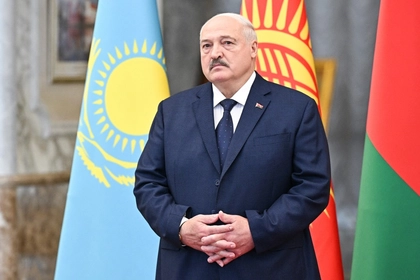
“Russia is advancing on the front line, and I say this responsibly… it could lead to the disappearance of Ukraine as a state,” the Belarusian dictator said.
Border Guard Commander General Rustamas Liubajevas said that several dozen balloons had been detected and 12 intercepted, though earlier he had claimed the total number could be as high as 200.
The NCMC also said that it was the second occasion the balloons carrying contraband cigarettes had interrupted Vilnius air traffic in a month, after 25 balloons crossed into Lithuanian airspace on Oct. 5.
Ruginiene asked Belarusian authorities to “adopt a responsible approach to these incidents, irrespective of our political relations,” demanding closer coordination to prevent further incursions.
“It’s not normal that so many balloons are crossing our border and that we have to intercept them to keep them away from our strategic sites and installations,” she said.
Lithuanian border guards have been authorized to shoot down such balloons since last year as smuggling via air devices has surged.
Official figures show that a total of 966 balloons entered Lithuania last year, while this year has already seen 500.
Authorities estimate that more than 771,000 packs of cigarettes have been trafficked across the border using balloons and drones.
Similar smuggling incidents have been reported recently in Poland and Latvia, where officials also intercepted balloons launched from Belarus.
It comes at a time of heightened tensions, as Europe has faced down repeated drone sightings and incursions linked to Russia in recent weeks, including at airports in Copenhagen, Munich and the Baltic region.
On Sept. 23, Lithuania’s Defence Minister Dovile Sakaliene said that the country had streamlined its rules to make it easier to order the military to shoot down drones violating its airspace.
In August, a Russian drone harboring explosives entered Lithuanian airspace from Belarus as the country called on NATO to help strengthen its air defenses.