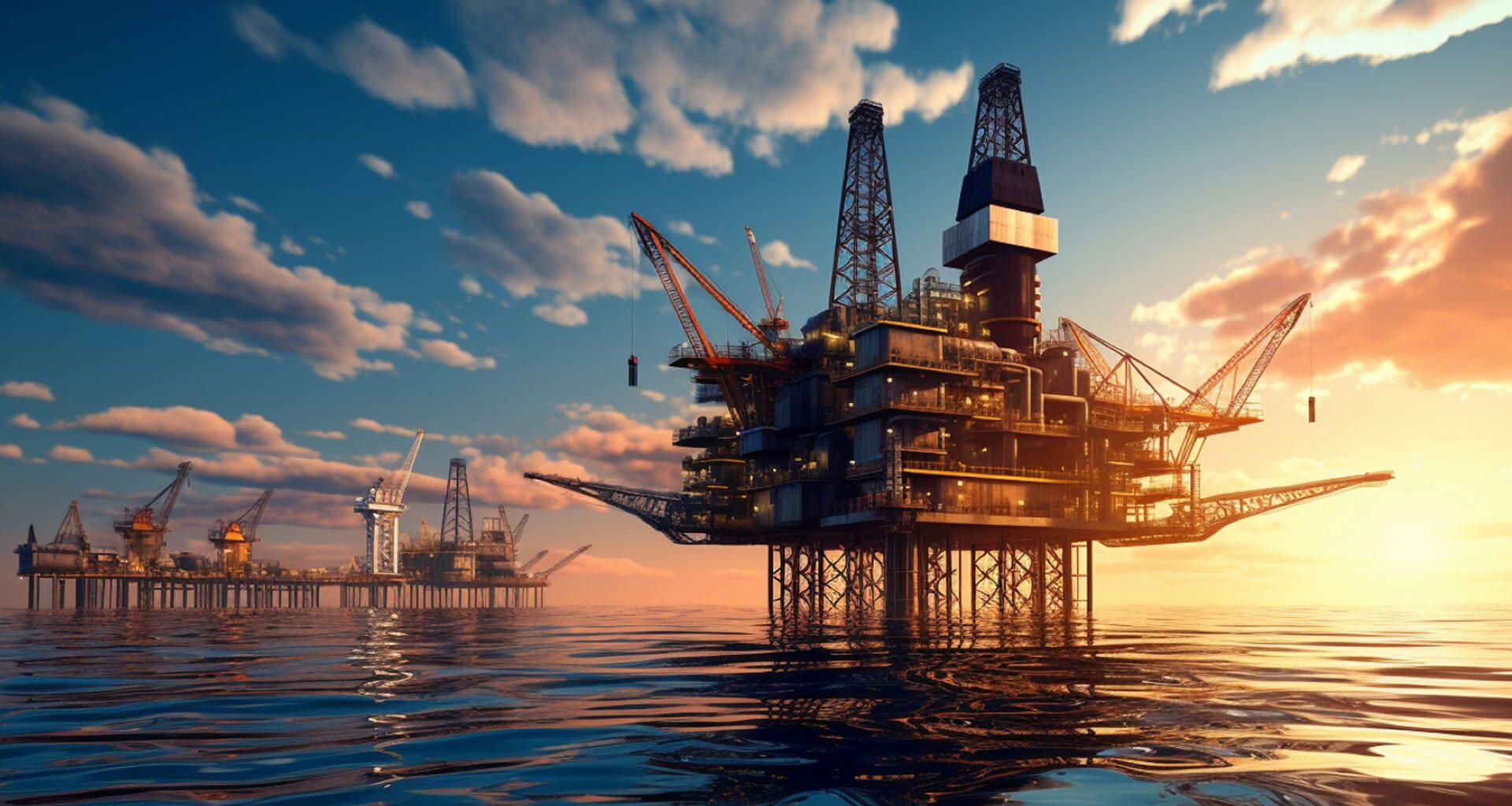
South Africa’s upstream oil and gas industry has the potential to become a vehicle for economic growth. According to new report released by EnerGeo Alliance titled The Economic Benefits and Opportunities of Enhancing the Upstream Oil and Gas Sector in South Africa – the country is experiencing a prolonged period of economic stagnation, characterized by slow GDP growth, declining investment and low unemployment. But the country also holds some of Africa’s most promising oil and gas deposits, resources which offer significant economic benefits and opportunities.
South Africa is more than a frontier oil and gas market; it is a proven petroleum province with significant upside potential. Offshore, the country offers proven petroleum systems in the Oryx and Sable fields, undeveloped discoveries such as Ibhubesi and the Brulpadda and Luiperd finds – made at Block 11B/12B in 2019 and 2020. Brulpadda and Luiperd have an estimated 275 million barrels and 340 million barrels of oil equivalent respectively, with 70% gas. Onshore, the country holds up to 370 trillion cubic feet of technically recoverable shale gas in the Karoo Basin. At the same time, the country’s vast marine Exclusive Economic Zone is largely underexplored, offering strategic opportunities for exploration and production companies.
This potential is further amplified by exploration success seen over the border in Namibia, which is on track for first oil by 2029 through its Orange Basin projects. South Africa, which holds 70% of this basin, has the chance to not only make similar finds, but transformative ones. South Africa also has the benefit of established infrastructure. The country has six oil terminals – including a 55-million-barrel Saldanha Bay facility, 3,000 km network of high-pressure petroleum and gas pipelines and the soon-to-be-revived Mossel Bay Gas-to-Liquids plant and SAPREF refinery. These serve as a foundation for new upstream developments.
The report shows that the economic benefits of developing South Africa’s upstream are endless. Across the entire project lifecycle, the country stands to benefit from strengthened fiscal revenue; job creation – both direct and indirect -; local procurement and enterprise development; infrastructure development and enhanced energy planning. South Africa also struggles from a high-demand, low-supply situation, anchored by an over-reliance on coal and imports. The country’s upstream oil and gas sector can address this by providing a domestic source of fuel and power.
The development of Block 11B/12B alone will provide a much-needed boost to the country’s economy. The project is capable of enhancing South Africa’s annual GDP by R23 billion, contributing an additional R8.6 billion annually to the fiscus in taxes. The project also has the potential to create over 20,000 direct, indirect and induced jobs, while reducing import reliance, benefiting the country’s balance of payments by more than R25 billion annually. Future upstream projects will significantly enhance these benefits, fostering extensive industrial linkages, stimulating growth in manufacturing, heavy construction and transportation, while positioning oil and gas as vehicle of economic resilience.
Despite this potential, South Africa’s upstream market has been characterized by low levels of exploration activity. Environmental opposition to offshore drilling has further impacted development, while red tape has deterred investors. More than $1 billion in projects are currently on hold due to litigation. According to Nikki Martin, President & CEO of EnerGeo Alliance, the report “underscores the critical importance of regulatory and legislative efficiencies in enabling nations to fully harness their energy potential. Such reforms are fundamental to advancing economic development, enhancing quality of life and expanding equitable access to reliable energy resources.”
There has already been some effort to address long-standing challenges. The country is preparing to lift the moratorium on shale gas development, paving the way for research, exploration and future production. The move follows the implementation of the Upstream Petroleum Resources Development Act in 2024, providing greater clarity for the industry. In 2025, the South African National Petroleum Company was launched, while the country also released its updated Integrated Resource Plan (2025), offering clear targets for natural gas production. These measures are complemented by a strong drive by international companies to unlock South Africa’s oil and gas potential.
According to Ross Compton, Senior Director of Global Policy, EnerGeo Alliance, “as the voice of geoscience companies, innovators and energy developers that harness science to power our world, we are committed to partnering with the government and local communities to build a secure, reliable energy with lower emissions future for South Africa.”