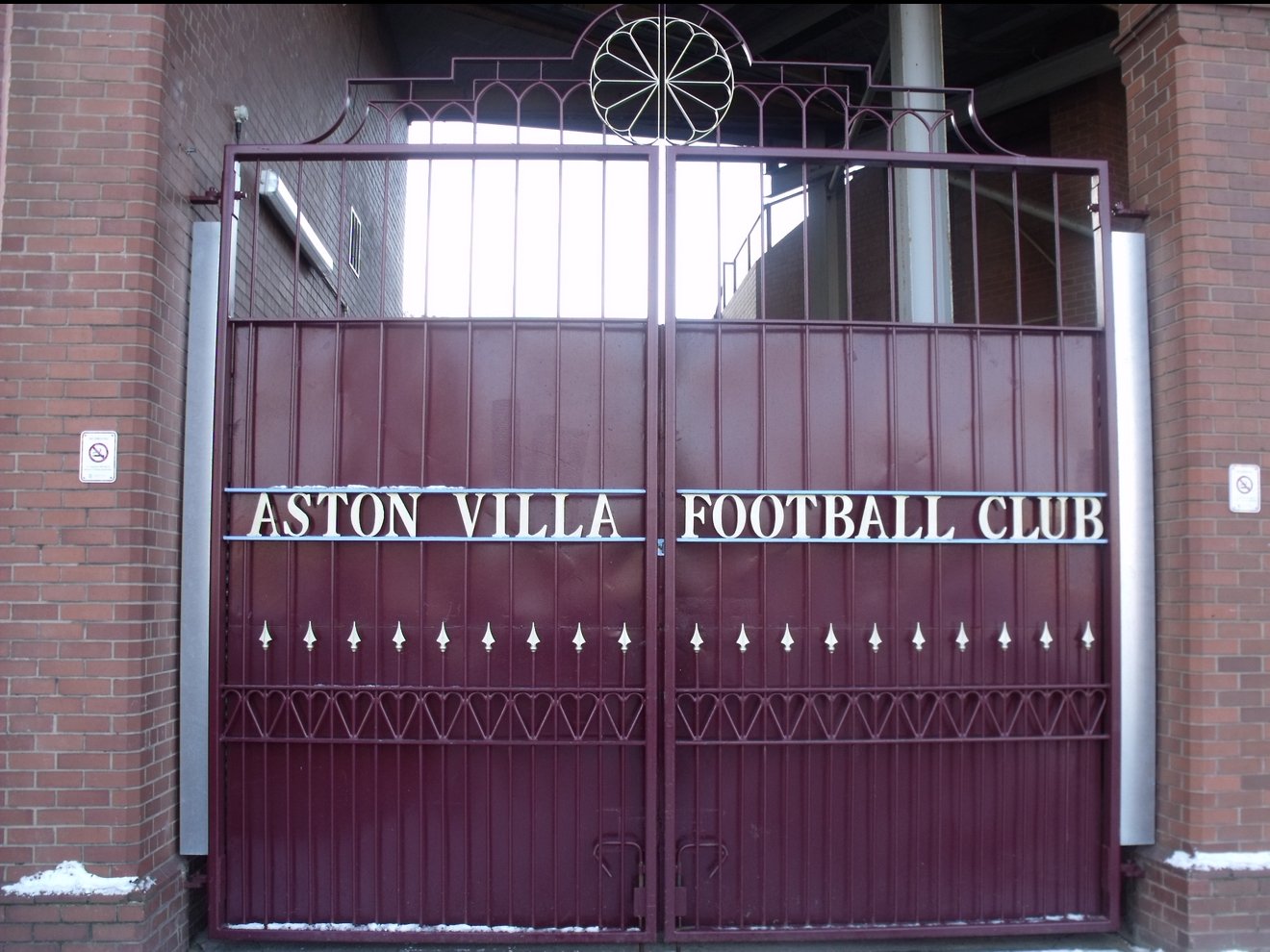
Last week, the police and the government had a chance to prove that promises on tackling antisemitism in the UK were not simply hollow words. It should come as no surprise that they failed. Based upon a decision from the city of Birmingham’s ‘Safety Advisory Group’ and West Midlands Police, Aston Villa football club announced that Maccabi Tel Aviv fans would be unable to attend a scheduled game against Villa due to ‘safety concerns’. The narrative that supporters of this ban would have you believe is that this decision was taken to mitigate the risk against Birmingham communities from violent or extreme Maccabi fans.
This could not be further from the truth. The reality is much darker: Not only was this decision motivated by political actions against Israel, but it is also clear that there is a risk of violence to Tel Aviv fans if they were to come to Birmingham, as seen in the Netherlands last year. The government failed to respond decisively, despite condemnations and promises, and Maccabi have now announced that no tickets will be sold regardless of if the ban is overturned, citing safety concerns.
The events in Amsterdam have been cited repeatedly to give cover to the decision to ban Maccabi fans. According to advocates of the ban, Maccabi fans are a particularly violent breed. The violence in Amsterdam has been presented one-sidedly with Maccabi fans portrayed as thugs looking to cause racist trouble. Of course, as with many European football sides, there are ‘ultras’ who partake in vile chants and hooliganism and we did see this in Amsterdam. But that does not change the fact that there was clearly pre-planned violence against Maccabi fans visiting the city simply because they were Israeli Jews. Messages in WhatsApp and Telegram groups from before the match were soon revealed; one said “Tomorrow after the game, at night, part 2 of the Jew Hunt.”
This premeditated violence saw Jews attacked in the street, forced to repeat anti-Israel slogans by gangs of men. Anyone reading this fairly can see it has much less to do with football hooliganism than it does with blatant antisemitism.
It is important that those who advocated this ban do not get to hide behind faux concerns over security. It was chiefly motivated by a political desire to isolate Israel from all international spaces, even sport. Ayoub Khan MP, who represents the constituency including Villa Park stadium, said in a statement celebrating the ban that the match was one of the “rare instances where the political dynamics… cannot be ignored.” A particularly revealing clip on BBC Newsnight saw Khan try to make a “moral argument” that “Maccabi Tel Aviv football club should not even be playing within this international competition.” When pushed on whether this was an antisemitic assertion, he pivoted to security concerns apparently evidenced by Maccabi Tel Aviv fans actions in the Netherlands at a game against Ajax.
We then saw the UK media and advocates for this ban take a sudden interest in Israeli football derbies. The cancellation of the Tel Aviv derby between Maccabi Tel Aviv and Hapoel Tel Aviv was seized upon as yet more evidence of Maccabi fan’s apparent insatiable hooliganism. Maccabi fans were lambasted as the chief instigators of this violence despite some reports from Israel suggesting Hapoel fans and their pyrotechnics were the main causes of the ban. Again, the truth does not matter to those advocating this ban, safety concerns are a complete ruse.
Since the cancellation of the Tel Aviv derby, there has been much pearl clutching from the original advocates of this ban like Ayoub Khan MP. They have suggested that the cancellation is proof of their legitimate safety concerns for Birmingham communities and have demanded that those who called the ban on Maccabi fans antisemitic to apologise. The brass neck of this position is almost ludicrous. If the goal is an international sports boycott of Israel, be honest about it, and take it on the chin when called out for antisemitism. Hiding behind security concerns is utterly craven.
Regardless of any additional resources promised by the government, who themselves believe the ban to be antisemitic, Maccabi Tel Aviv will not sell tickets for the Villa game to its fans. This is a shameful moment for the United Kingdom and a victory for antisemites. The decision to ban Maccabi Tel Aviv fans from Villa Park was conceived by those with an anti-Israel political agenda, and the difficult pill to swallow is that, if Amsterdam is anything to go by, Maccabi fans would have had security concerns of their own had they travelled to Birmingham. The fact that the police went ahead with this ban and that the government has been utterly unable to prevent it, shows how far the UK still needs to go in treating antisemitism seriously.
Mackenzie France is the Director of Strategy at The Pinsker Centre, a campus-based foreign policy think tank, which facilitates discussions on the most difficult foreign policy issues of our time. He is also a Krauthammer Fellow at the Tikvah Fund and a Middle East History and Peace Fellow at Young Voices.