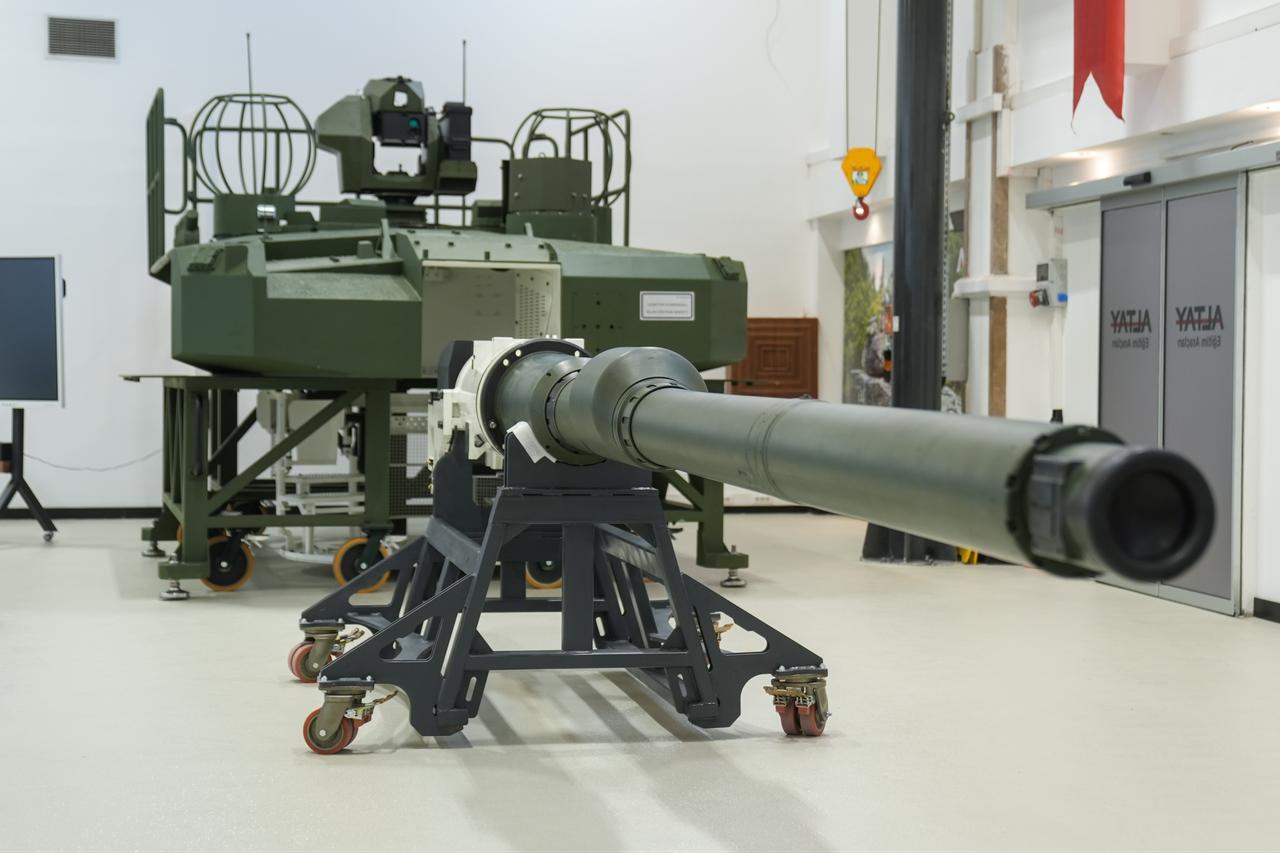
The Turkish defense industry is developing comprehensive training systems using domestic technology to prepare military personnel to operate and maintain the Altay main battle tank (MBT), beginning this year, the company leading the development of the training systems announced Sunday.
Havelsan, a Turkish defense technology company, is producing 94 training vehicles across 44 different types to support personnel and maintenance training for the Altay tank, which Turkish armed forces will begin receiving by year’s end.
“With the Altay training vehicles developed by Havelsan and simulators, we can provide user and maintenance training to a greater number of students simultaneously and at much lower operating costs, without bearing the real tank’s operational expenses,” Havelsan General Manager Mehmet Akif Nacar said.
“Our heroic tankers will be trained for future battlefields using domestic and national technologies,” he added.

Training vehicles are being prepared using national technologies for user and maintenance training for the Altay Main Battle Tank (MBT) in Ankara, Türkiye, October 26, 2025. (AA Photo)
Comprehensive training framework for Altay MBT
“The Altay training systems will provide comprehensive instruction in tank component and subsystem recognition and use, maintenance and troubleshooting demonstrations and applications, and emergency and multi-mission scenario training,” Nacar said.
“The open mockup and simulator structures combined with multimedia camera systems will allow all students to participate in training simultaneously, increasing training efficiency and effectiveness,” he added.
“Through virtual reality solutions, faster and more effective unit orientation training can be conducted,” Nacar explained.
“All scenarios can be used in troubleshooting training, providing maintenance personnel with the capability to respond to all possible types of failures,” he noted.
“The training systems will allow Türkiye to train significantly more personnel at substantially reduced operational costs compared to actual tank operation, which requires expenditures for fuel, spare parts and personnel,” Nacar said.
Project scale and scope
Alkan Dalkilic, Altay training systems project manager at Havelsan, speaking to state-run Anadolu Agency (AA) on Sunday, stated that the company designed, produced, and delivered training platforms where user and maintenance personnel will receive tank instruction.
“The project contract was signed May 1, 2019, with the project schedule beginning June 21, 2023,” Dalkilic said.
“Since that date, we have been working intensively,” Dalkilic stated.
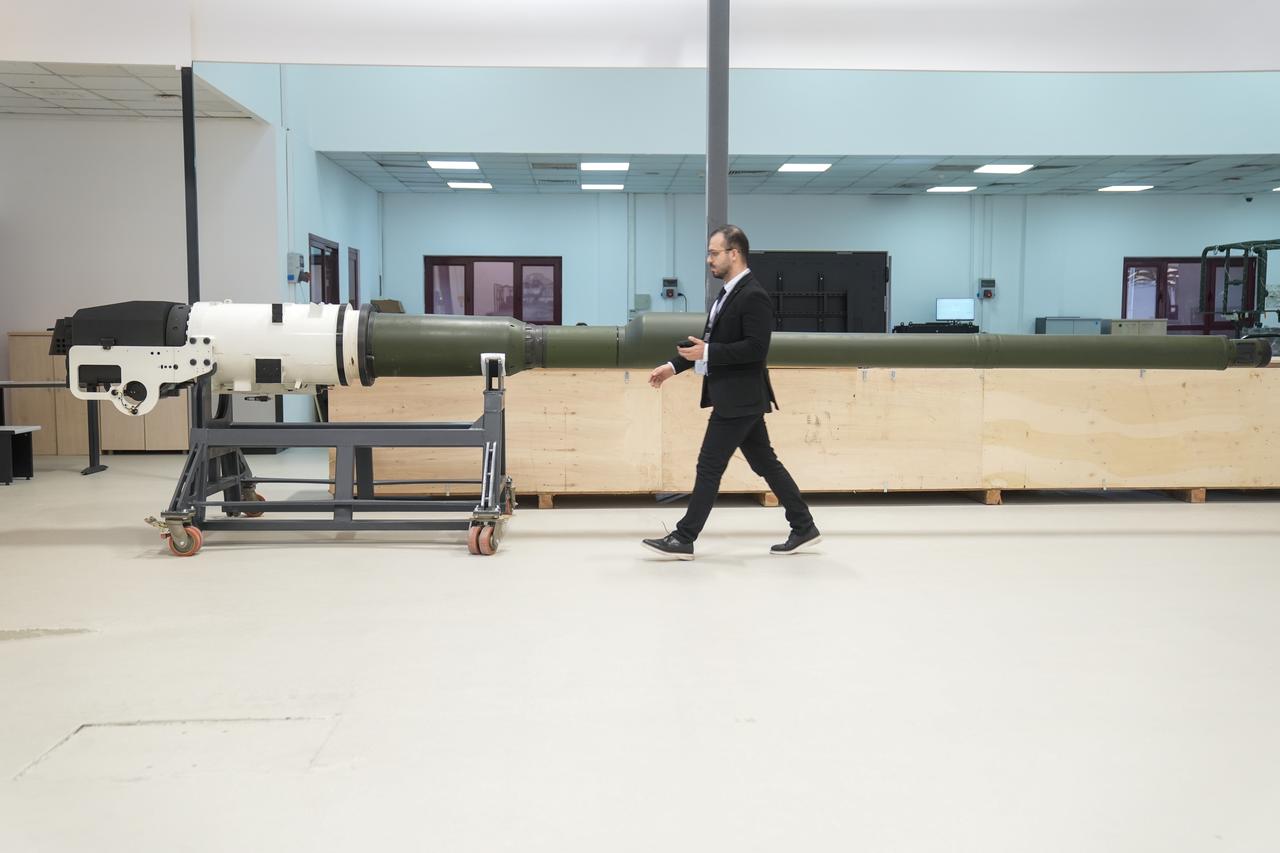
“We will deliver a total of 94 training vehicles across 44 different types. These include systems ranging from skeleton-type tank mockups to external lighting equipment mockups, and from live turret training mockups to maintenance training station systems. Through these systems, we will enable users to more effectively recognize the tank, learn about it, operate it and troubleshoot problems,” Dalkilic noted.
“The training systems employ open and partially open configurations to allow many students to simultaneously learn tank components without requiring each student to be physically inside a tank mockup at once,” Dalkilic explained.
“We generally compare this to full-mission simulators,” Dalkilic said.
“In full-mission flight simulators, as you know, we train pilots. The full-mission simulators we have for already-trained and flying pilots are where we run type adaptation and emergency scenario training.
Here, we are designing and creating training vehicles to introduce the tank to personnel who have never seen or known about tanks, and we can introduce many students to the tank simultaneously,” he stated.

Training vehicles are being prepared using national technologies for user and maintenance training for the Altay Main Battle Tank (MBT) in Ankara, Türkiye, October 26, 2025. (AA Photo)
Multimedia integration to Altay MBT
The training approach incorporates multimedia systems, cameras and large-screen televisions to support instruction, allowing students who cannot directly access the training equipment to follow lessons from outside through multimedia systems.
“Through this method, we provide simultaneous training to more students in a classroom environment,” Dalkilic said.
“Students who cannot physically be inside the tank or mockup at that moment can still follow the instruction being provided inside through multimedia systems and participate in the training,” he added.
Maintenance personnel will receive troubleshooting training using mockups that replicate real systems. For complex built-in systems like body electrical equipment with excessive cabling that cannot accommodate many users simultaneously, the project will employ virtualization solutions for more effective training, Dalkilic said.
“For maintenance personnel, we will have mockups through which we will provide troubleshooting training,” he explained.
“We will provide this both through real systems and through virtualization solutions for components like body electrical equipment—embedded systems with excessive cabling—where we cannot bring multiple users at the same time. This allows us to provide more effective training,” Dalkilic added.

Training vehicles are being prepared using national technologies for user and maintenance training for the Altay Main Battle Tank (MBT) in Ankara, Türkiye, October 26, 2025. (AA Photo)
Training infrastructure of Türkiye’s Altay tanks
“The Altay training vehicles will be deployed in classrooms being constructed at the Tank School in Mamak and the Maintenance School in Balikesir by BMC, the project’s main contractor,” Dalkilic said.
“Training personnel will receive instruction in an environment closely approximating real tanks, working with actual systems to build muscle memory and learning alongside training assistants,” he added.
“This will enable training personnel to work in an environment close to real tanks, receive training on real systems, build muscle memory, and learn tanks alongside training aids,” Dalkilic said.
Flexibility for engine transition in Altay main battle tank
The project is designed to accommodate Turkey’s planned transition to a domestically developed engine in later stages of the Altay program, Dalkilic said.
“We are prepared for this transition,” he stated, adding, “Since it is already a planned activity in the ongoing stage of the project, we will create our simulators with Korean engines within the Group 1 scope. Subsequently, when the domestic BATU power group is integrated into the Altay, we will also use BATU in our mockups. Therefore, we will be able to provide user and maintenance training for both power groups.”
Virtual reality integration into Altay MBT
The project incorporates virtual reality technology, allowing users to see and interact with tank equipment from multiple positions and perspectives.
“We have created an environment where we can show the equipment inside and on top of the tank,” Dalkilic said.
“Here we show and teach the user the Altay tank and its components. From both inside and outside the tank in different positions—as driver, commander, gunner and loader—wearing virtual reality goggles, users can see what they would see inside the tank. When they point to an item, the unit’s name and introduction scenarios appear. In later stages, we will be able to make this interactive and provide training through the virtual version of the tank,” he added.

Training vehicles are being prepared using national technologies for user and maintenance training for the Altay Main Battle Tank (MBT) in Ankara, Türkiye, October 26, 2025. (AA Photo)
Delivery timeline of Altay tanks
“Deliveries will begin by year’s end and be completed in 10 lots over three years, bringing all 94 training vehicles into the security forces’ inventory within that timeframe,” Dalkilic said.
The domestic development of the training systems is part of Türkiye’s broader strategy to ensure that all aspects of Altay tank operations and maintenance—not just the vehicle itself—rely on domestic technology and expertise.

October 26, 2025 01:16 PM GMT+03:00